JD Vance Claims Hospitals Are Just Plotting to Confuse English Speakers with Translators
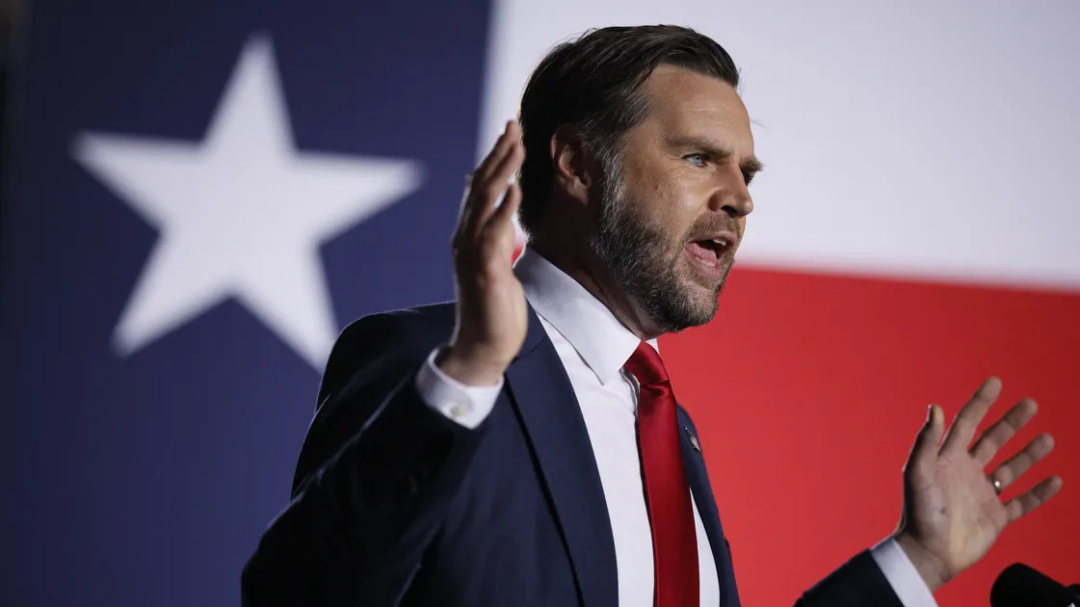
Vice President JD Vance has taken a bold stance on healthcare, declaring that hospitals should really cut back on translator services for non-English speakers. Instead of hiring nine different translators for nine different languages, he believes it would be far more efficient if everyone simply learned English. After all, why should anyone have the right to healthcare when they can just be indoctrinated into the joys of the English language instead?
During a recent Fox News town hall, Vance shared a personal anecdote about his emergency room experience, where he was surrounded by various translators while his child was in need of immediate medical attention. He found it utterly bewildering that the presence of translators could take away from the important work of doctors. "If we just eliminated the translators, we could hire more doctors!" he proclaimed, as if medical expertise was merely a matter of staffing decisions rather than complicated knowledge and hard-earned skills.
Still Beats Watergate:
Sponsor success. Continue reading:
Moreover, Vance’s thoughts took a philosophical turn when he emphasized the need for immigrants to assimilate into American culture. It turns out that the bare minimum expected of newcomers isn’t just respect for the country but a complete overhaul of their personal identities to fit within the established norms—because nothing says, "Welcome to America!" quite like demanding that people abandon their native languages.
This logic has its own unique flavor of absurdity, particularly when one considers that over 25 million Americans, or 8% of the population, have limited English proficiency. Vance’s call for assimilation overlooks a critical question: Who exactly is responsible for ensuring that healthcare is accessible to everyone, regardless of their language skills? Perhaps Vance believes that the universal right to communication should be trumped by a singular expectation of compliance with English.
While Vance's comments echo a broader, somewhat nostalgic desire among certain political factions to return to a supposedly simpler America, they also highlight a glaring oversight: the importance of effective medical communication. Studies have shown that providing adequate interpreter services significantly improves patient care and reduces health disparities. But Vance, it seems, is more concerned with the aesthetic of a homogeneous culture than the actual health of its citizens.
This brings us to the larger implications of his rhetoric: if the government really wanted to address healthcare issues, it might consider investing in better services and access, rather than simply vilifying those who speak other languages. But I suppose that would require a level of engagement with complexity that simply learning English does not.
The Irony of Simplistic Solutions
In a world where language barriers can lead to dire medical consequences, Vance's solution may play well in front of his audience but fails to address the real issue at hand: healthcare is not a one-size-fits-all endeavor. To suggest that simply eliminating translators will lead to better outcomes is akin to advocating that hospitals should only operate in a single language, disregarding the diverse reality of the American populace. After all, if one side of the story can’t be understood, does it even exist in the eyes of those making the rules?
As this debate continues, one thing is clear: when it comes to healthcare, the solution is not as simple as just speaking English. The real challenge lies in ensuring that everyone—regardless of their linguistic background—has access to adequate healthcare services. So, Vance's rhetoric may resonate with some, but it also underscores an alarming disregard for the nuance of human experience and the realities of American society.
Your takeaway
In a world that prides itself on diversity and inclusion, Vance’s proposal serves as a reminder of how far we still have to go in recognizing every individual’s right to healthcare, regardless of the language they speak. Perhaps instead of trying to erase language differences, we should focus on bridging them—because, in the end, health should speak louder than words.