Trump Claims Midterms Are Crucial, While Suggesting He Can Control Time
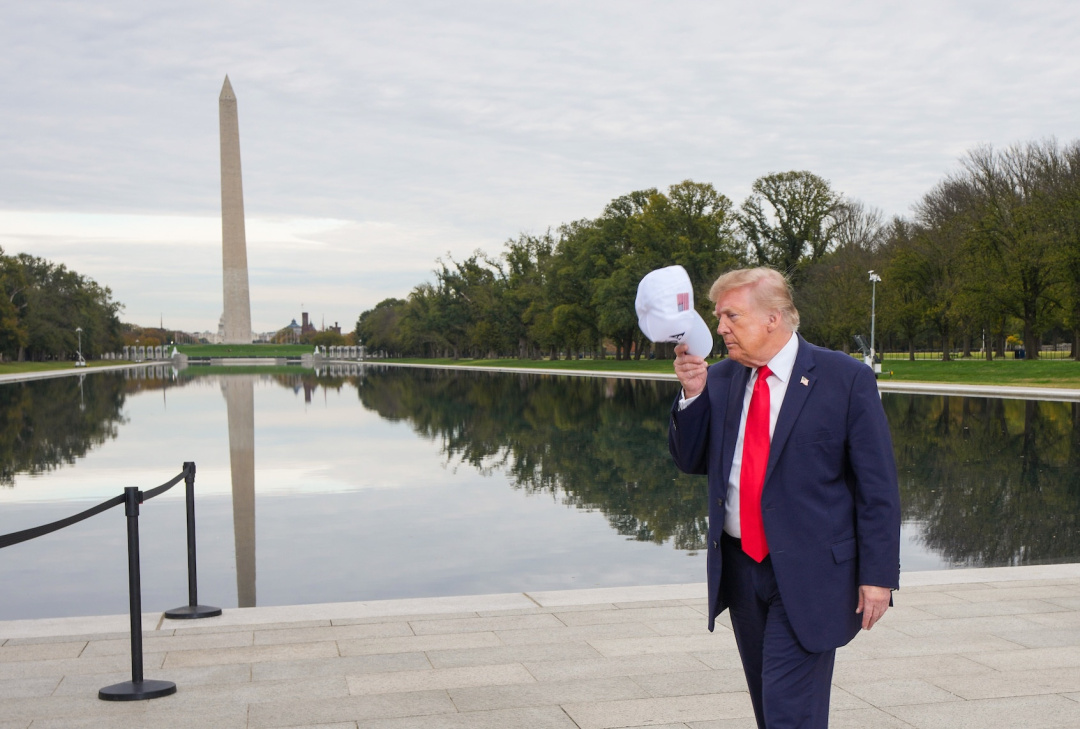
In the final hours before the midterm elections, President Donald Trump stood before the Lincoln Memorial Reflecting Pool—now humorously suggested by him to be renamed the "Trump Reflection Pool"—and delivered what can only be described as a masterclass in wishful thinking.
For over 23 minutes, attendees endured a tirade about the glory of Washington construction projects and a passionate revival of conspiracy theories about monument vandals, all before he finally got around to the elections. It seemed he was waiting for the right cosmic alignment to safely address the elephant in the room: the very real possibility that his party might face a catastrophic loss.
Still Beats Watergate:
Sponsor success. Continue reading:
"When you vote, remember that a party that hates America cannot rule over those who built our country!" Trump exclaimed, as if the fate of the nation hinged on his ability to distinguish between party platforms and a poorly written screenplay about a dystopian future. His proclamation that this election was "the most important midterm in our lifetime" did little to counter the polls predicting a Democratic wave. It’s as if Trump believes the power of positive thinking could somehow alter the course of political tides.
He shared his strategy for success: if enough of his previous supporters show up to vote, it’s all in the bag. Of course, he also acknowledged that historically, the sitting president doesn’t win midterms. One might ponder whether he sees himself as the exception to this rule due to his special brand of charisma—or perhaps he believes he can manipulate reality itself through sheer willpower, like a toddler convinced that covering their eyes makes them invisible.
In the background, the data on early voting tells a stark story of potential Democratic gains, with record numbers casting ballots in states traditionally dominated by Republicans. While Trump was busy spinning his tales of political grandeur, the reality was that around half of the expected votes would arrive on Election Day—much like his supporters, who seem to arrive fashionably late or not at all when it counts.
Expectations versus Reality
As Trump’s melodramatic rhetoric reached new heights, one couldn’t help but wonder if he truly believed the stakes were as high as he claimed, or if he was simply performing for an audience that now might just prefer Netflix dramas over political speeches. His assurance of a landslide victory seemed detached from the reality unfolding on the ground, where early voting results painted a more sobering picture.
Much like a magician who shows you nothing up his sleeve while fumbling with card tricks, Trump attempted to distract from the hard truths of polling data by insisting that his party was still very much in the game. Meanwhile, the sheer volume of ballots being cast suggested that voters were not just practicing their civic duty—they were actively orchestrating a political protest against everything Trump represents.
As the dust settles and the votes are counted, it’s clear that Trump's charm may not be enough to defy the immutable laws of political gravity. Or perhaps he’s still convinced that if he just yells loud enough, he might just get the universe to listen. After all, for Trump, even a midterm loss could be spun into a narrative of personal triumph.
Your takeaway
In the end, Trump’s theatrics might just serve as a reminder that in politics, the most crucial midterm may not be about results but rather the spectacle itself. After all, a good show can distract from a dismal reality—at least for a little while.