Trump's Executive Orders: Energizing the AI Race or Just Really Fast Paper Shuffling?
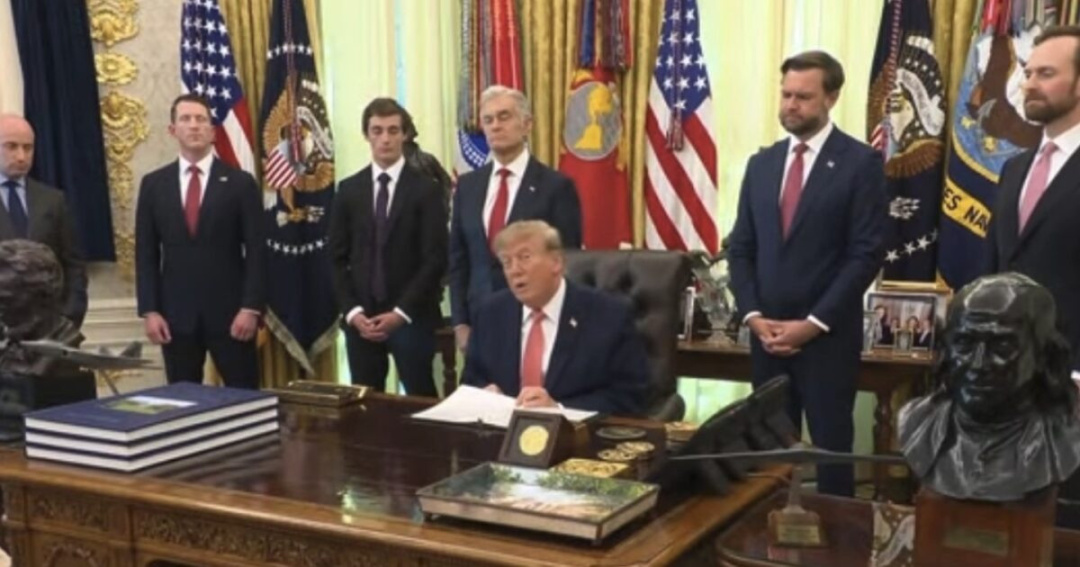
In an era where government speed often resembles a leisurely stroll through a bureaucratic labyrinth, President Trump’s recent issuance of AI executive orders can only be described as a caffeine-fueled marathon. With echoes of Alexander Hamilton’s call for ‘energy in the executive,’ the administration boldly claims to spearhead America’s AI race, all while navigating a minefield of regulatory contradictions and corporate pledges that might be more aspirational than actionable.
Hamilton envisioned an executive that clears paths for innovation, yet here we find ourselves at the intersection of ambition and absurdity. Last summer, Trump declared that the U.S. must do whatever it takes to dominate the artificial intelligence landscape—presumably while the rest of the world plays catch-up in a tech-driven game of tag. Meanwhile, Secretary Rubio’s blunt assertion that "winning the AI race is non-negotiable" raises the question: what are we actually racing toward? The implications are dizzying, shifting from robust policy to a somewhat frantic call to action that feels more like a group text than a national strategy.
Still Beats Watergate:
Sponsor success. Continue reading:
The administration’s AI Action Plan rests on three pillars: innovation, infrastructure, and international partnerships. Its ambitious framework is supposed to signal a new dawn for federal involvement in AI development—except that the actual details resemble a haphazard collection of ideas rather than a harmonized symphony. Faster permitting and the promise of federal land for data centers sound less like a strategic blueprint and more like a desperate bid to convince corporations to remain on American soil rather than take their chips and leave for greener pastures.
As if to prove its commitment to the cause, the administration convened major tech titans, urging them to shoulder their own operational costs. The plan sounds great on paper: Google, Microsoft, and Amazon are on board to pledge their own power supplies, promising to keep household electric bills untouched. The question remains, however, just how well we can rely on the self-regulating goodwill of these tech giants? After all, a corporate pledge is only as good as the last quarterly report.
Promises of Progress or Just a Facade?
Then came the rollout of America.gov—the shiny new AI-powered portal that promises to serve citizens rather than impede them. With the fanfare of a tech launch, Trump boasted that now the federal government “stands only at your service.” But critics quickly pointed out that the site’s initial phase seems more about answering questions than providing real solutions. The digital revolution might not entirely liberate us from the red tape of government; it might just make the red tape a bit more user-friendly.
While the administration insists that our needs will be just a click away by 2027, the specter of skepticism looms large. Critics argue that vibrant promises must transform into tangible actions, and the energy in the executive must translate into actual results rather than lofty declarations. As Hamilton warned, a feeble administration does everything badly, and we are left to wonder whether this energetic executive is simply a façade for bureaucratic inertia.
A Race Against Our Own Impulses
However, the direction chosen by this administration is unmistakable: a fervent backing of builders and innovators while also burdening them with responsibility. The White House seems to believe that if it encourages the private sector enough, it can dance around the critique that it’s still just government pretending to be hands-off. In this peculiar tango of regulatory promise and operational pressure, we are left with the amusing thought that perhaps the most energetic thing about this executive is its ability to run in circles, spiraling toward uncharted territory in a very familiar manner.
In the end, as Hamilton would undoubtedly nod in approval from his historical perch, the administration has embraced the idea that energy is better than feebleness. Yet, without the real drive to ensure that policies produce genuine results, we may find ourselves on a treadmill—sprinting with vigor, but ultimately going nowhere. Perhaps the greatest irony of this policy drama is that it seems less about the energetic embrace of innovation and more about the energetic assurance that we have at least put on our running shoes.