Nepali Congress Awaits Court Verdict: A Real Game of Political Musical Chairs
The Nepali Congress (NC) is embroiled in an internal rift so deep it could qualify as a political trench warfare documentary. With three camps forming like cliques in a high school cafeteria, the party is waiting with bated breath for an impending court ruling on its legitimacy, which, ironically, might be the only genuine unifying factor left.
In the center of this melodrama, we find Gagan Kumar Thapa, who has recently donned the party president's cap amid the chaos. Meanwhile, the former president, Sher Bahadur Deuba, is readying his own faction's convention, set to unfold amid the swirling uncertainty, like a bad sequel that no one asked for. Meanwhile, Dr. Shekhar Koirala and his loyalist Purna Bahadur Khadka are looking around, wondering if anyone brought the popcorn.
Still Beats Watergate:
Sponsor success. Continue reading:
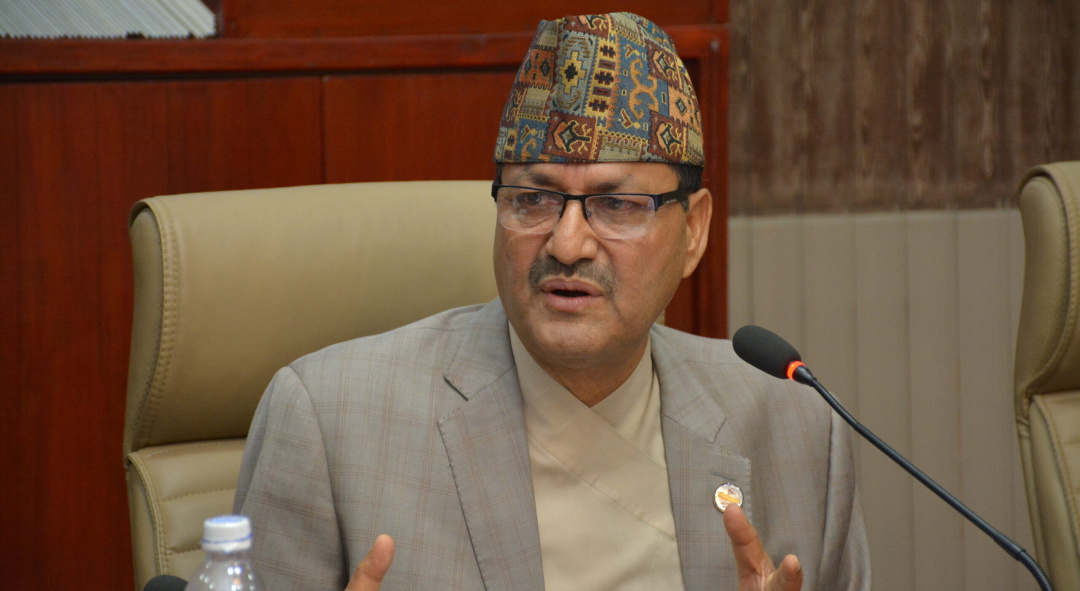
So, what happens when the party's legitimacy is pending a court ruling? It seems the NC is betting everything on a judge’s gavel rather than demonstrating the leadership qualities one would expect from a party vying for power. NP Saud, a notable figure in the party, suggests they’re preparing a convention that respects the old guard while also making room for the youth. How charmingly democratic! Let's just hope the judge doesn't deliver their verdict on December 9, right in the middle of their big gala.
As preparations for the upcoming general convention escalate, the party has found itself in a conundrum. The absence of party offices and the inability to form committees has resulted in some factions sharing spaces like reluctant roommates in a college dorm. This lack of cohesion only adds to the absurdity of the situation, with various factions holding conventions like it's some kind of political scavenger hunt.
The Irony of Waiting for Justice
What makes this situation more ludicrous is the fact that while they’re all scheming for power, they’re also waiting for the court to deliver what they’re calling ‘justice’—a term that seems to hang in the air like uninvited fog at a picnic. The idea that their unity is contingent upon a court verdict adds a layer of theatrical irony that would make even Shakespeare raise an eyebrow.
The Future of the Nepali Congress: A Waiting Game
In the face of this political theater, there’s a glimmer of hope. Saud insists they want to bring everyone together, yet participation from the factions seems like a long shot—similar to getting cats to attend a meeting. It’s a classic case of ‘let’s all agree to disagree, but let’s also hope the judge picks our side.’ The conventional wisdom here appears to be: “Reconciliation is possible... after the court decides who gets to keep the toys.”
As the Nepali Congress navigates its internal squabbles, the overarching reliance on a court ruling might just be the most telling sign of political desperation. The real tragedy? If the court decides to call it a game of musical chairs, who knows who will be left standing when the music stops? The answer, dear reader, may very well be as elusive as the unity these factions claim to desire. And so, the Nepali Congress continues its wait, while the rest of us grab a front-row seat to this political circus.