Cassidy Hutchinson Exonerated, DOJ Frees Up Time for More Ambiguous Indictments
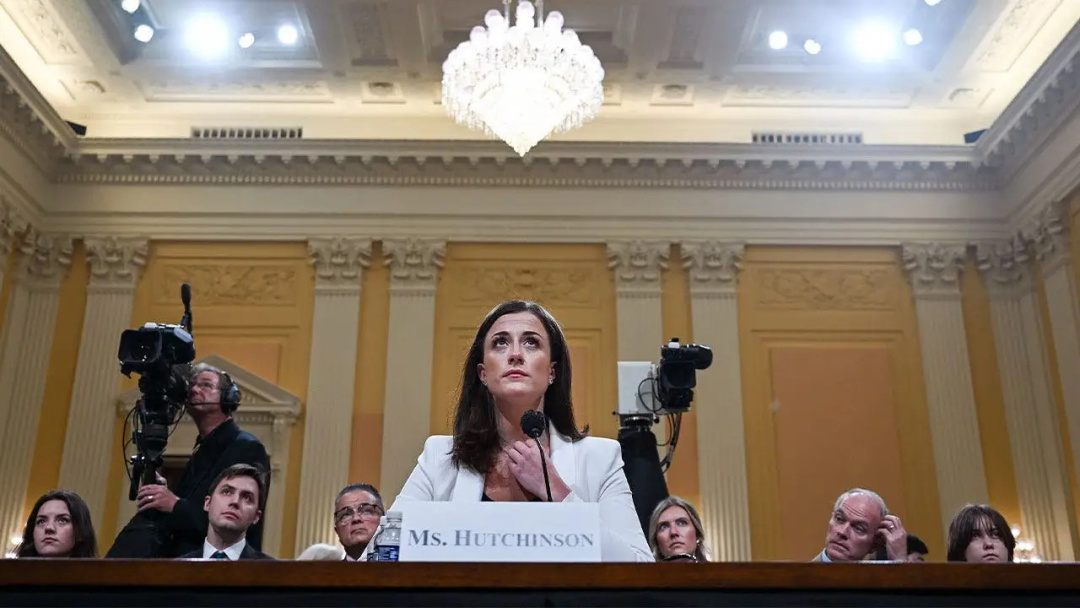
A federal grand jury in Washington, D.C., has decided not to indict Cassidy Hutchinson, former aide to Donald Trump, over her congressional testimony, leaving many to wonder what sort of interpretive dance the Justice Department now plans as a follow-up.
In what we can only assume was a gripping session of legal deliberation, the grand jury determined that Hutchinson's statements were perhaps too profound for mere indictment. After all, as the DOJ scrambles to make sense of an increasingly chaotic political landscape, they clearly have more urgent business at hand—like forming a committee to explore how they might one day consider charges against someone perceived as more indictable.
Still Beats Watergate:
Sponsor success. Continue reading:
Hutchinson’s testimony regarding the events of January 6 was undeniably captivating for those with a penchant for political theater. Yet, with the grand jury effectively hitting the snooze button on any indictment, it’s clear that ambiguity is the new black in Washington. Rather than pursuing clarity, the DOJ seems committed to exploring the shades of gray that come with political narratives, leaving the public in a state of delightful confusion.
As Hutchinson continues to stand by her testimony, which involves an alleged altercation in a presidential vehicle—details of which have become as tangled as the administration's messaging—the lingering question remains: what does it mean to tell the truth in a world so saturated with alternative facts? After all, if the DOJ refuses to take action, does that mean they’ve simply accepted the notion that the truth is as flexible as the political landscape?
Meanwhile, Hutchinson could become a new symbol of Washington’s artistic approach to accountability—an exhibit in the gallery of obfuscation that portrays a world where witnesses don't really need to worry about the truth, provided they can keep their stories vague enough to elude indictment.
Amid all this, legal experts are considering the implications of the DOJ’s decision. Maybe the next step will be a nationwide tour promoting the concept of non-indictment as a new method of governance. If ambiguity is the goal, perhaps they’ll launch a series of seminars titled "Indictment? What’s That?" aimed at preserving the murky waters of political accountability.
The Aftermath of Indictments
In the wake of this decision, many are left reflecting on the absurdity of it all. Is the grand jury’s ruling a victory for the truth, or just another day in the office where the pursuit of accountability takes a backseat to the theater of politics? As Hutchinson basks in the glow of her non-indictment, one can’t help but wonder if she’ll soon be taking the stage as the keynote speaker at the next political rally, sharing her wisdom on how to dodge bullets in the form of indictments.
As the political landscape continues to twist and turn, one thing is for sure: the DOJ has set the bar for what it means to be held accountable. It’s not just about who gets indicted anymore, but rather about how many layers of ambiguity can be added to the script before anyone notices the plot has disappeared altogether.
Your takeaway
So as we look to the future, let’s all take a moment to appreciate the fine art of political testimony—a performance where truth is optional, and indictments are just a suggestion. The stage is set, the players are in place, and the audience is left to wonder: will anyone ever take accountability seriously again?