Political Legacy of Lindsey Graham: A Masterclass in Sacrifice
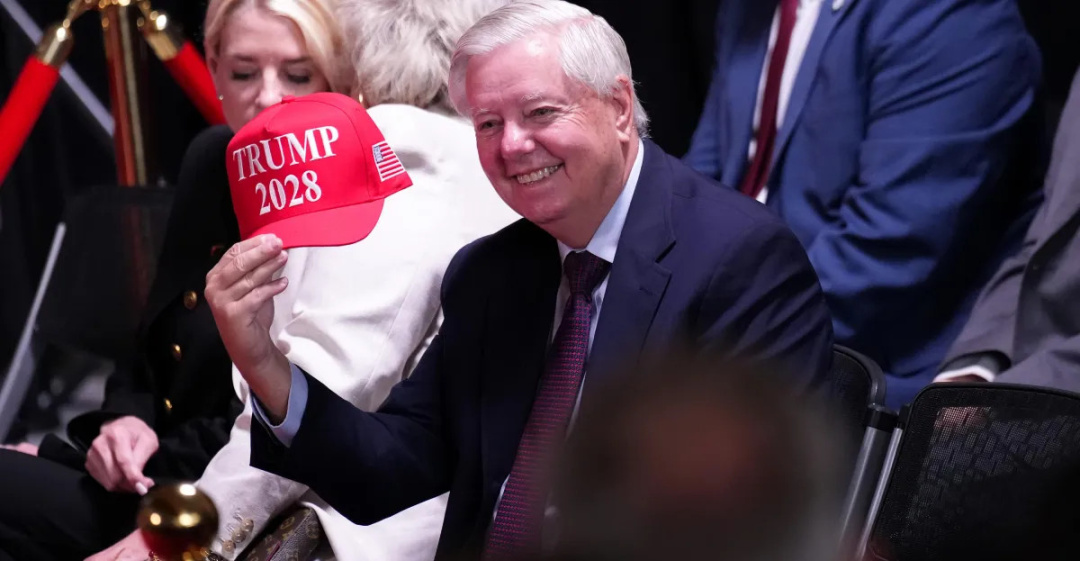
In a shocking turn of events, the political world is scrambling to assess the legacy of Lindsey Graham, the South Carolina senator who seemed to have sacrificed his very soul at the altar of Donald Trump. Reports indicate that Graham’s office has gone into overdrive, issuing a series of clarifying statements about his life choices, as if to reassure the public that yes, he really did mean it when he said he would ‘follow Trump to hell and back.’
But let’s be honest here: what does that even mean? It seems Graham took his role as Trump’s loyal lapdog far too seriously, turning every ounce of political capital into a lavish gift for a man who, let’s face it, would probably trade him in for a slightly shinier golf club if it came down to it. In the aftermath of his demise, insiders are left to wonder what Graham actually received in return for his unwavering allegiance. A few retweets? A hastily arranged photo op? Perhaps a lifetime supply of Trump-branded golf balls?
Still Beats Watergate:
Sponsor success. Continue reading:
It’s almost poetic, really. Here was a man who once had a glimmer of integrity, a spark of independent thought, only to morph into a caricature of political servitude. He became the embodiment of 'I’ll say anything for a seat at the table,' sacrificing his reputation and principles for the fleeting thrill of standing in Trump’s shadow. Now, as pundits dissect his career, they’re grappling with the ultimate question: was it worth it?
In a memo leaked from the Office of Utterly Confused Political Analysts, several theories emerged about Graham's motivations. Some speculate he was merely trying to revive the glory days of his youth when being a political maverick actually meant something. Others suggest he believed aligning with Trump would lead to a sort of resurrection of his own fading relevance, a misguided attempt to ride the coattails of a man whose grip on power is as slippery as a banana peel.
Meanwhile, Trump himself has reportedly been too busy preparing his own legacy to comment on Graham’s passing, likely drafting an executive order to rename a golf course in Graham's honor. After all, nothing says ‘I care’ like a hastily organized tribute that lasts just long enough for the cameras to click. If only Graham could have been around to see it; perhaps he’d find solace in knowing that his sacrifice was not in vain—at least in the eyes of a man who might forget his name before the next news cycle.
In the end, Graham’s political theater might be a cautionary tale for future generations of politicians. His story serves as a reminder that while loyalty can be a noble trait, blind allegiance can lead one into moral quicksand. As the tributes pour in, and the political elite wrestle with their nostalgia for Graham’s outlandish antics, one thing is clear: the void left by his absence may be filled, but his bizarre legacy will undoubtedly linger, a ghost of political absurdity haunting the corridors of power for years to come.