Messi's Non-Call: A Masterclass in Selective Justice at the World Cup
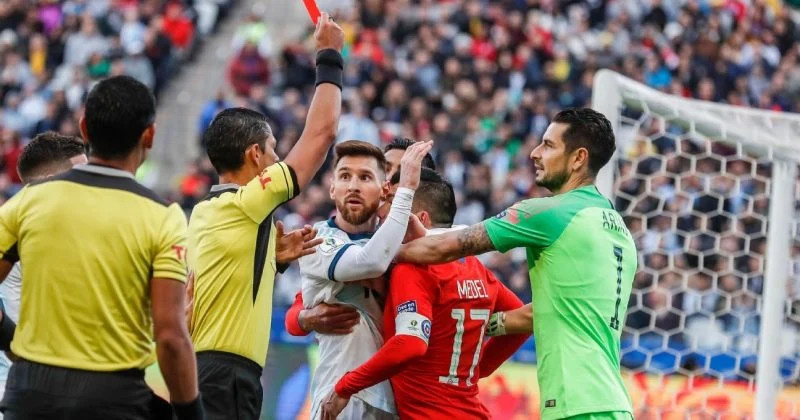
In a shocking turn of events at the 2026 World Cup, the rules of soccer have been rewritten on the fly, and the ink is still wet. Lionel Messi, the poster child of global soccer, found himself dodging a red card like a seasoned politician dodges accountability. In a match against Algeria, Messi's studs-up challenge on Aïssa Mandi went completely unpunished, allowing him to continue playing and ultimately score a hat-trick. It seems that when you’re the biggest star on the field, the rules are more of a suggestion than a mandate.
Meanwhile, in a twist that could only be crafted by the mad geniuses behind reality television, U.S. striker Folarin Balogun received a red card that was swiftly overturned thanks to a little behind-the-scenes intervention from then-President Donald Trump. This unprecedented move is not just bending the rules; it’s practically doing yoga on them. FIFA has described the ruling as unprecedented, which is a fancy way of saying, "We have no idea how this happened, but it sure makes for great television."
Still Beats Watergate:
Sponsor success. Continue reading:
The contrast between Messi's non-call and Balogun's political reprieve highlights a new standard of officiating—one that suggests that star power might just be the ultimate immunity card. After all, who needs to follow the rules when one can simply charm or coerce their way out of trouble? Messi’s non-call has stirred a tempest in a teapot, raising profound questions about fairness and integrity in the world's most-watched sporting event. Are we witnessing a new form of sport where the rules only apply to the lesser-known athletes? Perhaps.
FIFA, typically known for its enigmatic and often baffling decision-making, has remained tight-lipped on the internal mechanisms that allow a head of state to intervene in disciplinary matters. It seems that transparency is as foreign to them as fair play is to a referee with a penchant for favoring the home team. Instead, we're left to wonder how many more instances of selective justice will unfold before our very eyes, all while the governing body of soccer continues to play its favorite game: dodge the question.
As Messi basked in the glow of his hat-trick, one couldn’t help but think of the countless athletes whose dreams are dashed by strict adherence to the rules. The juxtaposition of Messi’s continued presence on the pitch and Balogun’s political reprieve paints a troubling picture, one where the beautiful game is overshadowed by the ugly reality of favoritism. It begs the question: when the lines blur between politics and sports, who really wins?
In the end, the 2026 World Cup may not just be about which nation lifts the trophy, but rather which players can best navigate the murky waters of selective enforcement. As fans tune in to the next match, they might want to keep their eyes peeled not just for goals, but for the ever-elusive red card that seems to be reserved only for the unworthy.