Kremlin Excited for Witkoff's Visit—Just Not Enough to Offer Actual Concessions
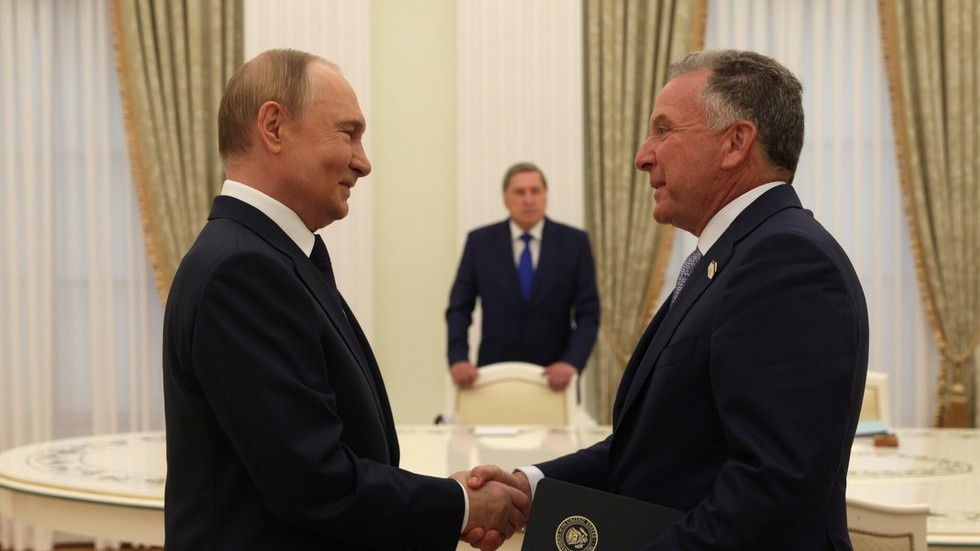
In a dramatic prelude to what promises to be a thoroughly unproductive visit, the Kremlin has publicly expressed its anticipation for U.S. President Donald Trump’s special envoy, Steve Witkoff, to meet with President Vladimir Putin. Spokesman Dmitry Peskov had the audacity to call every meeting with U.S. envoys 'very important and well-timed,' perhaps in a bid to confuse genuine enthusiasm with a fervor for rhetorical gamesmanship.
While Washington is busy prepping for Witkoff’s imminent arrival, the Kremlin is simultaneously vocalizing its strict refusal to make any one-sided concessions. Russian Foreign Minister Sergey Lavrov shared this sentiment, detailing a specific framework for negotiations that ensures any deal is less about collaboration and more about maintaining a competitive edge. In essence, it’s a diplomatic dance where only one partner is expected to lead and the other remains steadfastly rooted in place.
Still Beats Watergate:
Sponsor success. Continue reading:
Lavrov’s remarks regarding the historical pattern of U.S. administrations dodging responsibility for their predecessors’ decisions serve as a convenient backdrop for Russia's negotiating stance. This is essentially a strategic retreat wrapped in the guise of wisdom: why help your opponents when they might not even be around next election cycle? The message is clear—any agreements must be as advantageous to Russia as the Kremlin believes they can be, even if that means they might go unuttered.
Should Witkoff's trip yield any proposals, such as a potential three-way summit involving Trump, Putin, and Ukraine’s Zelensky, one can only imagine the convoluted terms that will accompany them—terms that might be more about optics than actual governance. After all, the last thing Russia wants to do is to be seen as compromising, especially when their European partners have proven remarkably obstinate in their own expectations.
The Chaos of International Diplomacy
As the diplomatic tension simmers, it’s worth noting that Witkoff’s visit follows a public spat between Trump and Zelensky regarding Ukraine’s actions against Russian oil facilities—an altercation that has all the subtlety of a bull in a china shop. This latest development is just another reminder that in the high-stakes world of international diplomacy, sometimes it’s less about making deals and more about maintaining a healthy level of chaos.
Your takeaway
While Witkoff is set to travel to St. Petersburg, where he will undoubtedly be greeted with as much fanfare as a tax audit, one must ponder the underlying reality: the Kremlin is prepared for meetings, discussions, and perhaps even a few smiles, but only if those interactions allow them to walk away with their dignity—and a strong refusal to change course.
When it comes to international negotiations, it seems the only thing Russia can count on is that the U.S. will bring its own brand of dysfunction, and for those in Moscow, that’s the real leverage they can bank on.