Trump's New Military Strategy: The 'If I Go Down, We Go Nuclear' Plan
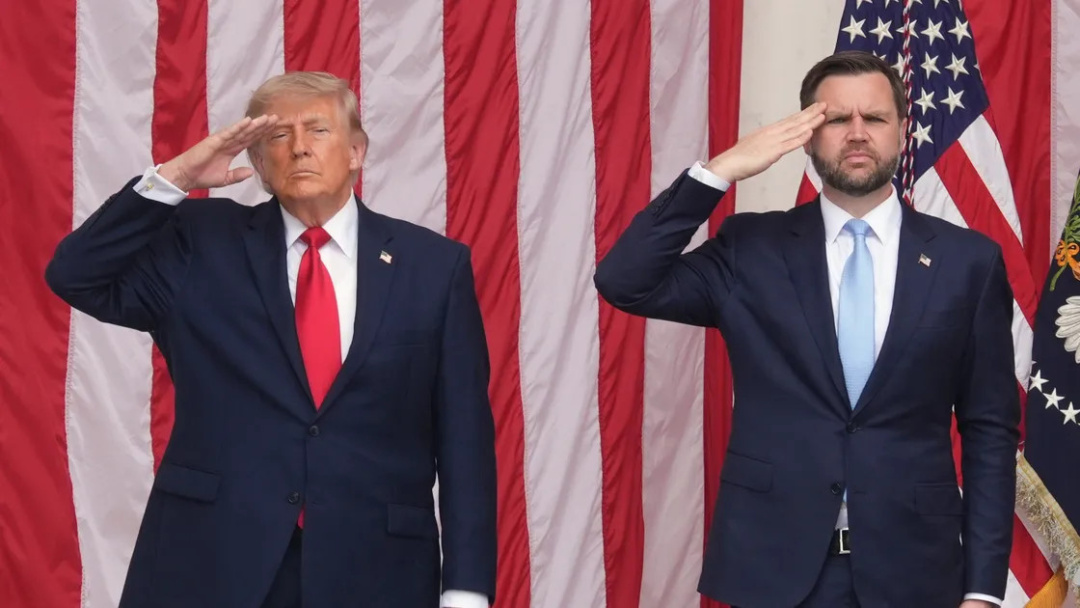
In a move that can only be described as a masterclass in political melodrama, President Trump has unveiled his latest military strategy: the 'If I Go Down, We Go Nuclear' plan. According to sources, this audacious doctrine suggests that should Trump meet an untimely end at the hands of Iran, all bets are off. He’s reportedly left standing orders to unleash a barrage of missiles that would make even the most seasoned military generals gulp in disbelief.
The proposed directive, however, raises a plethora of questions, particularly concerning its legality. Experts are scratching their heads, pondering how a country can operate under a preemptive plan of nuclear retaliation based on the whims of a president's survival. After all, the 25th Amendment and the Presidential Succession Act of 1947 dictate a rather mundane transfer of power to Vice President JD Vance upon Trump's hypothetical demise. Surely, Vance, with his own set of priorities, might have a different take on matters of global annihilation.
Still Beats Watergate:
Sponsor success. Continue reading:
Trump's social media musings, where he declared that a thousand missiles are "locked and loaded" and aimed at Iran, seem less like a serious military strategy and more like an overzealous teenager’s video game ambitions. Meanwhile, Iranian leaders have responded in kind, promising to avenge the death of their own leaders with all the fervor of a soap opera villain, complete with dramatic proclamations of revenge that could rival any Hollywood blockbuster.
As the political theater unfolds, one can't help but wonder if Trump truly believes he’s directing a war film where he’s the star. Navigating through the tangled web of military protocol, experts have noted that the U.S. has never actually utilized a 'dead man’s switch' for nuclear launch authority. It’s almost as if the government prefers to keep a semblance of sanity in the face of potential chaos.
Critics are already lining up to challenge the feasibility of such a plan, arguing that even if Trump leaves these orders, it ultimately falls on Vance to decide whether to follow through with such extreme measures. In a world where political survival often trumps logic, however, who knows what decisions might be made in the heat of the moment?
Let’s not forget the comedic irony that while Trump is busy plotting how to respond to threats against his life, the reality of political power often relies on the whims of those who inherit it. The White House has remained tight-lipped about what would happen to Trump’s military orders should he be assassinated, perhaps because the idea of actually following through on such an explosive directive is too absurd even for them to consider.
As the dust settles on this latest episode of executive theatrics, one thing is clear: the line between reality and farce has never been thinner. With the world watching, it appears that Trump is not just playing with fire; he’s loading the cannon and hoping for the best. The ultimate question remains: in a world where political rhetoric meets nuclear power, how much is too much?