Trump's Golf Course Closure: A Renovation for the Ages, or Just a Legal Fumble?
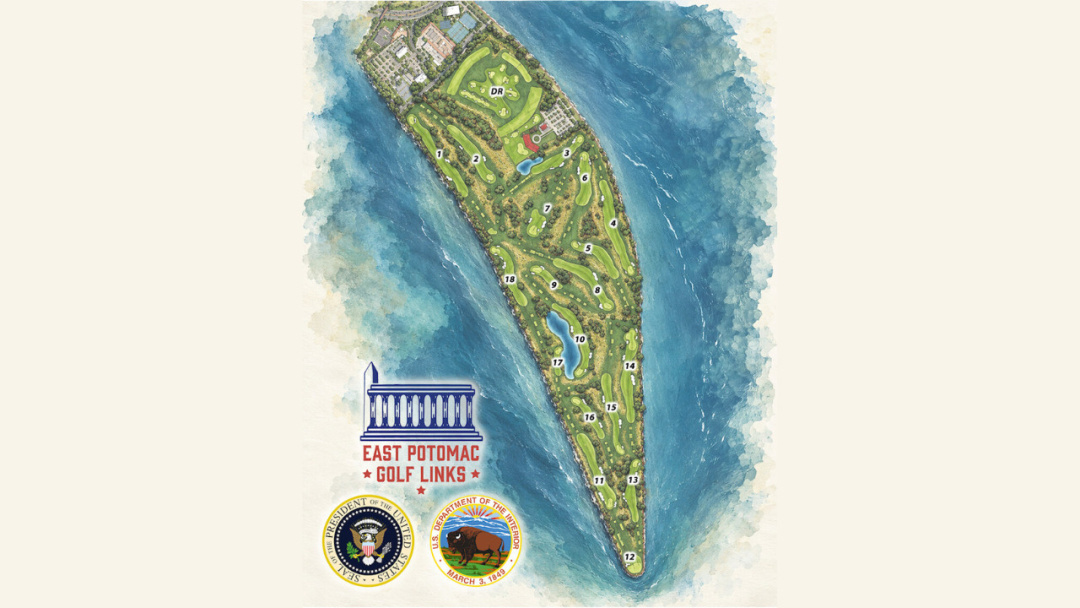
President Trump has proclaimed his intention to close the East Potomac Golf Course in Washington, D.C. for 15 months, all in the name of creating the world's most magnificent golfing experience. This announcement comes despite ongoing court challenges that are threatening to turn the project into a legal circus worthy of prime-time television.
In his latest social media post, Trump described the course as "old, broken, and dilapidated"—words that could equally apply to his administration's handling of court issues. The president's grand vision for the course includes not just a facelift but a full-blown spectacle that promises to attract world-class tournaments like the U.S. Open and the PGA Championship. One can only wonder if the upcoming legal hearings will be held in a more glamorous venue, perhaps under the bright lights of a newly refurbished clubhouse.
Still Beats Watergate:
Sponsor success. Continue reading:
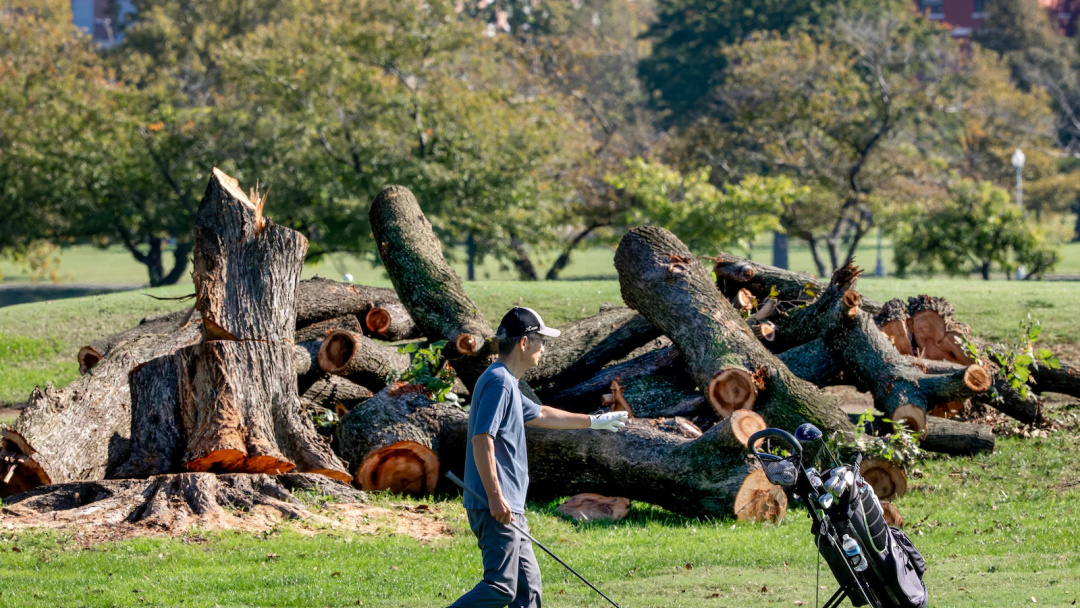
The president’s decision to move forward with the renovations has drawn the ire of a judge who recently put the brakes on the project, citing a hasty tree removal that redefined "timing" as a concept. The judge's rulings have become a pressing reminder that while Trump may play golf with ease, navigating the legal system requires a different skill set altogether. As the judge scolded the administration over its lack of notification regarding tree removals, it seems that the only thing getting cleared out faster than those trees might be Trump's plans for a smooth renovation.
As if the court battles weren't enough, Trump's justification for this ambitious project included a nostalgic nod to a time when the golf course boasted fewer trees and more views of the Washington skyline. It’s a classic case of looking back to a golden age that may or may not be compatible with today’s golfing realities—much like his administration’s vision for the future versus the legal obstacles at hand.
Community Voices Against the Renovation
Meanwhile, the plaintiffs fighting against this transformation, led by Democracy Forward, argue that this beloved community space is not merely the president's playground for a luxury golf course but a national park meant for all. Their goal is to protect this "community jewel" from what they perceive as a harmful intrusion, paving the way for what could potentially be the most publicized court case since Watergate.
With a federal court hearing looming, the stakes could not be higher. Will Trump's golf dreams prevail, or will they find themselves caught in a tangled web of legal disputes? Whatever the outcome, one thing's for sure: the golf course closure is shaping up to be a real hit on the political stage, a place where the only thing more questionable than the renovations may be the administration's grasp of legal ethics.
Your takeaway
As the administration pushes ahead with its plans, it can only hope that the legal challenges will fall away like errant golf balls into the rough. Perhaps the judge will take pity and allow some leniency for a president who simply dreams of a greener fairway, even if that means bulldozing a few trees along the way. And in a world where "the best" often comes at the expense of the common good, it's a reminder that sometimes the game of golf is not just about the swing; it’s about navigating a minefield of court orders and public sentiment.
Ultimately, as this litigation unfolds, one can only watch with bated breath—will the president's golfing aspirations turn into a majestic reality, or will they be forever marred by legal hurdles? In the world of politics and golf, where every swing counts, it seems that the real game is just beginning.