Obama's New Narrative Says Land is Just a Suggestion, Not a Right
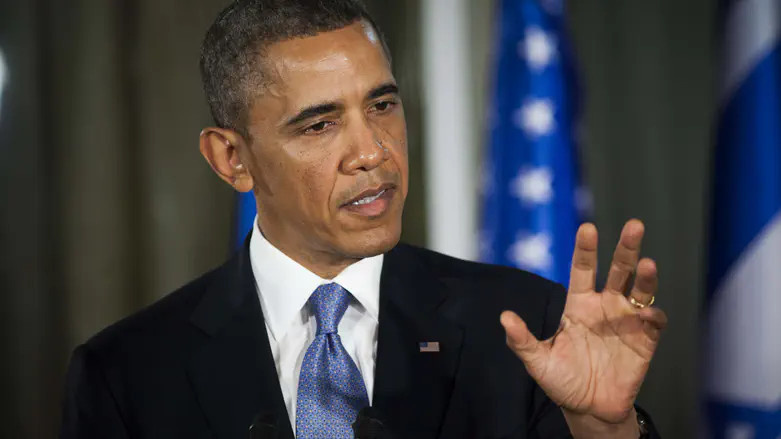
In a twist that only a former president could deliver, Barack Obama recently took to the podium in Belfast to redefine the very notion of land ownership. In a world where property deeds and historical claims reign supreme, Obama opted for a different approach: the narrative that land is merely a suggestion. According to his speech, Jews 'took land off people' as if they were simply borrowing a book from the library with no intention of returning it. This jarring statement was met with applause by those who favor a more ambiguous interpretation of historical events, proving that in politics, sometimes the story matters more than the facts.
The idea that the Jewish national home could be viewed as 'property seized by intruders' is a familiar trope, one that would make any scriptwriter envious. It's as if the history books have been rewritten to suggest that the Jewish return to their homeland was merely a spontaneous act, like a surprise party gone awry. Sure, let’s ignore the international mandates and agreements that actually recognized the Jewish connection to the land. Who needs context when you have a good story?
Still Beats Watergate:
Sponsor success. Continue reading:
Obama’s remarks echo sentiments popularized by figures like Edward Said, who painted a picture of victimhood that’s more cinematic than factual. The suggestion that the Palestinians were wrongfully dispossessed invokes a narrative that could fuel a dramatic miniseries yet fails to address the legal and historical nuances surrounding the establishment of Israel. It’s a narrative that conveniently skips over a century of complex history, as if it were trying to avoid a particularly awkward family reunion.
What’s even more absurd is how this narrative seems to ignore the fact that the Jewish people, often scattered across the globe, have maintained an unyielding connection to Palestine. A feat that defies logic! Imagine being uprooted from your home yet still managing to send heartfelt letters to it over the centuries, only to be told upon your return, 'Sorry, this place is taken.'
In a stunning display of irony, Obama’s comments may actually work in favor of those who aim to paint the Jewish connection to Israel as a whimsical notion rather than an inherent right. This rhetoric pushes the narrative that Israel is an occupier, conveniently overlooking the historical ties that Jews have to the land, ties that are so deep they could be classified as genealogical spaghetti.
As the speech concluded, one could almost hear the narrative gears grinding in the minds of those who heard it. Perhaps in the next iteration of this saga, Obama will suggest that land ownership should be based on who can tell the best story rather than who can present the best documents. After all, who needs legal rights when you have a compelling narrative?
The Disconnection Between Rhetoric and Reality
It’s almost charming how political rhetoric can sometimes turn history on its head. While the world watches with bated breath, Obama’s remarks may serve to redefine the essence of land ownership as one great big discussion topic. Perhaps we should start drafting a new set of property guidelines: land is available for anyone who can convince a crowd with a compelling narrative, rather than relying on pesky things like historical facts or legal frameworks.
In this brave new world of political messaging, it seems the only thing that remains constant is the desire to reshape reality to fit one's agenda. As we grapple with these evolving narratives, we must ask ourselves where this leaves the actual history of the region and the people who have lived there for generations.
In the quest for narrative dominance, let us not forget the principle that what you take may not always be yours to claim. After all, in the realm of politics, history is often like a buffet—everyone is taking what they want, and the leftovers are often forgotten.
Your takeaway
Ultimately, Barack Obama’s comments may simply be a reminder that in the world of political narratives, it’s not the facts that matter, but how well you can spin them. So, as we navigate this intricate web of conflicting histories and emotional appeals, remember: the truth is often just one narrative away from becoming fiction.