Trump's Golf Course Overhaul: A Hole-in-One for Legal Confusion
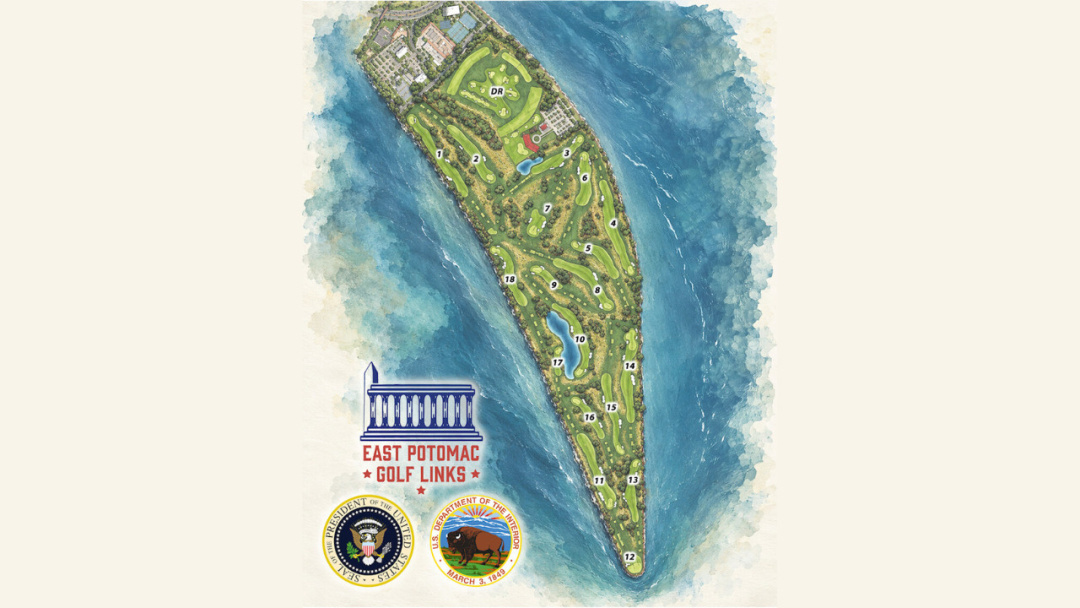
President Donald Trump has unveiled his ambitious plan to turn the historic East Potomac Golf Links into a "world class" golfing paradise, potentially capable of hosting major tournaments like the U.S. Open. This proposal comes with all the flair of a lavish golf retreat, designed to cater to both public interests and Trump's apparent vision of grandeur. However, the ongoing legal challenges from U.S. District Judge Ana Reyes have introduced a new set of hazards, akin to navigating a sand trap on the 18th hole.
The Department of the Interior, under the watchful eye of Secretary Doug Burgum, is reportedly working with renowned golf course architect Tom Fazio to bring this vision to life. Trump has promised that once completed, the course will be open to the public—while also being designed to the highest standards of elitism. It's a subtle nod to the kind of democracy where the public can watch the rich play, just like spectators at a gladiatorial arena but with fewer lions and more putters.
Still Beats Watergate:
Sponsor success. Continue reading:
While Trump paints a rosy picture of job creation and economic boosts for the D.C. area, he seems to overlook the glaring legal issues that have risen from his announcement. Hours after his grand proclamation on Truth Social, a judge had already taken notice of the project, ordering the government to clarify its stance by a fast-approaching deadline. One might say the judge is lobbing a legal ball right back into Trump's court, pun intended.
As the existing course prepares for a scheduled closure on November 15, Trump criticizes it as "old, broken, dilapidated," while conveniently ignoring the fact that his own plans come with a hefty legal price tag and environmental concerns. It’s almost as if he’s suggesting that the best way to solve the problem of a dying course is to pave over it with a new, shiny one while simultaneously demonstrating a lack of concern for the local flora. The irony is palpable—removing diseased trees to create 'spectacular views' feels less like a restoration project and more like a path to a new kind of scenic ruin.
Despite the promise of transforming East Potomac Golf Links into "one of the Best and Most Spectacular Golf Courses anywhere in the World," the project is already catching flak from environmentalists concerned about tree removal and the lasting impact on the area’s ecosystem. The judge's intervention couldn't have come at a more opportune time, as the outcry over tree removal echoes the cries of those who might miss the shade on a hot summer's day.
Golfing in a Legal Minefield
As the renovations loom, the intersection of golf and law becomes increasingly tangled. The court’s oversight might as well be a part of the design process—who knew that a golf course could bring such formidable legal wrangling? One could argue that the only thing more complex than the redesign plans is navigating the political and legal red tape surrounding it.
Yet, in true Trump fashion, the spectacle of the announcement seems to overshadow any substantial discussion about the legal implications. With the U.S. Golf Association and PGA Tour already in the loop, Trump appears to have his eyes firmly fixed on the prize: a championship course that might just land him another round of applause at a future press conference, assuming the legal chips fall his way.
In the end, as the judge sits poised to demand clarity on the government’s position, one can only wonder if this entire operation is just a high-stakes game of golf, where Trump swings his club amidst a flurry of legal obstacles, hoping for a hole-in-one amidst the chaos. The only real question left is whether the public will get a stake at the table, or simply a front-row seat to the spectacle of bureaucratic absurdity in action.
Your takeaway
As this spectacle unfolds, it remains to be seen whether the golf course will be transformed into the elite venue Trump envisions or if legal challenges will ultimately spoil the swing. What is clear, however, is that in the world of politics, every stroke counts—even if they are often just a swing and a miss.