White House's New Plan: Reparations for Mayors Who Don't Talk About Homicides
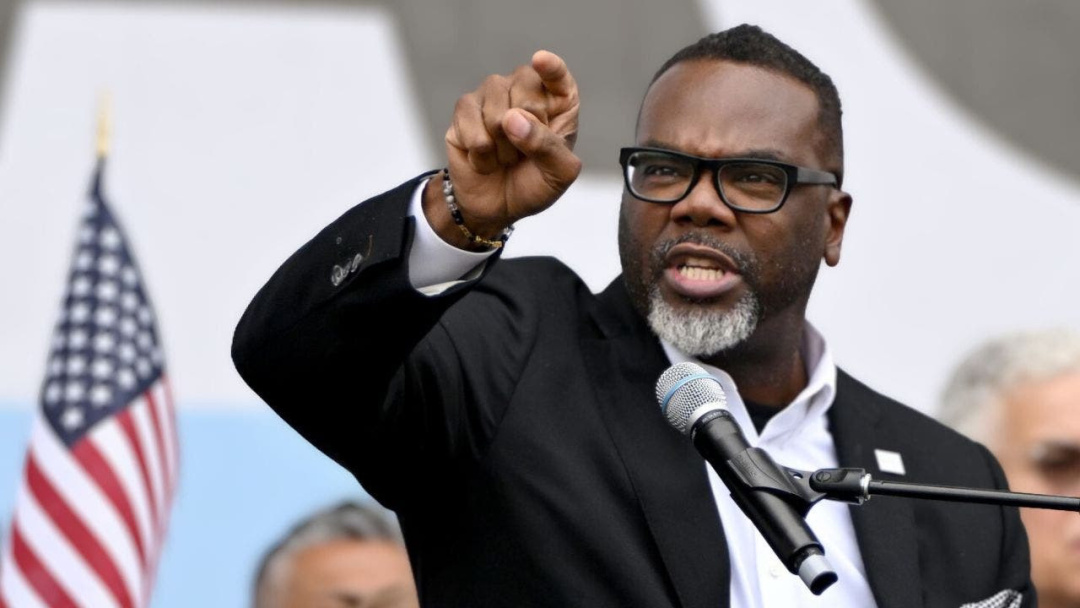
In a groundbreaking move that has the political world buzzing, the White House unveiled a revolutionary plan for mayors: focus solely on cutting homicide rates while suggesting that their reparations initiatives could use a little less attention. Chicago Mayor Brandon Johnson, who recently claimed that President Trump was too busy stimulating wealth for the rich to consider the needs of the descendants of the formerly enslaved, found himself on the receiving end of a pointed rebuke from the administration. Instead of engaging in the complexities of reparations, officials have directed Johnson to adopt a laser focus on local crime rates, effectively shifting the narrative from historical injustices to the immediate safety of the urban populace.
In a press conference that demonstrated the powers of political deflection, a White House spokesperson stated, "Government programs that dole out money based on race are illegal!" With this bold proclamation, they also urged Johnson to prioritize lowering the homicide rate over any divisive conversations about money. The juxtaposition is as clear as a sunny day: why tackle the intricacies of reparations when you can simply tell mayors to ignore them?
Still Beats Watergate:
Sponsor success. Continue reading:
This may come as a surprise to many, especially those in cities grappling with high crime rates, but the administration believes it has found the perfect solution to the challenges presented by urban policy: just stop talking about reparations! The White House’s strategic decision to encourage silence on historical reparations might inspire other cities to follow suit, paving the way for a new era of governance where reparations discussions are replaced with community policing talks.
Moreover, Johnson's previous achievements in reducing crime were brushed aside like crumbs on a table. The White House, showing impeccable timing, has diverted attention from these initiatives to suggest that mayors should simply accept responsibility for crime while simultaneously dismissing their calls for reparations—talk about a tightrope walk!
Silence as a Political Strategy
In a stunning twist, Johnson has been given a clear message: the less you say about reparations, the better. In a world where public safety is paramount, and historical grievances are muddied by political rhetoric, the White House has mastered the art of deflection. Perhaps, in this new landscape, the call for reparations can simmer quietly in the pot of bureaucracy while mayors like Johnson focus on crime rates, leading to a future where silence is not only golden but also politically expedient.
Affecting you
As the administration continues to advocate for a focus on local public safety, one can only wonder how long the mayor can walk this fine line. With the infamous "upward transfer of wealth" hanging in the air, will he dare to enter the realm of reparations again? Or will he find ways to keep the crime rate lower while the conversation around reparations remains tucked away in the archives of political discourse?
The only thing clearer than the White House's directive is the notion that reparations discussions may just be a necessary casualty in the ongoing pursuit of political expedience.