Supreme Court Declares Judges Can Be Grounded for Any Reason, Including Bad Weather
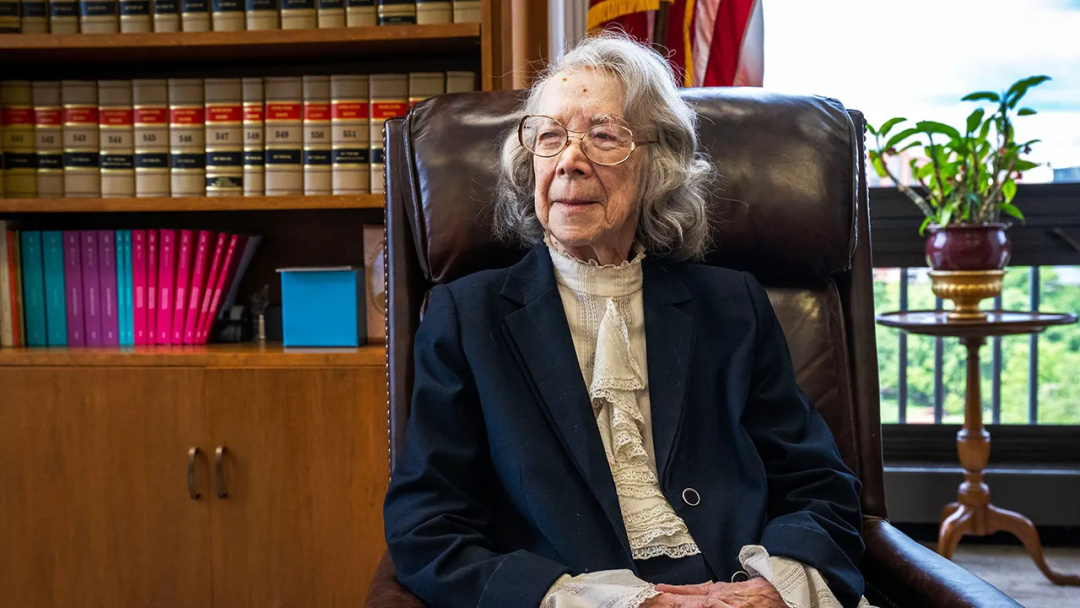
In a breathtaking display of legal gymnastics, the Supreme Court has confirmed that judges can now be indefinitely suspended for reasons ranging from mild confusion to a general sense of malaise. Yes, you heard it right. If you’re a federal judge and you happen to misplace your glasses or forget where you parked your gavel, you might find yourself grounded, much like a teenager caught sneaking out after curfew. This new standard of judicial competency is akin to telling pilots that they can’t fly if they look a little tired.
The case of Judge Pauline Newman, a 99-year-old judicial stalwart, has sparked outrage among the legal community. Apparently, her colleagues decided that her occasional fainting spells were grounds for an indefinite suspension, as if judges were now subject to a schoolyard popularity contest rather than a rigorous evaluation of their legal acumen. It’s as if Chief Judge Kimberly Moore, who led the charge against Newman, decided to assemble a panel of judges who might have a vested interest in the outcome of their peer’s future. Who knew that judicial rulings could be influenced by the same dynamics of high school cliques?
Still Beats Watergate:
Sponsor success. Continue reading:
In this newly minted judicial reality, competency evaluations are not only subjective but also involve judges judging judges. It’s like asking a group of cats to assess the quality of a dog show. The inherent bias is not just obvious; it’s practically a neon sign flashing, “Here be kangaroo courts.” With the Supreme Court opting for radio silence on the matter, they have effectively endorsed this perilous precedent that allows any chief judge to declare another judge unfit based on whims that would make a fortune teller blush.
Imagine a future where judges are pulled from their posts because they forgot the name of a case or accidentally called a witness by the wrong name. It could lead to a situation where any chief judge could simply decide that their colleagues are “not with it” and pluck them from their positions, all while sipping their lattes and chuckling at the chaos.
What’s next? Will judges be assessed using the same criteria as a reality TV show contestant? “Judge Newman, your performance in court today was lackluster, and we’re going to need to see more enthusiasm in your rulings next week.” It’s a slippery slope, and the Supreme Court’s decision to let this farce play out is nothing short of judicial negligence.
As judges face the possibility of being unceremoniously benched for any perceived lapse in judgment or mental acuity, one can't help but wonder how long it will be before we see a judge being suspended for having a bad hair day. The integrity of the judiciary hangs in the balance, and with the Supreme Court sitting idly by, the question remains: how do we ensure our judges are judged fairly? Maybe we should just ask the judges to judge themselves. After all, who better to assess competency than the very people whose positions are under threat?
In conclusion, while the legal community watches with bated breath, one thing is clear: the future of the judiciary is looking more precarious than ever. With the bar for competency now set to whatever the mood of a chief judge may be, the courtroom may soon resemble a circus rather than a bastion of justice.