NPR CEO to Receive First Amendment Award While Still Finding It a Challenge
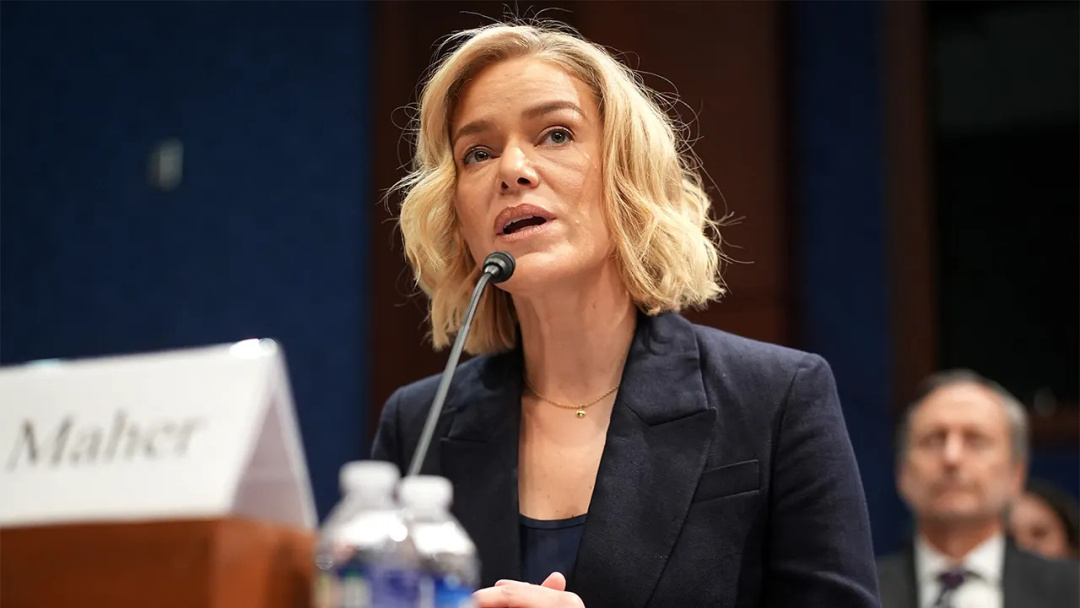
Katherine Maher, the president and CEO of NPR, is about to be honored with Harper's Magazine's prestigious First Amendment Award, a decision that undoubtedly leaves many scratching their heads. After all, Maher once famously deemed the First Amendment a 'challenge' in her quest to combat disinformation, a term that might send chills down the spines of free speech advocates everywhere.
In a press release, Harper's Magazine praised Maher for guiding NPR through waves of political, legal, and financial scrutiny, equating her efforts to the valiant battles fought in the name of journalism. One can’t help but wonder if this award is a reward for navigating challenges or merely an acknowledgment of her remarkable ability to redefine the parameters of free speech, all while insisting that it is a bit of a hassle to manage.
Still Beats Watergate:
Sponsor success. Continue reading:
With the magazine singling out her leadership during President Trump’s efforts to defund NPR—an endeavor that has since resulted in a rescinded $1.1 billion federal funding cut—one might expect a rousing endorsement of the First Amendment. However, the irony is deliciously thick. Maher’s previous musings on the First Amendment as a cumbersome obstacle in the fight against bad information hardly scream ‘First Amendment champion’. Instead, they could be interpreted as an admission that perhaps free speech should come with a few asterisks.
As if to sweeten the pot, NPR has been the subject of scrutiny for its coverage choices, including its infamous decision to downplay the Hunter Biden laptop story. Maher has since acknowledged a misstep there, which raises the question: how can an organization that struggles to balance editorial choices amidst fierce political winds simultaneously hold the moral high ground in a First Amendment debate?
Irony in NPR's First Amendment Advocacy
NPR is now waving the First Amendment flag with a fervor that would make one assume that Maher had penned the Constitution herself. Yet, her past remarks frame a rather ironic picture—a picture where the rights to express dissenting opinions might be seen as inconvenient.
As Maher prepares to accept this award, one can only imagine the internal monologue: will she acknowledge that her own definition of the First Amendment might contradict the very spirit of the honor she is receiving? The fact that she once considered the Amendment a 'challenge' could lead to an awkward acceptance speech, rife with euphemisms that dance around the fact that her past and present positions are not exactly on speaking terms.
Affecting you
Her comments on the First Amendment being a tricky hurdle conveniently gloss over the reality that the amendment exists precisely to allow for the very dissent she finds problematic. Perhaps the irony will be lost in the applause, but surely, this award ceremony will be a prime example of how far removed rhetoric can be from reality.
In closing, one must ponder: what does it truly mean to defend the First Amendment in an era where its very essence can be seen as a hindrance? As Maher steps onto the stage to claim her prize, one might wonder if this is less a celebration of free speech and more a marvelous balancing act of contradictions. It’s a spectacle to behold, indeed.