White House Plans to Fix AI Oversight by Directing Traffic at CAISI
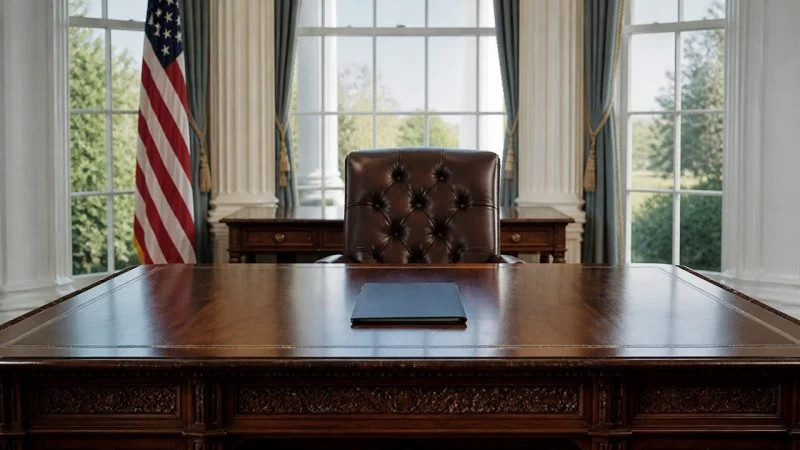
In a stunning display of bureaucratic ingenuity, the Commerce Department has decided that the best way to tackle management and resource problems at the Center for AI Standards and Innovation (CAISI) is to have it report directly to the White House. This ground-breaking plan, described as an operational upgrade, suggests that oversight from the very top is just what’s needed to make everything run smoothly, particularly when everything else has turned into a chaotic mess.
CAISI, currently nestled within the National Institute of Standards and Technology, has been busy collaborating with major tech titans like OpenAI, Google, and Microsoft. However, if it’s so busy trying to rein in the wild west of AI, why not pull it into the White House fold? Commerce insists that this will streamline operations, even if the past year has seen a revolving door of directors and a complete halt to public model assessments. Clearly, when it comes to AI governance, nothing says efficiency like a game of musical chairs at the top.
Still Beats Watergate:
Sponsor success. Continue reading:
The idea that moving CAISI to report directly to the White House will magically solve its leadership problems is deliciously ironic. After all, the agency’s previous incarnation—the US AI Safety Institute—was also subject to a rebranding effort that has done nothing to enhance its stability or effectiveness. This latest strategy seems to imply that if the White House is in charge, all problems will be solved. Perhaps the magic words are "executive oversight," which usually translates to "we're aware there's a problem, but we’re not equipped to fix it."
Under the proposed plan, companies working with CAISI can expect a shift in the nature of their collaboration. While these firms have previously engaged with CAISI on a voluntary basis, the new oversight suggests a potential for classified benchmarking led by security agencies. In other words, get ready for a whole new level of scrutiny that may leave developers wondering if they signed up for a partnership or a high-stakes game of bureaucratic roulette.
Challenges of Global AI Cooperation
The implications for international collaboration are particularly amusing. As AI development knows no borders, limiting CAISI’s ability to coordinate with international counterparts threatens to isolate US firms in a rapidly globalizing field. Commerce’s pitch for a direct line to the White House assumes a kind of transparency that has been notably absent from recent governance decisions, leaving developers with a convoluted mess instead of clear guidelines.
At the end of the day, one must wonder whether this oversight will serve to illuminate or obfuscate the realities of AI governance. As CAISI prepares for its moment in the White House spotlight, it may find that the promised operational upgrade looks suspiciously like the same old charade with a new coat of paint.
Your takeaway
As we watch this latest chapter unfold, the real questions are whether CAISI will finally gain a permanent director or if the carousel of acting leadership will continue to spin. Will public assessments of AI models resume, or will the classified approach become the new normal? In the end, one thing is clear: the road ahead for CAISI is fraught with uncertainty, and it’s anyone’s guess whether this shift will lead to meaningful improvements or just more of the same.
So, as the White House prepares to tighten its grip on CAISI, keep an eye on just how this new direction plays out. One can only hope that when it comes to AI governance, they remember that oversight doesn't mean oversight. It just means someone else is now responsible for the chaos.