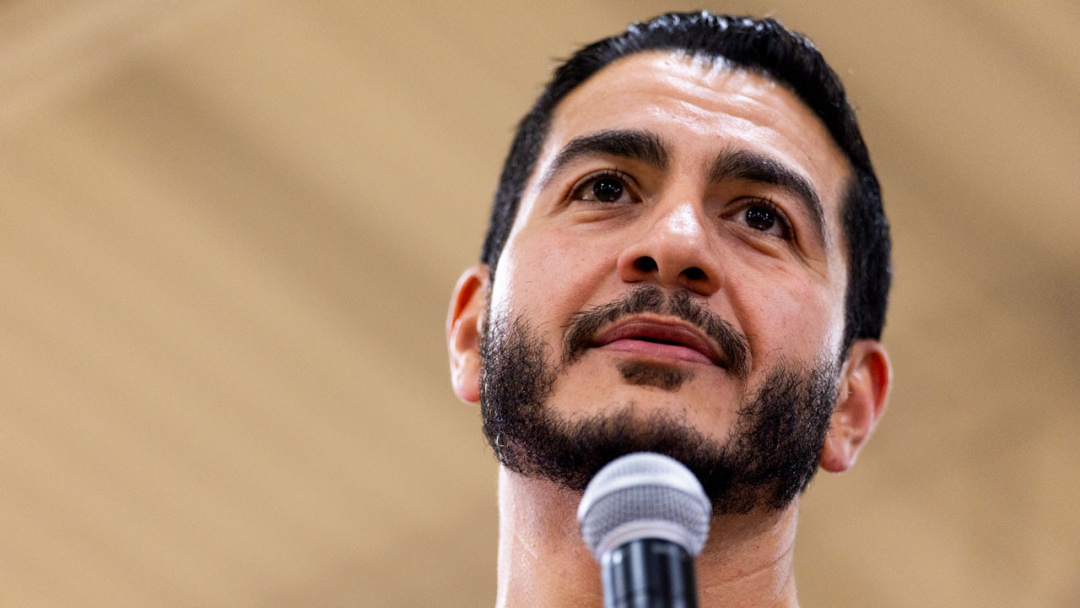
Graham Platner: The Candidate Who Refused to Be Canceled

In a move that has left political analysts scratching their heads and party strategists reaching for the nearest bottle of antacids, Graham Platner, the Democratic candidate whose campaign was marred by controversy, has announced he will be suspending his campaign rather than officially withdrawing. This bold strategy seems to be less about stepping back and more about keeping his options open, a classic political maneuver that has left the Democratic establishment feeling more than a little queasy.
Platner, a self-proclaimed "oyster man from Maine," has made headlines for all the wrong reasons. His social media escapades, including questionable associations and a tattoo that would make any history teacher blush, have created a whirlwind of scandal. Yet, despite the revelations about his past that would make even a seasoned soap opera writer raise an eyebrow, he managed to secure an impressive 70% of the primary vote. Apparently, the voters of Maine were more enamored with the idea of a socialist candidate than they were concerned with his personal history.
Still Beats Watergate:
Sponsor success. Continue reading:
However, things took a turn for the worse when a credible accusation of assault emerged, one that the Democrats could no longer ignore. Suddenly, Platner's previous support began to evaporate faster than a snowflake on a summer sidewalk. With poll numbers dropping like a rock, the party's leadership finally decided it was time to intervene. They clearly realized that a candidate with such a problematic past could jeopardize not just a seat but the entire party's credibility.
But rather than gracefully bowing out, Platner’s decision to suspend his campaign has the whiff of defiance. It’s almost as if he’s daring the Democratic Party to push him out while he keeps his name on the ballot, ready to play the sympathy card if they try to ditch him. This strategy, reminiscent of a bad reality TV show subplot, indicates that he’s not just any candidate; he’s a wildcard, and that makes him dangerously unpredictable.
In a world where political careers can be ended with a single tweet, Platner’s tenacity is remarkable. He’s flipping the script on the typical political exit strategy, opting instead for a more theatrical approach. Instead of a quiet exit, he’s putting on a show, raising the stakes and perhaps hoping to capitalize on the chaos. It's a classic case of "I’m not leaving until I see how this plays out," and it’s making everyone nervously check their watches.
As he navigates this precarious political landscape, it’s clear that Platner has grasped one fundamental truth about modern politics: controversy can often be a ladder rather than a noose. The Democratic Party might have thought they were rid of him, but as long as his name remains on the ballot, the ghost of Graham Platner will haunt their campaign strategy.
In this age of hyper-partisan politics, where authenticity is often overshadowed by ideology, Platner’s saga highlights the absurdity of the political machine. The Democratic Party may be scrambling for a more palatable candidate, but until then, Platner is proving that sometimes, being the bad boy of politics can be just as effective as being the golden boy.
As the saga unfolds, one can only wonder how this will all play out. Will he become the Al Franken of Maine, or will he manage to turn this scandal into a second act? One thing is for sure—this isn’t the last we’ll hear from Graham Platner, the candidate who refused to be canceled, at least not yet.