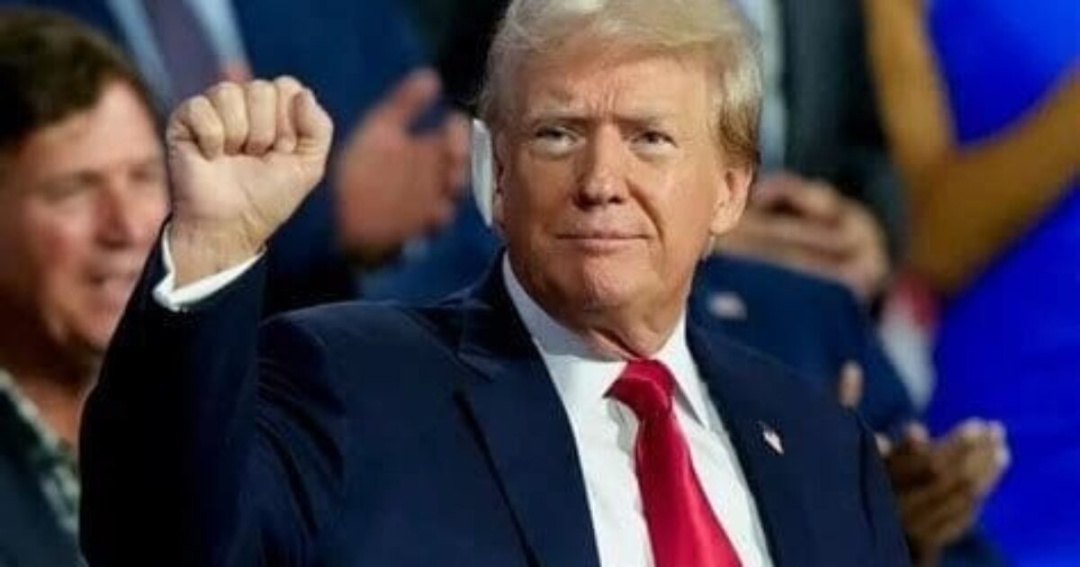
Trump Declares Debate Victory for Rogers, Claims He 'Obliterated' El-Sayed into Next Week
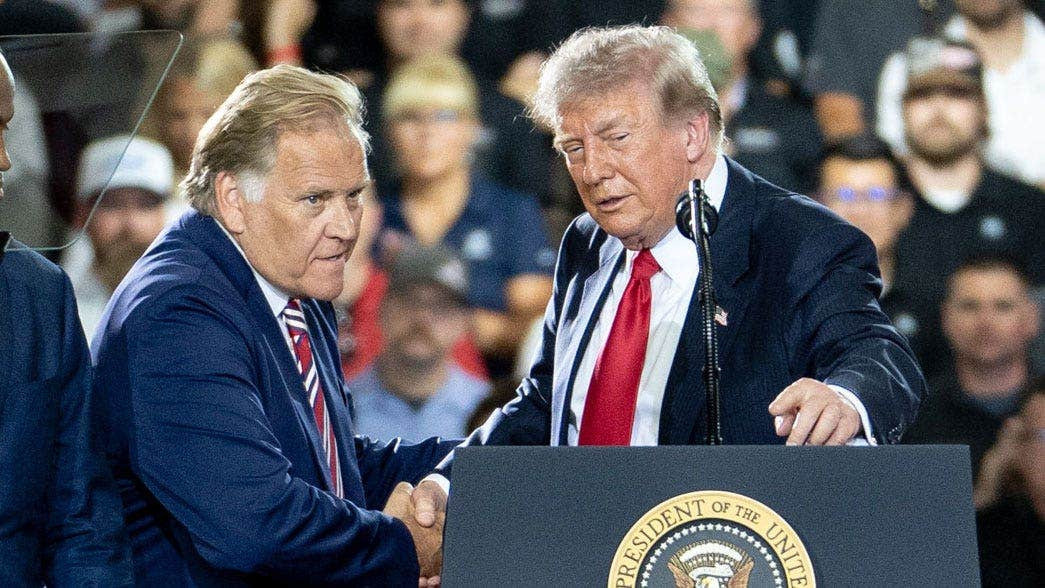
In what might be one of the more dramatic debates in recent memory, President Trump boldly asserted that Mike Rogers, the Michigan GOP candidate, didn't just win against Abdul El-Sayed but rather 'obliterated' him. According to Trump, if the debate had been a boxing match, referees would have stopped the action due to the sheer magnitude of the alleged beatdown.
The President's post-debate analysis on Truth Social was an enthusiastic endorsement of Rogers, who, according to Trump, transcended the normal boundaries of debate performance, entering a realm beyond mere rhetoric into the territory of gladiatorial combat. "Mike Rogers, the great American Patriot and Republican Candidate for the U.S. Senate from Michigan, completely obliterated Mohammad El-Sayed in the big debate tonight," Trump claimed, showcasing his penchant for hyperbole.
Still Beats Watergate:
Sponsor success. Continue reading:
Yet, one must wonder about the implications of such vivid language. Did anyone actually witness the debate, or was it merely a spectacular performance existing wholly within Trump's boundless imagination? After all, if obliteration was indeed the measure of success, it raises the question of how candidates can ever recover from such a crushing defeat. Perhaps El-Sayed is currently plotting his comeback from the depths of debate oblivion, much like a phoenix rising from the ashes—or at least a moderately warmed-over political narrative.
In his tirade, Trump didn’t hold back, labeling El-Sayed as a "Jihadist lunatic who hates our Country" and questioning his stature, patriotism, and truthfulness. It seems that while Rogers was busy 'obliterating' his opponent, Trump was conducting a rhetorical bombing run, dropping incendiary remarks with abandon. The administration’s strategy appears to hinge on conflating aggression with political prowess, but perhaps this tactic could use a little fine-tuning before it becomes the new normal.
With El-Sayed firing back, pointing out Trump’s failure to acknowledge the realities facing citizens today, it becomes clear that political narratives are often littered with obfuscation and distraction. El-Sayed argued, "He thinks he can use my name and my faith to distract us from the suffering his policies are inflicting on us at the pump, at the grocery store, and at the doctor’s office." Is this what it means to fight for the heart of America?
A Battle of Ideologies
As the debate rages on, it becomes evident that the real battle may not be about policy at all, but rather about who can deliver the most absurd soundbite. In a world where obliteration is a measure of success, perhaps we should prepare for future debates to be held in gladiatorial arenas, complete with the cheering crowds and perhaps a few lions for good measure. After all, America loves a good spectacle, especially when it involves a healthy dose of hyperbole and a dash of melodrama.
In this context, Rogers may have won the debate, but it feels like America lost a little piece of sanity along the way. The question remains whether we will ever return to reasoned discourse, or if we’re doomed to witness ever more theatrical political performances.
What This Means for the Future
As we look ahead, one can only hope the stakes of political engagement will evolve from mere obliteration back to meaningful dialogue. But if the past few months are any indication, we might just be treated to more rounds of this political bloodsport. One thing is for sure: in the realm of Trump’s political theater, reality is merely a suggestion, and obliteration is just another debate tactic.
The absurdity of it all leaves one wondering if anyone truly remembers the issues at hand or if we’re all just spectators in this grand political circus.