Vance Takes a Stand, Refuses to Watch Execution He Didn't Approve
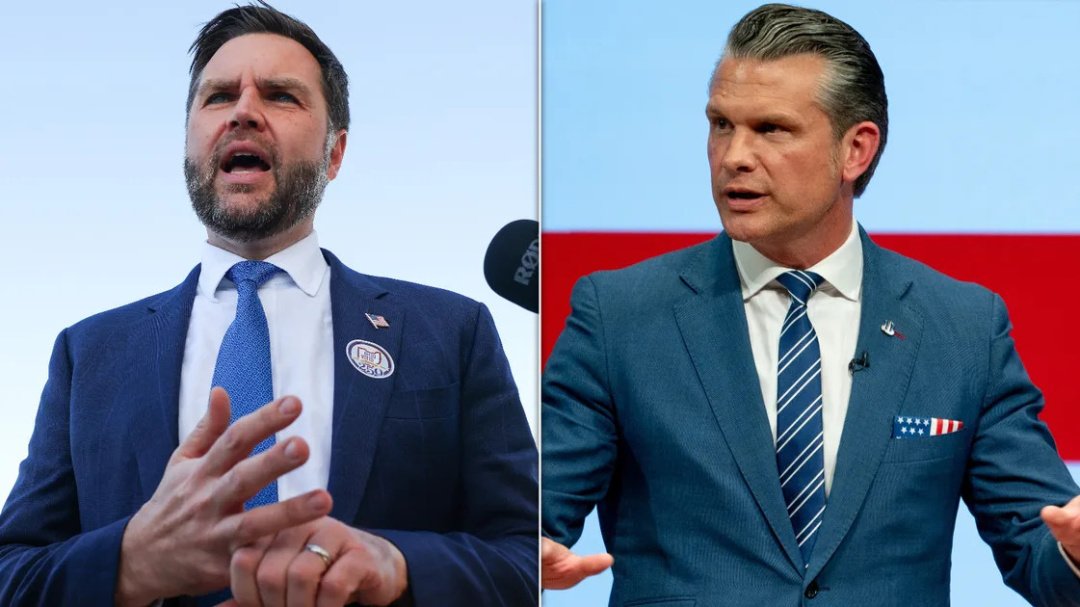
In a bold move of selective disengagement, Vice President JD Vance declared he wouldn’t be watching the scheduled public execution of Army Maj. Nidal Malik Hasan—if it even happens at all. Vance stated, ‘I’ve seen those announcements,’ as if the Pentagon were merely announcing the latest reality show instead of a death sentence. The Pentagon, led by Defense Secretary Pete Hegseth, has confirmed that this execution will be the first live-streamed event of its kind since 1961, which raises pressing concerns about the future of entertainment in a world already rife with horror.
Vance's reluctance comes amidst the rapidly evolving spectacle of American justice, where the line between solemnity and showbiz has been irrevocably blurred. Hegseth, aboard the USS Abraham Lincoln, announced this plan as if he were promoting a blockbuster event, declaring, ‘We’ll make sure that people are able to watch it, that it’s public, because people need to understand that there’s serious consequences for these types of things.’ Clearly, nothing screams ‘serious consequences’ like a ticket to the front row of a public execution.
Still Beats Watergate:
Sponsor success. Continue reading:
The absurdity deepens as Vance, a practicing Catholic, distances himself from the execution while simultaneously condemning Hasan's actions, labeling him ‘the worst terrorist attack on American soil outside of 9/11.’ It seems Vance is quite skilled at separating the act of executing a man from the moral implications of that act—an impressive feat in bureaucratic gymnastics.
Meanwhile, the public awaits this modern spectacle, where executions are treated like primetime events, ensuring that the horrors of war and betrayal are packaged neatly for mass consumption. And while Vance insists that he won't watch, it raises the question: what does it mean when our leaders publicly distance themselves from the choices they make? Perhaps that’s the real entertainment—watching politicians wriggle out of accountability like they’re auditioning for ‘Survivor: Washington.’
The upcoming execution is being hawked with a zeal usually reserved for blockbuster movie premieres. Little do they know that the 'viewership' is likely to turn into a national debate about morality, entertainment, and the future of capital punishment versus the public’s desensitization to violence. And as the date approaches, one can only hope that the executives of this grim show remember to carry out their production with a modicum of sensitivity—though historically, that seems as likely as a cat winning a dog show.
Executions as Spectacle
As discussions evolve around the ethical implications of public executions, one can't help but reach for the popcorn. Vance's comments could be interpreted as an attempt to salvage some semblance of human decency amidst a spectacle that could very well redefine the line between justice and entertainment. Yet, let’s not forget that this is the same administration pushing for an unprecedented surge in federal executions—vigorously advocating for a system that seems more concerned with ratings than righteousness.
The reality is that the execution will happen whether Vance tunes in or not. His protestation is reminiscent of a child covering their eyes during a scary movie, hoping that the violence stops if they can’t see it. In a world increasingly desensitized by brutality, perhaps the only shocking element left is the audacity with which public officials approach the grave matters of life and death.
Your takeaway
As the date approaches, we are left to ponder the implications of what it means for a society to not just sanction but promote such acts. Vance may not watch, but the rest of the nation will be forced to confront the existential questions that arise from turning justice into a public spectacle. Will the viewers be enlightened, or will they simply tune in for the thrill of the execution? The irony is rich, and perhaps we’re all just players in this grotesque theater of the absurd that defines our modern political landscape.