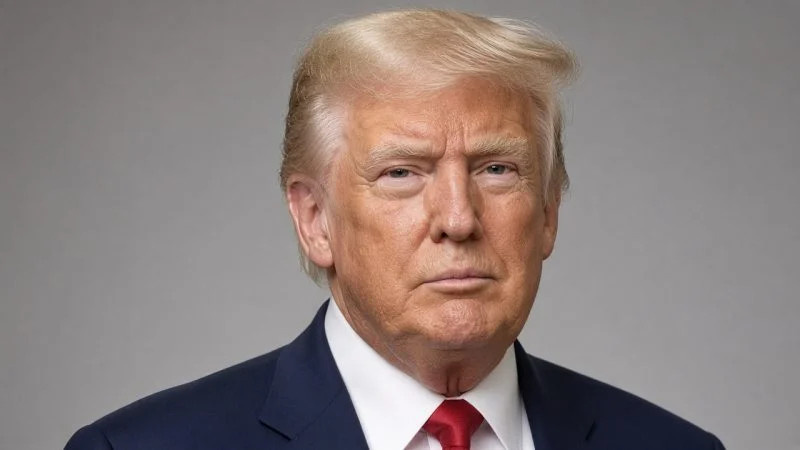
Trump Celebrates 'Golden Age' of Science by Awarding Medals to Science Fiction Stars
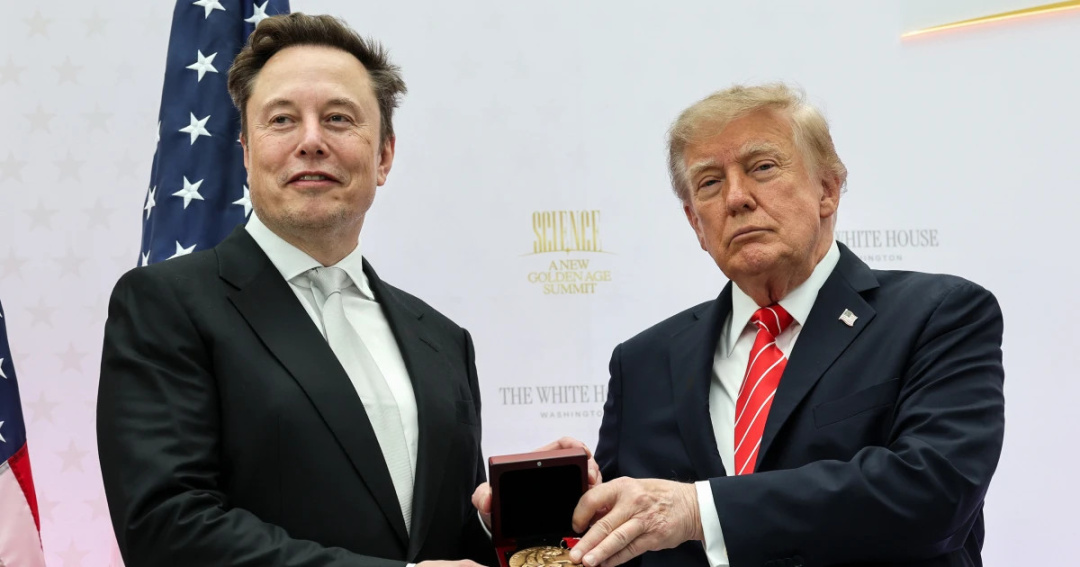
In a rare moment of sincerity during a White House event, President Trump proudly gathered a cadre of America’s most illustrious tech leaders to announce what he boldly termed the onset of a "golden age" of American science. Among those basking in the glow of presidential adoration were the likes of Elon Musk and Sergey Brin, who presumably were just happy to be remembered amid the existing social media chaos.
The summit, dubbed "Science: A New Golden Age," was held in a venue best known for its peace-promoting mission, a tantalizing juxtaposition to the national chaos reigning outside its walls. Trump presented National Medals of Science to tech titans like Musk, with the enthusiastic proclamation that they would "go down in the annals of history as being great," which, tragically, may lead to a future that needs a lot of erasing.
Still Beats Watergate:
Sponsor success. Continue reading:
As the cameras flashed, Liz Huston, a spokesperson for the administration, articulated the White House's gratitude for these "incredible leaders in science and technology," likely hoping the taxpayers wouldn't notice the irony as they simultaneously discussed tightening immigration policies. One can only imagine the enthusiasm of the tech sector as they secure their medals while their immigrant workers anxiously await the next administrative decree.
Unsurprisingly, the event coincided with Vice President JD Vance's announcement of a green card suspension for several tech companies, including the very Microsoft whose CEO had just been honored on stage, marking a splendid example of the administration’s commitment to consistency—specifically, the kind that raises eyebrows and evokes outright confusion.
Celebrating Contributions Amidst Contradictions
The day continued with rhetoric that glorified immigration’s contribution to American science—immigrants who had just become the scapegoats for a multitude of policies—artfully dodging the fact that their contributions were essential to the very innovations being celebrated. The irony hung heavier than a cloud of political theater, with speakers like Nvidia’s Jensen Huang reminding the audience that America’s scientific progress relies on welcoming the world, even as the doors were slamming in the faces of prospective talent.
As the closing remarks drew nearer, Trump, channeling an almost Shakespearean flair, insisted that we are now in a golden age, presumably without realizing he was confusing the glitter of medals with the substance of policy. Touting advancements in artificial intelligence, now rebranded as "super intelligence"—because, of course, regular intelligence wasn’t nearly pretentious enough—the administration looked to the future with the same optimism that has characterized its recent past: uncertain and vaguely threatening.
The Reality of Innovation
In a world where science meets spectacle, amidst promises of streamlined processes and funding for new initiatives, it becomes clear that the administration’s plan hinges less on actual scientific advancement and more on throwing a glittering event that distracts from the bureaucratic congestion it claims to abhor. The approaches discussed reflected not a pathway to progress but rather a convoluted maze where funding favors the familiar and established, while truly groundbreaking ideas languish in administrative purgatory.
As the day concluded with the obligatory pep talk from an award-winning physicist who claimed we’re living in "exciting times," one can’t help but wonder what sort of excitement lies ahead. Will it involve genuinely revitalizing science, or will it be a spectacular illusion of progress?