Schröder Celebrates Putin's Birthday, Claims Excuse Was Just a Side Dish
Former German Chancellor Gerhard Schröder has taken the art of political networking to new heights or depths—depending on your perspective. In what can only be characterized as an incredibly bold move, he attended Vladimir Putin's 74th birthday party in Moscow, reportedly under the pretense of addressing business matters. If one were to believe the Kremlin's narrative, Schröder was merely in town to oversee affairs at the newly minted Hyperglobus supermarket chain. Clearly, nothing says 'business trip' like a birthday celebration with a world leader, right?
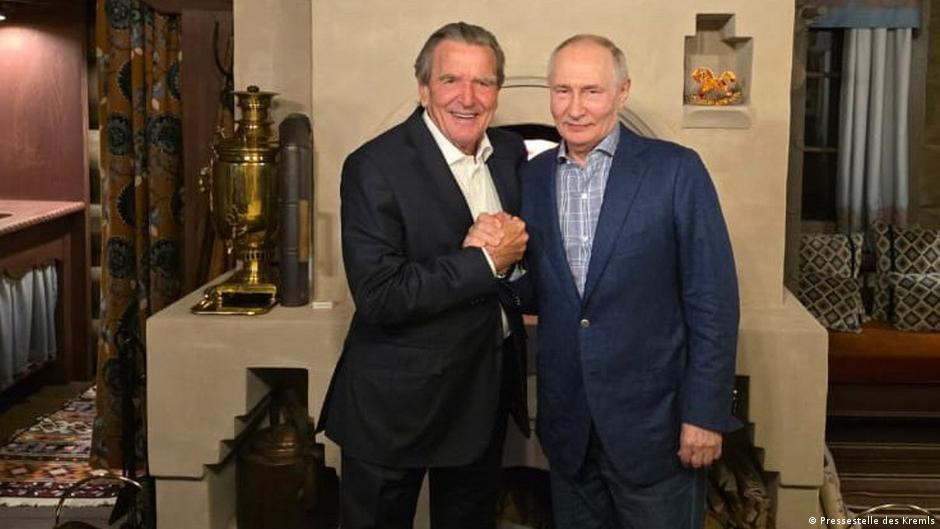
The Kremlin was thrilled to announce Schröder's appearance, complete with cheerful photos of the two men clasping hands and sharing smiles that could light up the darkest of diplomatic disputes. One can only assume that such camaraderie over cake is how international relations are conducted these days—who needs treaties when you have pastries?
Still Beats Watergate:
Sponsor success. Continue reading:
Despite the warm embraces and toasts, the optics are far from benign. Schröder's fondness for the Russian president has drawn ire back home, particularly in light of ongoing tensions following Russia's invasion of Ukraine. His attendance at the birthday bash is being viewed not only as a personal gesture but as a public relations nightmare for the Social Democratic Party (SPD), which has been struggling to distance itself from Schröder's increasingly controversial ties.
In an age where political figures are often scrutinized for their associations, Schröder appears unfazed, having weathered attempts to oust him from the SPD. Perhaps the party's motto should be 'unity through awkward reunions with despot friends,' which certainly seems to be working for Schröder.
As he mingled with the elite at a lavish Russian celebration, one can only wonder how many business deals were struck over vodka shots and cake. The contrast between the festive atmosphere and the reality of geopolitical strife is striking—like mixing champagne with conflict. After all, who wouldn’t want to celebrate a birthday while their country is at the center of a global crisis?
A Festive Yet Tense Affair
The bizarre juxtaposition of Schröder’s attendance amid international outcry showcases the intricate dance of diplomacy where personal friendships often overshadow political repercussions. Instead of being an outright condemnation of Russia's actions, Schröder's birthday visit has turned into a twisted form of validation, with critics arguing that the ex-chancellor’s presence sends all the wrong messages.
While some might argue that personal relationships are vital in diplomacy, one can't help but question if a birthday party is the optimal setting for such interactions. Was there a cake flavored with accountability? Or perhaps a slice of responsibility hidden beneath layers of frosting? Unfortunately, those are questions that will remain unanswered as the two leaders enjoy their festivities while the rest of the world watches in disbelief.
As the party winds down, the lingering questions about Schröder's loyalties persist. In the world of international relations, it seems unclear whether his actions are a cause for concern or simply an elaborate performance art piece performed on the global stage. In any case, the next time a business trip is mentioned, one might just check the guest list for any surprise birthday bashes, because nothing says 'serious diplomacy' like cake and confetti.
Your Takeaway
In the end, Schröder's decision to celebrate with Putin may not only have implications for his political career but also for how we perceive the intertwining of personal relationships and public responsibilities. It seems the line between business and pleasure is not just blurred but decorated with balloons and a very large cake. As Schröder continues to navigate this sticky situation, one thing is clear: political ties are complicated, especially when they come with a side of birthday cake.