Trump Turns Disaster Relief into Campaign Propaganda, Wonders Why It Didn't Work Last Time
President Trump has officially declared disaster relief a major campaign tool, turning emergency aid into the latest buzzword for his midterm election strategy. With a hurricane barreling toward the Gulf Coast, he’s promising millions in disaster funds while endorsing every Republican in sight, proving once and for all that there's no better way to secure votes than by dangling the lifeline of taxpayer dollars in front of desperate communities.
In a brilliant display of political acumen, Trump recently endorsed Wisconsin gubernatorial candidate Tom Tiffany while tossing around a casual $17.9 million disaster fund pledge, because what says ‘trust me in a crisis’ better than a side of political favoritism? Critics are scratching their heads, wondering how the administration’s approval of disaster declarations can coincide with campaign stops like a well-rehearsed magic trick. "Poof! Here’s your funding, now vote for my friend," seems to be the message.
Still Beats Watergate:
Sponsor success. Continue reading:
At a recent rally in North Carolina, Trump took his act to new heights, joking about withholding funds from the state if Republican candidate Michael Whatley didn't win. "Just kidding!" he chuckled, as if joking about the suffering of disaster victims is a new form of comedy. But for many, this isn’t a laughing matter; it’s an indication that political calculations can drown out genuine humanitarian concern. After all, nothing screams "compassionate leadership" like mixing disaster recovery with electioneering.
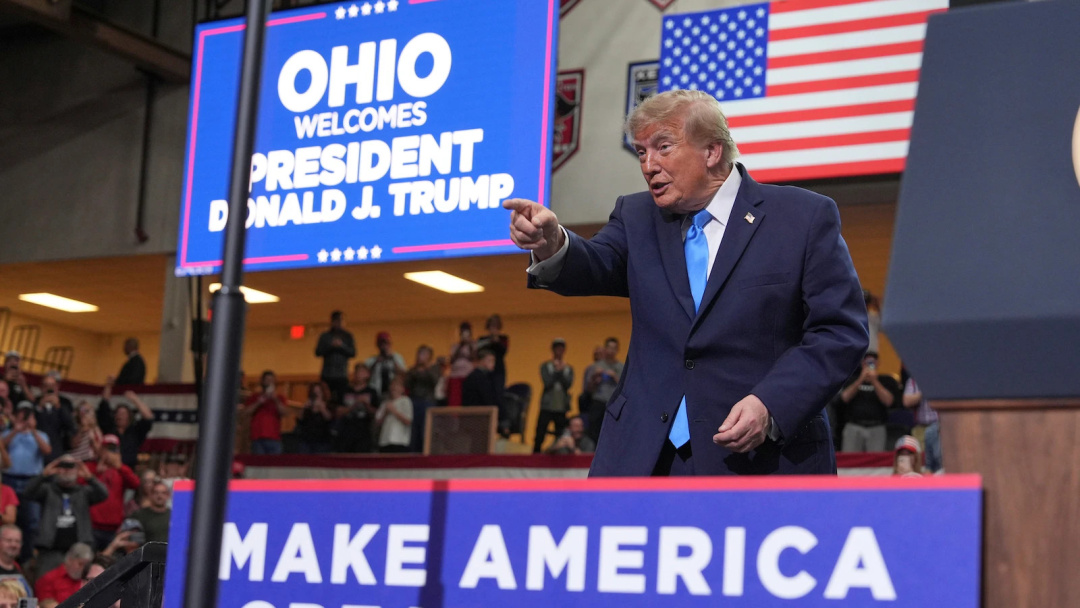
The White House insists there’s no politicization happening here, claiming that any connection between disaster aid and electoral success is simply a figment of the imagination. Yet, when disaster declarations are being approved in pivotal battleground states like Ohio right before rallies, one can’t help but wonder if Trump’s scheduling assistant is moonlighting as a political strategist.
Amidst all this chaos, advocates for disaster survivors are left shaking their heads. They argue that recovery should not be a partisan issue. "Recovery isn't partisan," stated Sierra Lindsey-Kos, co-founder of an advocacy group. It’s an astute observation, yet one that seems lost on an administration eager to capitalize on human suffering for a potential electoral boost.
Disaster Aid and Political Favoritism
Critics have pointed out that Trump’s favoring of disaster aid to states that voted for him is more blatant than a toddler with cookie crumbs on his face. An analysis revealed that over 75% of disaster requests from Trump-supporting states were approved, while less than half from states that identified as non-supportive saw the same treatment. It raises eyebrows and questions about the integrity of the disaster relief process as a whole.
So as the winds pick up and the clouds darken, one has to wonder: will Trump’s campaign tactics weather the storm? Or will voters see through the thin veil of political maneuvering? With a hurricane on the way and disaster funds on the line, the stakes are high, but let’s just hope we’re not left holding the bag when it’s all done.
Your Takeaway
This bizarre intertwining of political ambition and disaster relief brings us to a surreal fork in the road. Voters are left to evaluate whether their communities deserve aid based on who they supported in the last election. As local officials scramble for funding while Trump’s rhetoric spins like a twirling tornado, one can only hope the true needs of disaster survivors won’t get lost in the electoral crossfire. Yet, with Trump’s past comments floating around, it seems we might just be at the mercy of not just the storm, but the whims of a campaign in full effect.
Ultimately, while Trump might see disaster relief as a path to political glory, communities rebuilding from disaster should not have to barter their dignity for votes. In the game of political theater, let’s hope that the aid for those in need isn’t just another pawn on the campaign chessboard; because when the dust settles, it’s the voters—and victims—who will want more than just promises that blow away with the wind.