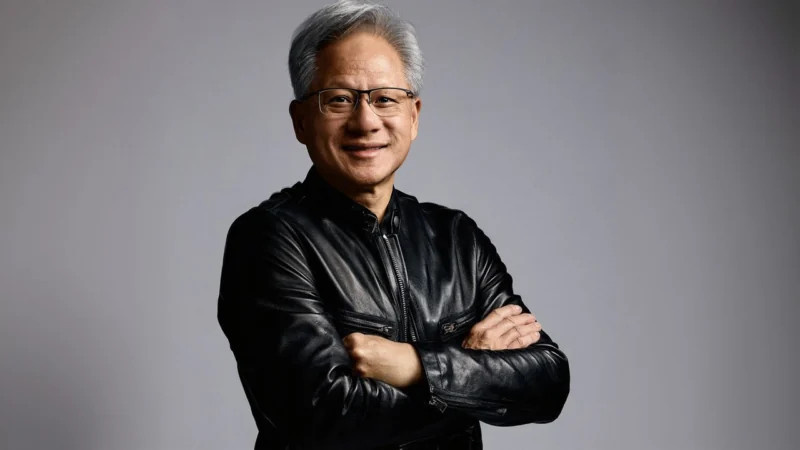
White House AI Czar Visits Silicon Valley to Discuss Innovation and Existential Risk
In an effort to stave off the impending doom of AI overlords, Jay Clayton, the White House's newly minted AI czar, is on a mission to Silicon Valley to have a nice chat with tech titans like Jensen Huang and Sam Altman. You know, just the casual meet-and-greet kind of event where national security and innovation are discussed over coffee and pastries.
This marks Clayton's first significant foray into the tech scene since taking on the dual role of Director of National Intelligence and AI czar, a title that seems to combine the gravitas of national security with the whimsy of a startup pitch meeting. Perhaps he envisions a future where regulations are as light as the foam on his latte while he sips it in a cozy café, pondering the fate of humanity in the hands of algorithms.
Still Beats Watergate:
Sponsor success. Continue reading:
Clayton's ambitious 120-day review on AI risks and opportunities sounds like a grand endeavor, but let's be real: it's probably just an extensive PowerPoint presentation that he plans to roll out to the Super Intelligence Force, a charmingly named group that includes familiar figures like Vice President JD Vance and former Secretary of State Condoleezza Rice. What a lineup! One can only hope they will have enough time to discuss the finer points of machine learning before jumping into a debate over who gets to decide the fate of the world.
As the tech moguls gather to sign the “White House Accord on Super Intelligence,” which, let's not kid ourselves, is about as binding as a handshake agreement at a bar, Clayton reassures us that everything is voluntary. It’s like saying, "Sure, you can choose to jump off the cliff, but we won't push you!" This self-regulation pact is meant to inspire goodwill, a lovely sentiment that, in practice, often leads to companies doing exactly what they want until it becomes inconvenient.
The overarching strategy, as articulated by Clayton, is to position AI as a national security priority while simultaneously ensuring a flow of investments. So, it appears the administration's plan is to juggle the safety of the nation while encouraging tech companies to unleash their latest innovations without too much oversight. What could possibly go wrong?
The absurdity of having one person simultaneously oversee national security and AI policy is a masterstroke of bureaucratic art. Clayton's background as a corporate attorney and former SEC chair should lend him some credibility, but will it be enough to keep tech moguls from turning our national security into their next big opportunity?
The real question lingers: will this 120-day assessment lead to tighter regulations or merely serve as an excuse for more tech-fueled chaos? As Clayton prepares for his meetings, we can only sit back and wonder how many more unregulated AI inventions will come knocking on our door, all while he smiles and reassures us that everything is just fine.
The Flimsy Accord's Implications
As the self-regulation pact unfolds, it remains to be seen if any actual enforcement will occur. With no legal teeth to compel compliance, the so-called "White House Accord" is less a robust safeguard and more a polite suggestion. In the grand theater of political maneuvers, this might just be another show where the audience is left clapping for an encore while the performers stroll offstage, their intentions obscured by the smoke and mirrors of innovation.
As Clayton dons his dual hats of intelligence czar and AI overseer, one can't help but think that the real danger might not lie in the technology itself, but rather in the blurred lines between innovation and security. Will he emerge from this Silicon Valley tour with a master plan, or will he simply return with a collection of business cards and a newfound appreciation for artisanal coffee? The only certainty is that the future of our technology—and perhaps our very existence—will continue to unfold under his watchful eye, one café meeting at a time.
Your Takeaway
In this wild ride through the intersection of technology and national security, keep an eye on Jay Clayton. His unique approach might be one of the most entertaining political narratives we’ve seen lately. If nothing else, it promises to be a blend of innovation, risk, and a touch of absurdity that could redefine the terms of engagement between tech companies and our government. Who knows? Perhaps in a few months, we'll be celebrating our new AI overlords as they graciously allow us to keep our jobs... as long as we follow their rules.