Brits Face 14 Years for Standing Up to Government's Pro-Palestine Narrative
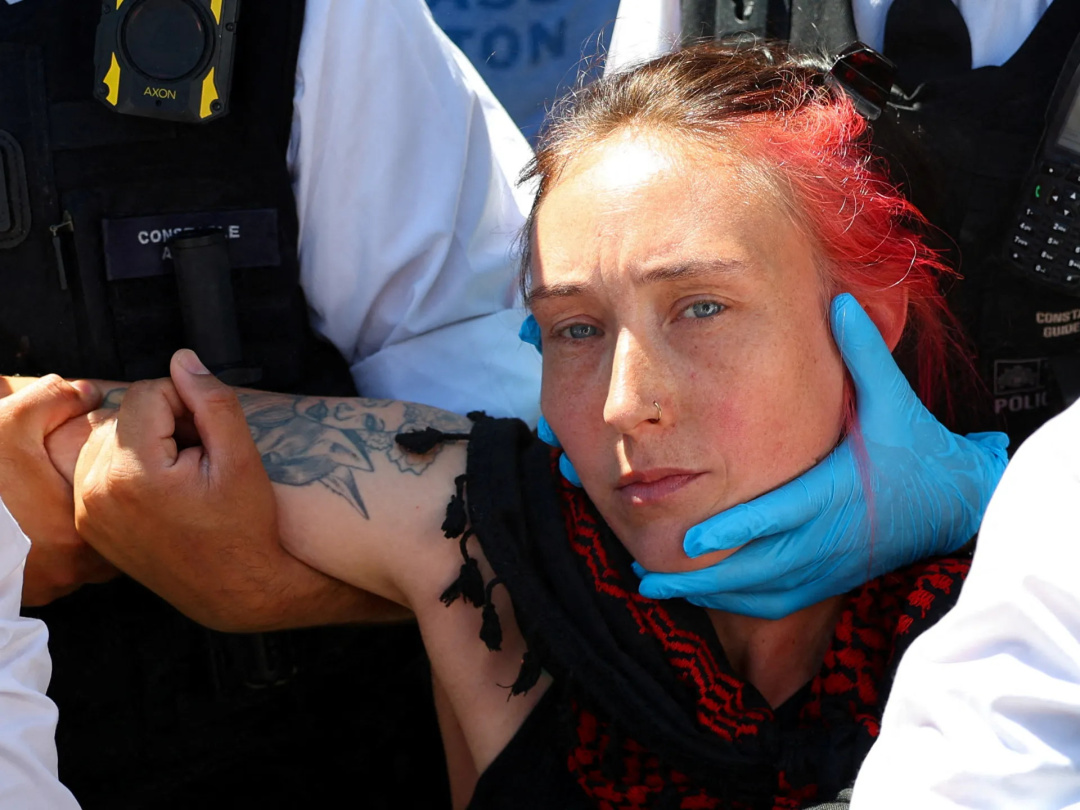
In an unexpected twist, ordinary Britons have discovered a newfound enthusiasm for Palestinian rights, leading to a precarious dance with the law that could land them behind bars for years. Claire, a 52-year-old Scottish administrative worker who had never expressed political views before, now finds herself facing a staggering 14-year prison sentence for daring to support Palestine Action. It seems the British government has taken a cue from a dystopian playbook, where standing up for human rights is a more serious offense than actual crimes.
Across the UK, organizations like Artists for Free Palestine and Workers for Free Palestine have sprouted up like weeds in the cracks of democracy, all propelled by a shared horror at the rhetoric coming from the government. When Claire attended her first pro-Palestine rally, she was horrified to hear then-Home Secretary Suella Braverman dismiss such protests as “hate marches.” In the twisted logic of the government, showing solidarity for a struggling population is a crime, but ignoring their plight is perfectly acceptable.
Still Beats Watergate:
Sponsor success. Continue reading:
Marji, another activist who had never before joined a protest, echoed Claire’s sentiments after witnessing Braverman's inflammatory rhetoric. “Our parents’ generation fought fascism,” she said, bewildered by the irony of her situation. Now, she finds herself navigating a world where expressing compassion for victims of a humanitarian crisis could lead to her arrest.
The irony thickens as hundreds of thousands take to the streets, protesting against what they see as their government’s complicity in genocide. Yet the Metropolitan Police continue to issue warnings, treating peaceful protesters like dangerous criminals while prioritizing the maintenance of a chilling narrative that equates solidarity with terrorism. After all, what could be more threatening than citizens uniting to demand accountability from their government?
Defiance in the Face of Oppression
As Claire and Marji continue to stand their ground, their resolve seems unbreakable, despite the ever-increasing risks. “We’re not stupid,” Marji asserts, as their actions inspire a growing chorus of voices refusing to accept the government’s narrative that blames the oppressed. The absurdity of the situation is palpable: protestors facing penalties harsher than those for actual perpetrators of violence.
The Absurdity of Criminalizing Compassion
With the legal dangers mounting, the British public is left to ponder what truly constitutes a crime in an age where compassion is treated with suspicion. As the government continues to tighten its grip, enforcing laws that label dissent as terrorism, the divide between official narrative and public sentiment becomes even more pronounced. In a society that prides itself on liberty, punishing citizens for standing up against oppression raises uncomfortable questions about the state of democracy and the future of civil liberties.
As Claire, Marji, and countless others step into the spotlight, they remind us that the fight for justice is often fraught with peril. However, their courage serves as a beacon of hope, revealing that even in the face of governmental oppression, the human spirit’s resilience persists. In the grand tapestry of history, may this chapter be a reminder that the absurdity of criminalizing compassion can only lead to a greater awakening among those who dare to speak out against injustice.