Trump Appoints Jay Clayton to Oversee AI While Trusting Tech Giants to Regulate Themselves
In a stunning display of confidence, President Trump announced the formation of the Super Intelligence Force, a crack team aimed at tackling the complexities of artificial intelligence, or as they’re more commonly known, the machines that might one day outsmart us. The new force will be led by none other than Jay Clayton, noted for having previously mastered the delicate art of oversight in the financial sector, which should surely translate well to the wildly unpredictable world of AI. After all, what's the worst that can happen when you let a financial expert handle superintelligence?
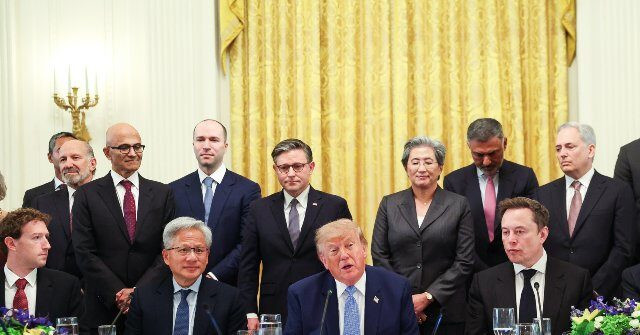
The announcement was made in a classic Trumpian fashion—via Truth Social, where he declared the accord reached at the Historic White House Accord on Super Intelligence. It’s almost as if he painted a picture of himself cutting ribbons while technology executives stood in the background, pens in hand, prepared to sign a one-page document that will surely keep AI in check. Yes, the document outlined lofty ideals, promising layers of audits and evaluations—all the kind of promises that sound great until you realize they rely on the very people who’ve created the tech in the first place to keep themselves in line.
Still Beats Watergate:
Sponsor success. Continue reading:
Of course, the tech giants themselves were more than happy to join in. After all, if we can rely on companies like Google and Meta to ensure their own products don’t pose threats, surely this new 'force' will hold them accountable. It’s not like those companies have ever been accused of putting profits over public safety before, right? As multiple industry leaders gathered to rubber-stamp their commitment, one could almost hear the collective sigh of relief from Washington—finally, someone is handing over responsibility to those who created the chaos!
Among the illustrious team is Andrew Ferguson from the FTC, who will undoubtedly ensure that any mischief in tech regulation is kept to a minimum. Emil Michael, the under secretary for research and engineering at the Pentagon, will add a touch of military seriousness to the affair, while Scott Kupor from the Office of Personnel Management rounds out this dream team. This lineup is sure to bring the kind of oversight that only government can provide—vague, slow, and completely reactive.
Trump's Trust in Tech's Self-Regulation
The real comedy lies in the expectations set forth by Trump himself, who expressed confidence that the industry would self-regulate. Imagine that—tech companies, known for their cutthroat competition and frequent ethical lapses, now being entrusted with the moral high ground. This is like asking a cat to babysit a family of mice, but with flashy titles and impressive job descriptions. The sheer audacity of believing that the same players who sprinted ahead to develop AI technologies will now pause to consider their societal impacts is, frankly, delightful.
Applied to you
But not to worry; Trump reassured the public that these voluntary standards were, in his words, "morally binding." So, rest easy, America! The fate of humanity rests in the hands of tech giants who have agreed to something that sounds reassuringly official while being entirely devoid of consequences. As they gather to discuss their 'best practices,' one can only hope that AI doesn’t skip ahead to a future where they’re deciding our fates as well as their own.
In this tale of bureaucratic absurdity, we are left with the hope that perhaps the Super Intelligence Force will one day become the universal example of how not to manage a transformative technology. Until then, we can sit back and watch as the industry that created the problem promises to solve it while securing a shiny new title for their troubles.