Trump Rebrands AI to Super Intelligence, Offers Patently Non-Binding Pact Instead of Action
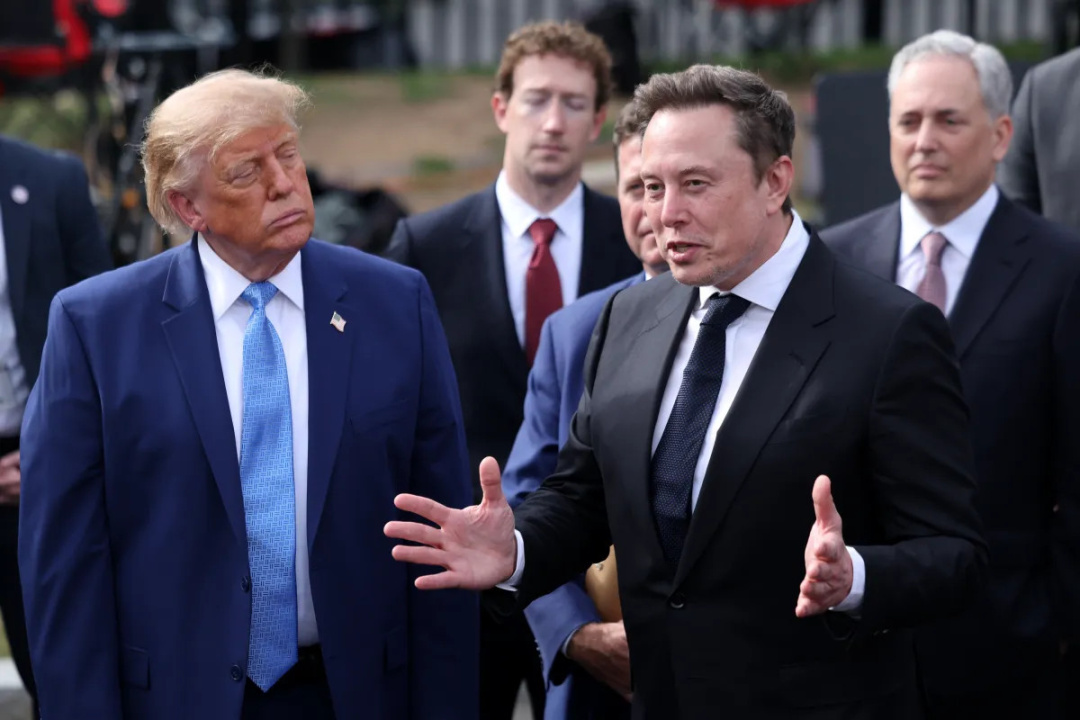
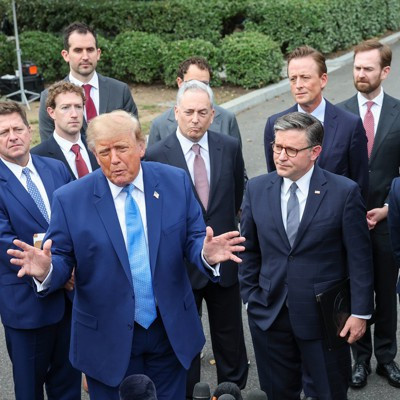
This week, President Trump hosted a star-studded gathering of tech titans to announce that the U.S. government is officially rebranding artificial intelligence as super intelligence. Yes, you heard that right! Because when there’s a confidence crisis, nothing screams ‘we’ve got it under control’ like a new name. Forget about the potential dangers lurking behind the algorithms; now we can all rest easy knowing that our impending doom is just a fancy rewording away!
The new non-binding safety pact—aptly penned in invisible ink—aims to assure the public that everything is fine. "Morally binding," said Trump, as he waved off concerns like a pesky mosquito. Apparently, a promise made on a cocktail napkin is now considered a legal strategy. Clearly, who needs actual regulations when you can rely on the honor system?
Still Beats Watergate:
Sponsor success. Continue reading:
In a rare moment of clarity, even some attendees expressed skepticism about the effectiveness of this so-called pact. As tech leaders like Zuckerberg, Bezos, and Musk gathered to witness the birth of super intelligence, one might imagine a parallel universe where they signed an actual agreement that mattered. But alas, the only thing that truly bound them was the sheer audacity of the spectacle.
And let’s not overlook the timing! Just a week prior, President Trump was vehemently declaring that any mention of AI dangers was merely a ploy by his political adversaries. Yet here we are, with a lunchtime gathering that has transformed into a political theater of the absurd. As if to say, "Let them eat cake while the robots take their jobs!"
The Real Meaning Behind the Rebranding
What’s more intriguing than the pact itself is the messaging. The narrative is clear: AI might be out to get us—but roll out the red carpet for super intelligence! It’s like calling a fire a ‘warmth enhancement initiative.’ With this rebranding, the administration sends a message: don’t worry, it’s just a supercharged version of the same chilling threat, only with a happier face!
In a stunning display of irony, the newly minted super intelligence is presented as a benign force, destined to save humanity from itself. And what better way to assure the public than by drawing the line in the sand with a comically ineffectual document? The misspelled agreement—yes, they misspelled the United States—is a fitting metaphor for the entire initiative: rushed and utterly devoid of substance.
What Can We Take Away From This?
The conclusion is simple yet profound. When faced with a challenge as daunting as the existential threat posed by AI, the White House has opted for rebranding over real action. Because let’s be honest: the best way to tackle a crisis is to slap a fresh coat of paint on it and call it a day. So, remember when you hear the phrase ‘super intelligence,’ it’s merely a rebranded version of the same old story—one that leaves us with just as many questions as answers.
So, will this new terminology change anything substantial? Probably not. But hey, at least it sounds cool—and isn’t that what really matters in the high-stakes world of tech and politics? With super intelligence, we can all just kick back and enjoy the show while the rest of the world continues to scramble for answers. Cheers to that!