UAE Confirms Netanyahu Visit, Suggests War-Free Zone for Talks

In a truly historical moment, the United Arab Emirates has officially acknowledged hosting Israeli Prime Minister Benjamin Netanyahu for discussions with Emirati President Mohammed bin Zayed. In what can only be described as a diplomatic dance, the Emirates News Agency reported that the two leaders discussed ways to strengthen bilateral relations, possibly while skillfully dodging questions about actual wars happening in their backyard.
The meeting, bravely conducted behind a veil of silence regarding the chaos in occupied Palestine, Lebanon, Syria, Iran, Yemen, and Sudan, raises the bar for official statements to a level previously thought unimaginable. One can only wonder if the UAE's communications team advised bin Zayed to keep the conversation focused on non-combat topics such as the weather or the latest trends in sustainable energy.
Still Beats Watergate:
Sponsor success. Continue reading:
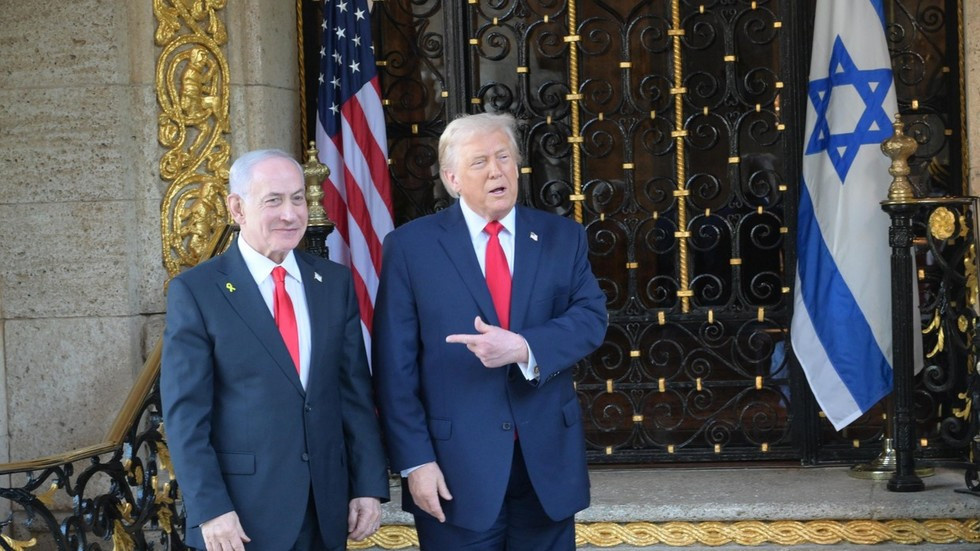
Interestingly, the Emirates News Agency released no photographs of the meeting, possibly to maintain an air of mystery around what was discussed—this is, of course, assuming it wasn't just an awkward exchange about how to avoid the topic of war. The absence of regional conflict in an official statement about the Prime Minister’s visit is undoubtedly a bold move; who needs to acknowledge reality when you have bilateral relations to strengthen?
In a comically parallel universe, Netanyahu's office confirmed the visit, stating that he and his wife Sara were invited by bin Zayed to focus on strengthening ties and addressing regional challenges—and yet, it seems they forgot to mention which specific challenges would remain unaddressed, as the word "war" decidedly did not make the cut. The irony is palpable; a meeting on regional challenges that excludes the most pressing ones borders on performance art.
The Absurdity of Diplomatic Performances
As Israeli media reported on this remarkable event, it became clear that key players were also present, including top officials from the Mossad and the National Security Council. Still, the absence of any substantive content addressing the regional crises can only be interpreted as a conscious effort to perform a diplomatic sleight of hand. The Emirati Foreign Ministry had previously assured the world they were shifting to transparent relations, yet this visit proves that transparency is perhaps limited to what one decides to ignore.
Your takeaway
In light of Iran's Foreign Ministry warning that Israel's presence in the region creates a "dangerous situation," one has to wonder what exactly constitutes a safe discussion space. Perhaps the safe zone for talks is simply one where discussions about wars are entirely omitted. The UAE’s artistic approach to diplomacy—where facts are rearranged like furniture in a gallery—has initiated a campaign of silence that leaves us with only one burning question: is it possible to strengthen relations without acknowledging the inconvenient reality of conflict?
As these political players prance around the stage, perhaps the real takeaway is that in the realm of official statements, the only thing more significant than the meeting itself is the multitude of topics left unsaid. If silence is golden, then the UAE and Israel have struck gold in an astonishing display of selective diplomacy that would leave even the most seasoned spin doctors in awe.