Zuckerberg's Hand in Trump's AI Industry Pact Raises Eyebrows
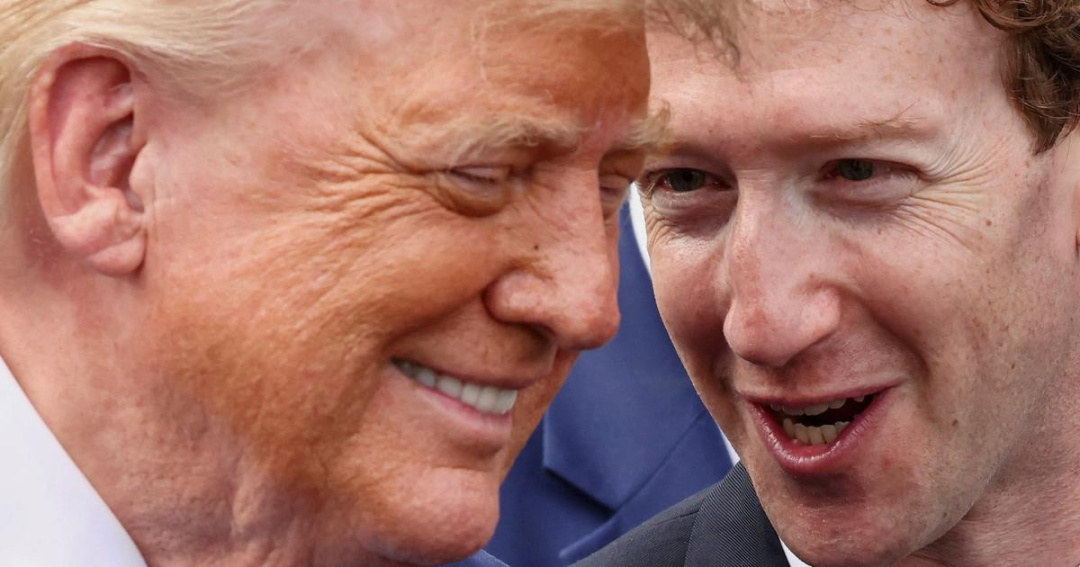
In a twist befitting both Silicon Valley and the political theater of Washington, Mark Zuckerberg found himself in the driver’s seat of a new AI regulatory landscape. It all began at a state dinner where the Meta CEO broke bread with House Speaker Mike Johnson, seated next to him while the ever-looming specter of artificial intelligence hung over the festivities. Little did they know, this conversation would give rise to President Donald Trump’s recent AI industry pact.
According to sources familiar with the matter, Zuckerberg casually mentioned regulatory concerns around AI to Johnson, sparking ideas that would eventually be formalized into a document aimed at guiding tech executives during their next meeting with Trump. After some strategic back-and-forth with NVIDIA’s CEO Jensen Huang, a draft of these principles was circulated just in time for Tuesday's meeting, where it was ultimately released as the so-called “White House Accord on Super Intelligence.”
Still Beats Watergate:
Sponsor success. Continue reading:
This so-called historic accord, touted by the Trump administration and the participating tech giants as a pact of monumental importance, outlines principles for self-regulation in the AI space. But as with many political gestures, the real question remains whether this will actually alleviate public concerns about AI safety or merely serve as a band-aid over a gaping wound.
Zuckerberg’s efforts to cultivate connections with influential political figures seem to be paying dividends, as he appears to have struck a chord with Trump, a man known more for his erratic messaging than consistent policy. The significance of his role in shaping this document cannot be understated; it raises eyebrows regarding how much sway Zuckerberg holds over tech regulation discussions. After years of navigating the tech backlash from both sides of the aisle, it seems Zuckerberg now wears a new hat: the benevolent tech executive willing to play ball with the government.
Despite the mixed reception from lawmakers, the agreement has been signed by a coalition of tech titans including Meta, OpenAI, Anthropic, xAI, and NVIDIA. The accord pledges the companies to implement “robust internal controls” and undergo outside audits aimed at ensuring public safety in frontier AI models. Surprisingly, while the document lays out commendable intentions, it remains vague on the specifics of these safety measures, leaving many to wonder if this is less a solution and more a promise of future action.
As the public grapples with the implications of AI on society, the existence of such an accord hints that federal oversight might be on the horizon. Zuckerberg was quoted as saying, “The idea isn’t that this is the only thing that we will ever do. It is that this is a start and an accord that the whole industry could come to.” With the landscape continually evolving, it seems he’s keeping his options open.
Zuckerberg's journey through the political landscape post-2016 has been nothing short of a balancing act, and his ability to navigate the complexities of tech regulation while maintaining a favorable relationship with the administration may mark a new era for Meta. If this trend continues, we could see a future where tech executives and politicians collaborate more closely, shaping policies that could redefine the very fabric of AI governance.
Navigating the AI Regulatory Landscape
The implications of Zuckerberg’s newfound influence extend beyond mere optics. As the tech industry seeks to present itself as responsible stewards of AI, the question of who will ultimately hold them accountable remains. It’s evident that Zuckerberg is keenly aware of the shifting tides of public opinion and regulatory scrutiny, positioning himself as a partner rather than an adversary.
With this accord, the Trump administration aims to project an image of cooperation between government and industry, though skepticism abounds regarding whether this collaboration will yield tangible change or simply serve as a façade to placate critics. As the AI dialogue evolves, the stakes are high—and the outcome may very well shape the future of both tech and politics.
Your Takeaway
In a world where AI's influence is rapidly expanding, watching how these high-stakes negotiations play out is crucial. Zuckerberg's maneuvering illustrates not only the complexities of tech regulation but also the potential for collaboration between the tech industry and government. As the public remains watchful, one must ponder whether this recent pact is a genuine step toward meaningful regulation or merely a strategic play to mollify concerns while the tech behemoths continue their ascent in the digital age. With the implications of AI touching nearly every aspect of life, the intersection of politics and technology will undoubtedly remain a hotbed of discussion and debate in the coming months.