The Press Room: A Stage for Liberal Elitism or True Representation?
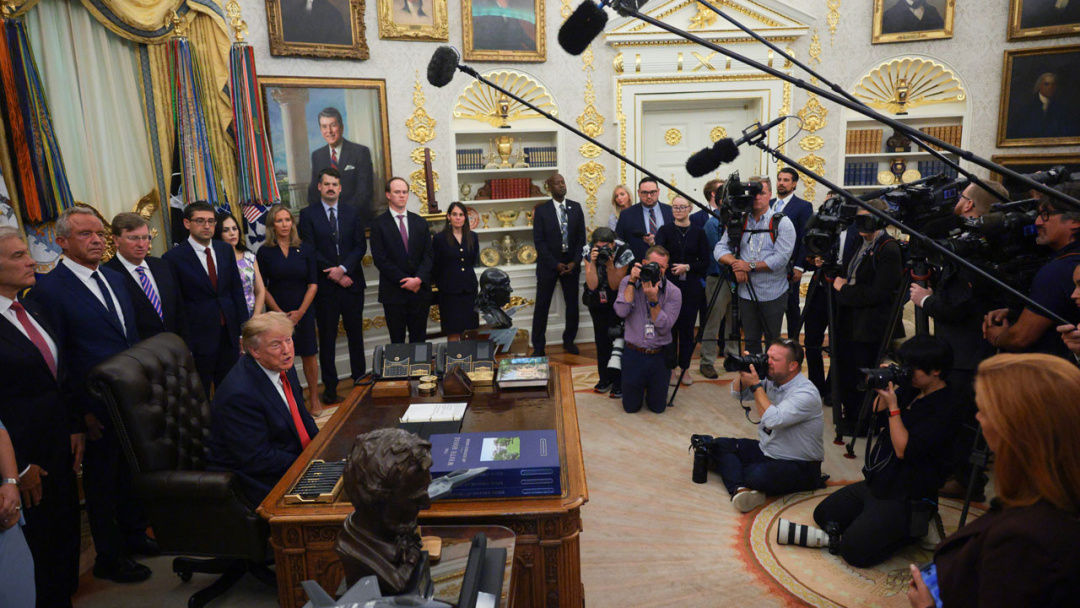
In a stunning display of irony, President Donald Trump’s efforts to shuffle out press passes for reporters who openly criticize him has ignited a fervent debate over representation in the White House briefing room. The argument posits that journalists, particularly those from liberal outlets, claim to embody the voice of all Americans, yet their questions often echo the sentiments of a decidedly distinct audience.
Take the words of National Public Radio’s Tamara Keith, who asserted during a CNN segment that her reporting was done on behalf of the American populace. Trump’s exclusion of certain reporters, she argued, also meant excluding everyday citizens from their rightful place in the people’s house. However, the narrative becomes murky when one considers the millions who voted for Trump and the contrasting treatment afforded to Republican and Democratic administrations.
Still Beats Watergate:
Sponsor success. Continue reading:
Keith’s notable moments have demonstrated a certain camaraderie with the Democratic establishment, notably when she failed to challenge Hillary Clinton on significant issues during the 2016 campaign. Instead, her inquiries were steeped in adoration, exemplifying a press corps that too often seems to revel in the glow of Democratic figures rather than hold them accountable.
The tone in the White House briefing room shifts dramatically depending on who occupies the Oval Office. Under Republican leadership, particularly Trump, journalists have assumed the role of ferocious interrogators, while during Democratic administrations, they often adopt a gentler demeanor resembling that of a children’s television show.
During the Biden presidency, the dynamics only grew more convoluted. Reports surfaced of the administration providing reporters with advance questions, prompting reactions from both the White House and the press corps that alternated between indignation and defensiveness. This alleged priming of journalists raises further questions about the impartiality and independence of the media that professes to represent the entire nation.
Meanwhile, Trump’s attempts to create a more inclusive press environment by inviting right-leaning journalists has sparked outrage within liberal media circles, who lament the intrusion of what they term "MAGA Media." This backlash underscores the reality that the existing press structure is far from neutral; it is biased, seeking to dismantle Trump while often shielding Democrats from similar scrutiny.
The Fragile Nature of Media Representation
The narrative presented by the mainstream media illustrates a profound disconnect with vast segments of the American electorate. While the press strives to project itself as the watchdog of democracy, its apparent favoritism reveals a more complex truth: true representation is elusive in a landscape dominated by partisan interests. As voters navigate through this media maze, they must arm themselves with discernment to identify fact from fiction amidst the cacophony of biased reporting.
Trump's presidency has not only highlighted the media’s biases but has also reignited discussions about the role journalists should play in a democracy. The question looms: can the press truly represent the diverse tapestry of American voices when it is ensnared in its own ideological confines?
Your takeaway
As discussions of media representation continue, it is crucial for citizens to scrutinize the narratives constructed by outlets that claim to speak for them. The evolving nature of press relations under Trump serves as a reminder that a vigilant and discerning public is paramount for maintaining the integrity of democracy. In a landscape fraught with bias, the search for a truly representative press remains an ongoing challenge.