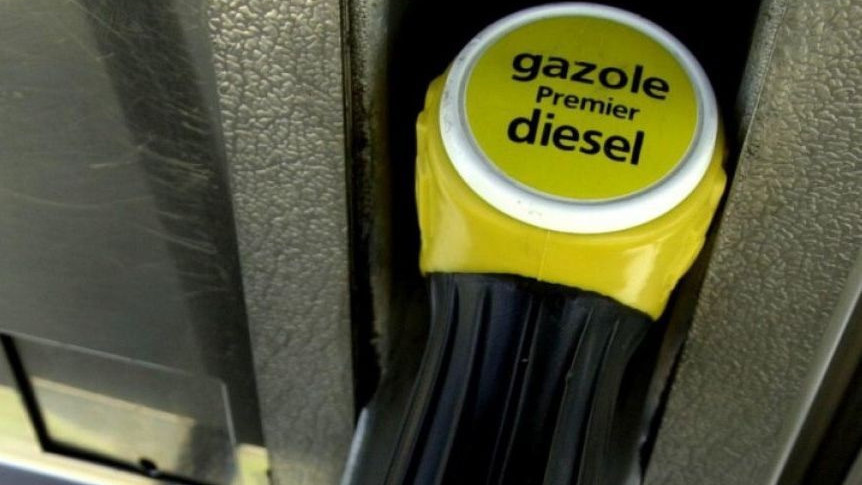
Energy Secretary's Voluntary Limits on Diesel Exports Avoids Heavy-Handed Ban
In a move that could be likened to a high-stakes game of environmental whack-a-mole, Energy Secretary Chris Wright has made it clear that the Trump administration will not resort to an outright ban on diesel exports. This revelation, shared on the sidelines of the United Nations General Assembly, comes as diesel prices soar to record highs, leaving consumers and businesses alike wondering if the administration has any clue about the meaning of 'supply chain management.'
Wright's remarks are a direct counter to a recent report from Politico, which suggested that a 90-day diesel export ban was looming over the horizon like an unwanted storm cloud. Politico, citing unnamed sources who clearly had their fill of political drama, claimed that the White House was considering this ban in response to rising fuel prices, particularly as those prices reached an alarming average of $6.52 per gallon. The report had the makings of a classic bureaucratic farce, with various cabinet members expressing their concerns about the implications of such a blunt instrument.
Still Beats Watergate:
Sponsor success. Continue reading:
Despite President Trump's earlier remarks hinting at a desire to rein in diesel exports—spurred largely by nervous Republican legislators facing tight races in the upcoming midterms—Wright's stance suggests a more nuanced approach. "We're trying to avoid a blunt hammer of a government policy, understanding the complexity of refining," he stated, presumably with a straight face. The implication here is clear: a ban could lead to a cascade of unintended consequences, like seeing refiners left with nowhere to store excess diesel, ultimately driving up prices of gasoline and jet fuel. Because why fix a problem when you can simply complicate it further?
As the saga unfolds, it's clear that Wright's rejection of a total ban might be the administration's attempt to placate both the industry and consumers. The escalation in diesel prices is not just a statistic; it is an economic alarm bell that has been ringing loudly for months, exacerbated by global conflicts and supply chain bottlenecks. Trump's initial support for restrictions was more than just a passing thought; it was a desperate echo of past administrations trying to control markets under pressure. But the wheels of bureaucratic caution have turned slowly, as evident in Wright's preference for voluntary limits—because who doesn't love a good voluntary agreement in the cutthroat world of energy politics?
Consequences of Diesel Policy Decisions
As of now, the immediate threat of a full export prohibition appears to have receded into the political ether, leaving consumers hoping for some relief in the form of stable prices. However, the underlying issues tied to high fuel costs remain unresolved, leading to speculation about how long this voluntary approach will last. Will it be enough to satisfy the farmers, truckers, and businesses that rely on affordable diesel, or will they find themselves trapped in a cycle of unpredictable price surges?
In a world where fuel prices can trigger panic quicker than a meme goes viral, the administration's decision to take a step back from draconian measures is crucial. Yet, the absence of a clear and decisive policy shift leaves open many questions. How will this voluntary limit actually work? Will it be enforced? And above all, at what cost to the consumer's wallet?
Your takeaway
As we navigate through these rocky waters of energy policy, one thing is clear: whether it's voluntary limits or outright bans, the stakes are high. For an administration that often seems to be at odds with itself over energy production and environmental concerns, Wright’s comments shine a light on the complexities involved in balancing economic pressures with market realities. The impending fuel crisis might just be another chapter in the ongoing saga of American energy policy, one in which the ultimate victor remains uncertain and the effects on everyday lives linger.
With conflicting reports and an administration that appears to be playing both sides, the diesel export debate is bound to continue. While we await the Trump administration's next move, one can't help but wonder: how many more twists and turns will there be in this high-stakes game of diesel diplomacy?