Federal Judge Orders White House to End Trump’s Press Ban Amidst Legal Ruckus
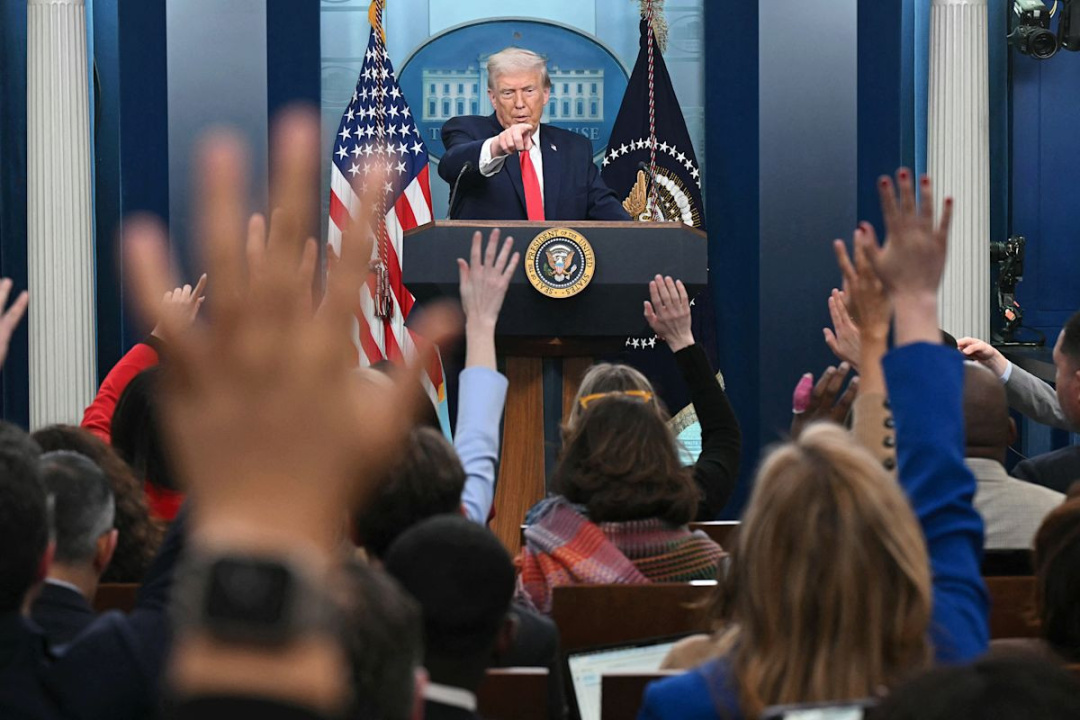
In a stunning legal twist reminiscent of political theater, a federal judge has stepped into the robust drama that is the White House press corps. U.S. District Judge Timothy Kelly, appointed by Trump himself, issued a temporary restraining order demanding the White House immediately restore press access for CNN, MS NOW, and Politico, all of whom had been unceremoniously banished by the President. Notably, this ruling arrives just in time for the much-anticipated state dinner with Chinese President Xi Jinping, although attendees might notice a stark absence of the usual pomp from the banished outlets.
The ruling came after these media organizations filed a lawsuit, asserting that their First Amendment rights had been trampled upon by Trump’s impulsive ban, which he justified through a series of Truth Social posts where he decried the outlets for “fake news.” It seems that denying access was merely the latest tactic in the ongoing saga of executive branch media relations. Meanwhile, these outlets had a front-row seat to the debacle of their own exclusion from an event meant to showcase international diplomacy, further adding insult to injury.
Still Beats Watergate:
Sponsor success. Continue reading:
Judge Kelly, in his eight-page ruling, pointed to the lack of due process in the revocation of the reporters’ credentials. It was a sharp reminder that while the President may dream of a press corps that only sings his praises, the reality is that the Constitution doesn’t have a clause for presidential preferences in media coverage. The judge’s order mandates a restoration of access for 14 days while the case continues to unfold in court, which could be an interesting period given Trump’s propensity to appeal any unfavorable judgments.
Yet, the drama doesn’t end here. Shortly after the ruling, reports emerged indicating that some journalists were still turned away from the White House, and the Secret Service was reportedly keeping a tight grip on access, confiscating hard passes like some sort of high-stakes game of media Monopoly. The outlets are now seeking an immediate hearing, because what’s a little court-ordered access if it’s not accompanied by the actual ability to enter the premises?
Historical Context of Press Relations
As the media landscape bristles with indignation, it’s worth noting that this isn’t Trump’s first tango with press freedoms. Historical precedents set the stage for this continued skirmish, as past administrations have also grappled with the complexities of press relations, albeit with varying degrees of finesse. The American public deserves to scrutinize their elected officials through a free press, a point underscored by the White House Correspondents' Association, which decried the ban as a blatant affront to journalistic freedom.
With the backdrop of ongoing election campaigns and a fraught political climate, this legal skirmish raises vital questions about the state of press access in America. Are we witnessing a necessary recalibration of media access norms, or just another chapter in Trump’s ongoing saga of confrontations with the Fourth Estate? As the world watches, one can only hope for a future where access to the President remains free and unfettered, rather than dictated by the ebb and flow of political favor.
The Implications of Press Access
The implications of this ruling stretch far beyond the immediate restoration of access for three outlets. If upheld, it could set a crucial precedent about the rights of journalists and the responsibilities of the administration regarding transparency. In a time when trust in media is at an all-time low, clarity and accountability are paramount. As we navigate an era where information is wielded as both a sword and a shield, the battle for press rights will undoubtedly continue to unfold in the courts, the press room, and, quite frankly, on social media.
As the Judge Kelly’s ruling reverberates through the White House and beyond, the focus remains fixed not just on the restoration of credentials but on the fundamental right of a free press to operate without unwarranted interference from those in power. Will the administration comply, or will this merely lead to further legal entanglements? Only time will tell, as the ongoing saga of press access in the Trump era continues to captivate and baffle in equal measure.