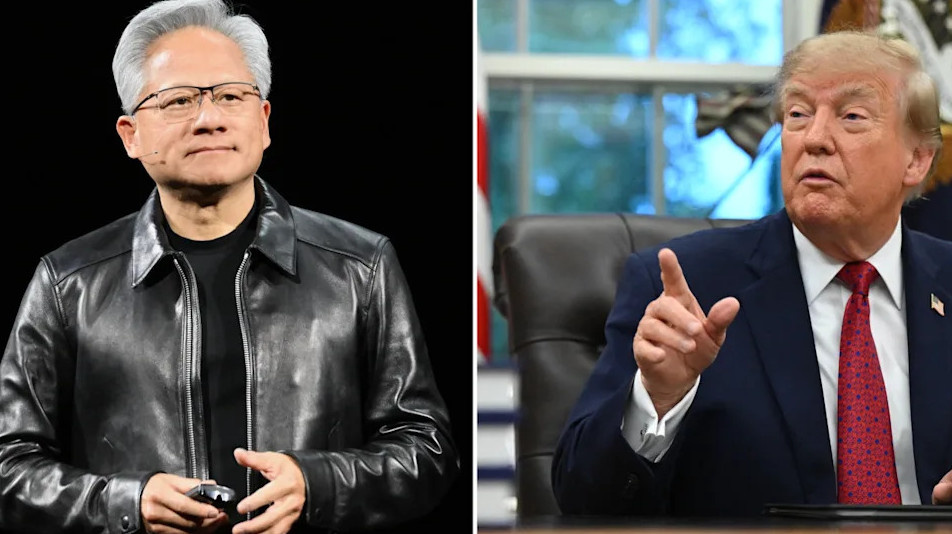
White House Announces New AI Policy: Chips Ahoy!
In a bold display of technological bravado, the White House has declared a new policy designed to sprinkle some high-tech fairy dust on the nation’s artificial intelligence sector. Under the catchy title "Chips Ahoy!", the initiative promises to allow select AI firms to buy a limited number of H200 chips from Nvidia, while simultaneously ensuring that the process resembles a bureaucratic obstacle course designed by a sadistic game show host.
In a press briefing that could only be described as a masterclass in obfuscation, spokespersons explained the rationale behind this groundbreaking policy. "We’re excited to announce a significant step forward in regulatory clarity, which is to say that we’re still figuring out how to sort through the mountain of paperwork required for this endeavor," said one official, while nervously checking their watch as if waiting for the next round of questions about the policy’s actual benefits.
Still Beats Watergate:
Sponsor success. Continue reading:
The administration emphasized that while easing restrictions on AI technology was a priority, the actual process of obtaining these chips will involve a series of forms, applications, and perhaps an interpretative dance. "We want to make it clear that while AI firms can buy these chips, we’ll ensure that they have the same experience as trying to navigate the DMV on a Monday morning," the spokesperson quipped, eliciting chuckles from the assembled press corps who had already resigned themselves to a future filled with endless red tape.
In an effort to make the policy seem as transparent as possible, the White House has launched a new initiative called "Operation Chip-ocalypse". The initiative is designed as a public relations effort to assure the American people that their government is taking significant steps toward technological advancement, while also ensuring that only a select few will actually benefit from said advancements. Citizens can rest assured that the chips will be distributed according to a complex algorithm that takes into account everything from campaign donations to the ability to quote obscure regulatory language.
Meanwhile, in an effort to quell any public concern about the ramifications of such a policy, officials assured the public that no one would be left behind—except for those who fail to complete the newly introduced "Chip Compliance Form 42B" which is rumored to be as long as a Tolstoy novel. For those who manage to navigate the labyrinthine requirements, the reward of possessing Nvidia’s coveted H200 chips will be akin to finding a unicorn in your backyard—magical, rare, and probably just a figment of your imagination.
As the initiative rolls out, the White House will keep a close eye on how many chips actually reach these AI firms. They’ve formed a special task force, humorously dubbed the "Chips and Dips Committee", to monitor the situation. Their primary mission? To ensure that the chips don’t just end up in the hands of those who already have too much power in the tech world. Because if there’s one thing Washington knows how to do, it’s to distribute power like a game of musical chairs—with only a few left standing when the music stops.
So, buckle up, America! The journey to the AI future is just beginning, and it promises to be as convoluted and unnecessarily complicated as any government program should be. Stay tuned for further updates as the White House continues to redefine what it means to "make it easier" for businesses to thrive in a digital age. Spoiler alert: it still involves a lot of paperwork.