Pro-China Protests Across America Raise Questions as Trump Meets Xi
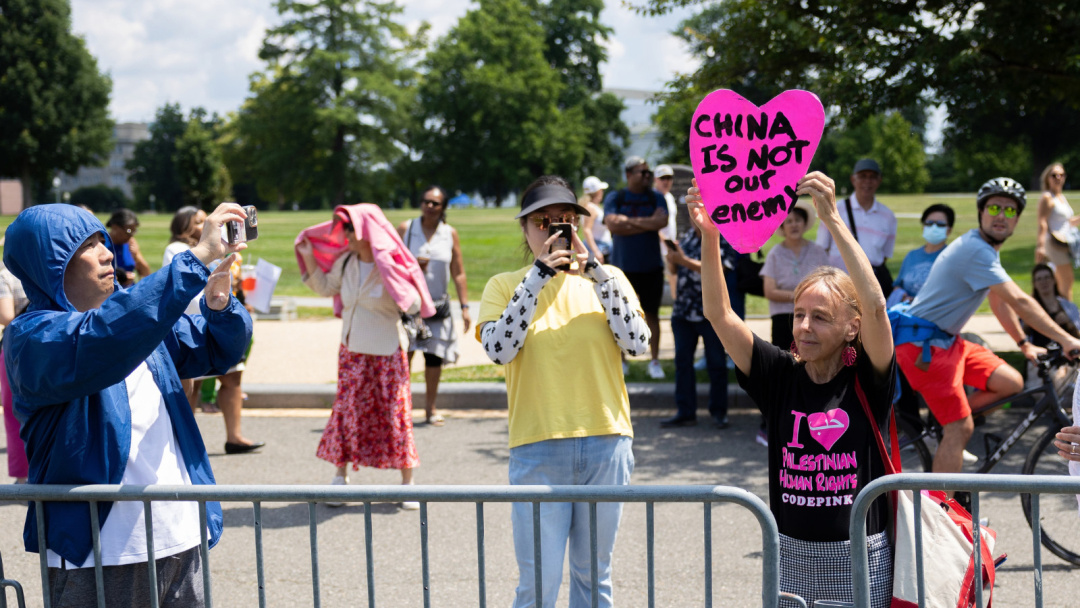
In the lead-up to President Trump’s critical negotiations with Chinese President Xi Jinping, a series of protests organized by pro-China groups have erupted across the United States, notably from the bustling streets of New York City to the more laid-back vibe of Austin, Texas. Funded by Neville Roy Singham, a tech tycoon known for his communist affiliations, these protests have been framed as grassroots actions aimed at highlighting various social issues while creating an image of unrest that could be exploited by foreign adversaries.
On a recent day of protests, Jodie Evans, Singham’s wife and co-founder of the far-left organization CodePink, was seen donning her signature fuchsia straw hat while rallying together with activists outside the United Nations in New York. This demonstration was part of a larger weeklong campaign, coinciding with Trump’s anticipated discussions with Xi, where activists criticized the U.S. military and its environmental policies. The juxtaposition of Evans alongside prominent anti-war figures underscores the intricate web of organizations involved, each seemingly addressing different grievances but united under a common financial and ideological umbrella.
Still Beats Watergate:
Sponsor success. Continue reading:
This recent wave of mobilization has raised eyebrows among lawmakers, who are increasingly concerned about the potential for foreign influence complicating domestic issues. Representatives such as Jason Smith and John Moolenaar have expressed that the apparent spontaneity of these movements may be more a product of coordinated efforts with significant financial backing, rather than organic activism. Their remarks shine a light on the underlying motivations of these protests, suggesting that they may serve as “Trojan horses” for foreign agendas rather than purely American grassroots movements.
The protests, while framed as advocating for various causes—ranging from climate action to immigration reform—have been criticized for their selective criticism that notably overlooks issues within China itself. This selective messaging raises questions about the integrity of the organizations involved and their true objectives. Amid this backdrop, Evans has previously praised China for its economic achievements, further complicating her role and that of her associated groups in the broader political discourse.
Foreign Influence and Domestic Activism
The scale of financial support Singham has funneled into this network, estimated at around $285 million through various channels, amplifies the concern that these groups are not just harmless activists but rather instruments of a more significant geopolitical strategy. Lawmakers are now demanding greater transparency and accountability from these organizations, questioning whether their tax-exempt status should continue given their political activities. The need for scrutiny is heightened with the Justice Department reportedly investigating Singham's funding practices, examining potential fraud and financial irregularities.
As the protests unfold, they also serve to highlight the tensions between American domestic politics and foreign influence, particularly from nations like China that are keen on shaping narratives within the U.S. The protesters may be advocating for issues that resonate with many Americans, yet the timing and orchestration of these events suggest a calculated effort to sway public opinion and distract from the complexities of international relations.
Your Takeaway
As President Trump prepares to engage with Xi, the backdrop of these protests serves as a reminder of the delicate interplay between domestic activism and foreign influence. The visibility of these pro-China demonstrations could potentially alter the perception of stability in the U.S., providing foreign adversaries with a narrative to exploit. With lawmakers calling for increased vigilance, the unfolding situation warrants close attention as the discussions at the highest levels of government proceed amidst a chorus of dissent from the streets. It remains to be seen how this interplay will impact both the negotiations at hand and the future of domestic political activism in an increasingly globalized world.