Sylvester Stallone Declines Trump’s Hollywood Ambassador Role as ‘Impossible’
In a stunning turn of events that could only happen in the surreal realm of government appointments, Sylvester Stallone has weighed in on President Donald Trump’s eyebrow-raising decision to name him a special ambassador to Hollywood. Stallone, speaking candidly to The Sunday Times, described his initial reaction to the announcement as one of sheer disbelief. “I was watching TV one night, and they go, ‘So Stallone and Mel Gibson and Jon Voight will be …’ And I went, ‘What?’”
The 80-year-old actor recounted the moment with a mix of incredulity and humor, noting that had he been consulted beforehand, he would have flatly rejected the notion that such a role was even possible. “If they had asked me in the beginning, I would have said, ‘This is not possible.’” In January 2025, Trump informed the world that Stallone, Jon Voight, and Mel Gibson would serve as “Special Envoys to me for the purpose of bringing Hollywood, which has lost much business over the last four years to Foreign Countries, BACK — BIGGER, BETTER AND STRONGER THAN EVER BEFORE!” Talk about an ambitious agenda.
Still Beats Watergate:
Sponsor success. Continue reading:
Stallone, however, isn’t convinced that such a mission is feasible. “Hollywood, I guess it’s like feudal states. They have their little kingdoms,” he observed, implying that the intricate dynamics of the film industry aren’t easily navigated by newcomers, even those with Hollywood cred like himself, Gibson, and Voight. “You don’t go in and tell six studios how to do things. And Mel Gibson and Jon Voight, we’re kind of do-our-own-thing people. No, it won’t work.”
His doubts about the practicality of the ambassadorship are accompanied by a healthy dose of realism. He expressed a strong belief that Hollywood is an evolving entity that functions best when left to its own devices. “Thank you and ciao,” Stallone said with a chuckle, highlighting his view that in a corporate landscape, the last thing decision-makers want is unsolicited advice from an actor regarding finance.
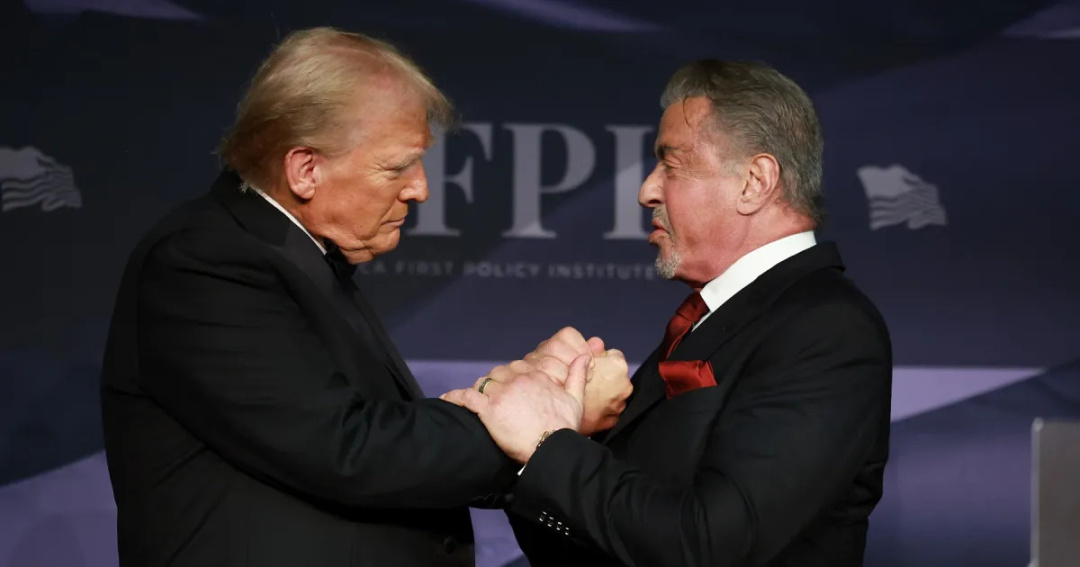
Interestingly, Stallone’s relationship with Trump isn’t one of antagonism; he has previously shown support for the former president, even introducing him at a Mar-a-Lago party after Trump won reelection in 2024. Nonetheless, Stallone presents himself as politically ambivalent, declaring, “I am not a political animal. I’m almost a political atheist.” This admission brings a refreshing touch of humility and candor to the often overly politicized terrain of Hollywood.
A Revolutionary Idea or a Comedy Act?
In the current political climate, Stallone’s dismissal of the ambassadorship as merely a pipe dream raises questions about the effectiveness of celebrity involvement in government initiatives. Is it a genuine attempt to bridge gaps between Hollywood and Washington, or merely another spectacle designed to garner attention? People might wonder if this appointment is meant to engage artists in real change or if it is just a plot twist in a reality show that is American politics.
As the conversation unfolds around this peculiar role, other voices in Hollywood are also weighing in on the broader implications of such unconventional appointments. Actor Jon Voight, asked about the prospect of a revived golden age in Hollywood during a separate interview, expressed a rather optimistic outlook under Trump’s tenure. He proclaimed that if the industry could align itself with favorable tax benefits, the energy and action would return almost immediately.
The juxtaposition between Stallone's skepticism and Voight's enthusiasm encapsulates the diverse perspectives within Hollywood regarding political involvement. Stallone's take serves as a reminder that while the White House may be keen on leveraging celebrity status to influence public sentiment, the realities of Hollywood's complex network may render such efforts futile. The ambassadorship might provide entertaining headlines, but does it carry any weight? Stallone’s candid commentary suggests it’s a comedic venture at best.
Your Takeaway
As the saga of Stallone’s ambassadorship unfolds, it’s clear that while appointments like these can create buzz, they often reveal more about the absurdities of political maneuvering than any concrete plans for change. In a world where the line between entertainment and governance blurs, Stallone's reluctant acceptance of this role—or lack thereof—serves as a humorous critique of how Hollywood continues to interact with political power. Whether this appointment does anything for Hollywood is still up for debate, but it certainly gives us plenty to laugh about.