Trump's New Venezuela Policy: Keep Your Friends Close, Your Opposition Leader Further Away
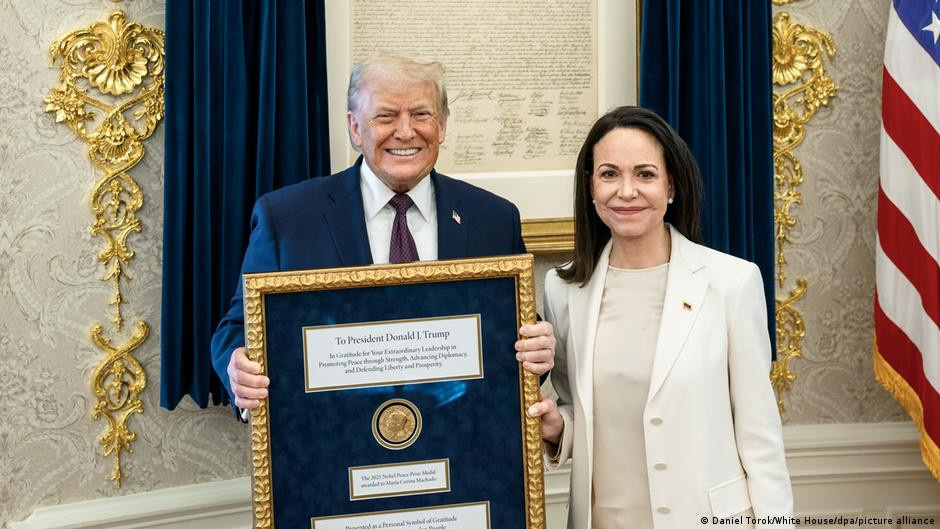
In what can only be described as a masterclass in political irony, the Trump administration has taken a bold stand against Venezuelan opposition leader María Corina Machado's return to her homeland, effectively telling her that her political aspirations are about as welcome as a mosquito at a barbecue. While Machado believes she’s the beacon of hope for a nation ravaged by earthquakes and authoritarianism, the White House seems to think keeping her in the U.S. is the best way to ensure that hope remains firmly unlit.
The situation is a classic example of U.S. foreign policy: the administration claims to stand for democracy while simultaneously playing a game of geopolitical chess. It’s as if they took a page out of a bad sitcom script, where the punchline is the realization that political interests always trump (pun intended) actual democratic processes. According to insiders, Machado's ambition to return is seen as a wild card that could disrupt the delicate balance the administration has crafted in Venezuela, one that prioritizes U.S. economic interests over the whims of an actual democracy.
Still Beats Watergate:
Sponsor success. Continue reading:
As Machado records heartfelt video messages from Panama City, accusing the Venezuelan government of obstructing disaster relief, the U.S. government is busy orchestrating a series of bureaucratic roadblocks. After all, what's more effective than a little red tape when you want to keep someone grounded? Reports suggest that the State Department ordered her private jet back mid-flight, citing concerns of further complicating relief efforts—because nothing says 'we support democracy' like preventing the opposition leader from entering her own country.
Even Secretary of State Marco Rubio, who’s typically all in for a regime change in Venezuela, seems to have a case of political whiplash. While he expresses sympathy for Machado’s plight, the administration's actions suggest that they’d rather keep her on the sidelines, where she can be a symbol of resistance without actually being a threat to their carefully laid plans. It’s a strategy so convoluted that one could assume it was drawn up during a round of golf.
Meanwhile, the administration’s mixed signals highlight the rift between U.S. interests and the realities of Venezuelan politics. Machado once stood as Trump’s darling within the opposition, but as her popularity wanes, so does her support from the Oval Office. The irony is delicious: a leader who once seemed poised to challenge the status quo is now being treated like an inconvenient guest that overstayed her welcome.
As the earthquakes expose the fault lines in U.S. policy, one can't help but wonder: will Machado’s ambitions crumble under the weight of political maneuvering? Or will she find a way to navigate this treacherous landscape, perhaps with a little help from those who profess to champion her cause? Only time will tell, but for now, the administration’s message is clear: democracy is great, as long as it doesn’t get in the way of our plans for Venezuelan oil.
In the end, Machado remains a potent symbol of opposition, but as the U.S. government continues to weigh its options, it appears that her dreams of returning home may be dashed—at least until the White House finds it politically convenient to let her back in. Until then, she can always take comfort in knowing that her political ambitions are no match for a good old-fashioned U.S. foreign policy shuffle.