UN Appoints Luke Lindberg, Agricultural Insider, to Tackle World Hunger
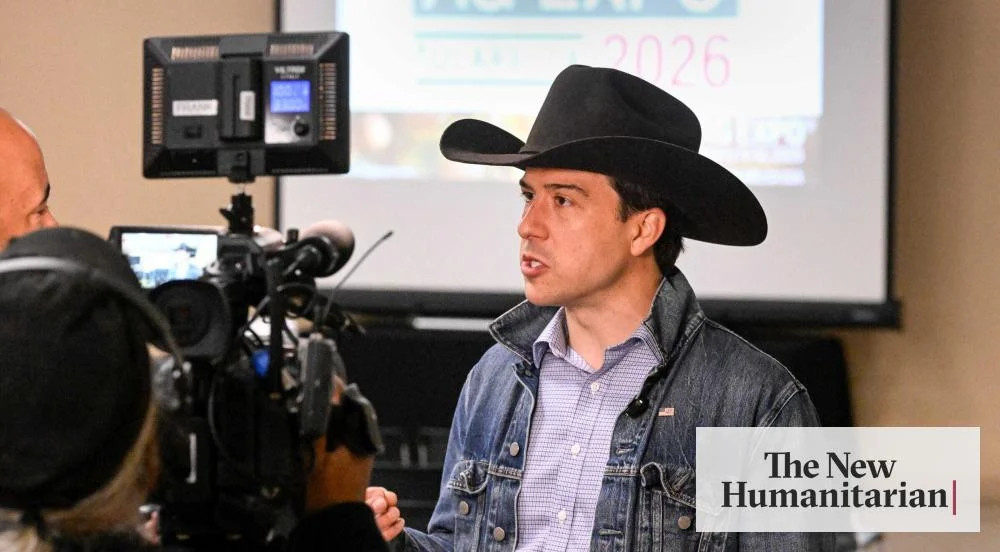
In a typical twist of bureaucratic fate, the United Nations has appointed Luke Lindberg, a U.S. agriculture official and son-in-law to Senate Majority Leader John Thune, to lead the World Food Program (WFP). This food agency, which prides itself on being the world's “frontline responder to hunger,” is now set to tackle the immense task of feeding those millions teetering on the edge of starvation.
Lindberg, currently the undersecretary for trade and foreign agricultural affairs at the U.S. Department of Agriculture, will be stepping into the shoes of Cindy McCain, who has recently vacated the position. McCain, noted for her leadership during tumultuous times, has earned accolades for her dedication to the cause of global hunger, leaving Lindberg with considerable expectations and a towering challenge.
Still Beats Watergate:
Sponsor success. Continue reading:
As the WFP struggles to secure funds to aid the staggering 266 million people facing acute hunger globally, Lindberg will have to navigate a complex world where donations are drying up faster than a desert well. The organization aims to assist only 110 million this year, a lofty goal given the reality of funding cuts and increasing needs. Lindberg's connections and experience could be a double-edged sword: will he charm Congress into loosening the purse strings, or will he simply end up as another cog in the wheel of bureaucratic inertia?
One can’t help but wonder if this appointment is a clever maneuver by the U.N. to ensure that the U.S. remains the largest donor to its food initiatives, a title it has held since the early 1990s. Lindberg’s background includes founding and presiding over the South Dakota Trade Association, where he was responsible for boosting exports. Let’s hope this experience translates into a similar efficacy in rallying support for the WFP, or else he may find himself stuck in a different kind of trade—one where he’s trading hope for empty promises.
U.N. Secretary-General António Guterres and Food and Agriculture Organization Director-General Qu Dongyu expressed their appreciation for McCain’s service, a sentiment that seems both genuine and strategically timed. Lindberg, at just 37, is entering a position that demands not only administrative acumen but also a heart for humanitarian causes—qualities that are sometimes hard to find in the political arena.
Fundraising Challenges and Political Capital
As Lindberg takes the reins, the looming question remains: can he translate his political connections into tangible outcomes for those in desperate need? The WFP is often hampered by narratives of bureaucracy, and Lindberg will have to combat not just the reality of funding shortages but also perceptions that the organization is mired in red tape. His relationships on Capitol Hill might prove indispensable as he seeks to advocate for the world’s hungriest.
With a considerable portion of the world’s population facing severe hunger, Lindberg’s leadership role could not be more crucial—or more precarious. Will he be able to harness the political will needed to bridge the gap between humanitarian necessity and government apathy? We can only watch and wait, all while hoping that the world’s frontlines in the battle against hunger do not turn into a theater of unfulfilled promises.
What Lies Ahead for Lindberg and the WFP
As Lindberg prepares to step into this pivotal role, the global hunger crisis looms larger than ever. His appointment might be seen as a calculated risk by the U.N., hoping that his prior experience and political ties will yield not just support but a renewed commitment from the international community to tackle the escalating crisis. If there’s anything we’ve learned from political appointments, it’s that they often come with more questions than answers. Here’s hoping Lindberg finds the answers before his tenure turns into a case study of political ambition eclipsing humanitarian need.