Newsom's AI Oversight Order: A Presidential Hopeful's Tech-Savvy Stunt?
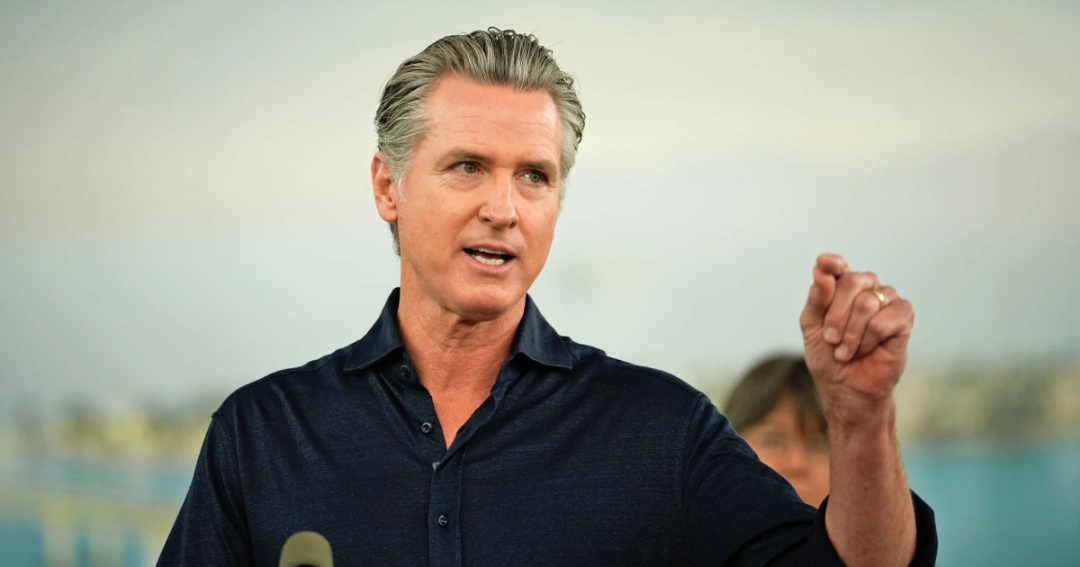
California Governor Gavin Newsom has officially declared that the time to panic about artificial intelligence is now, and he’s not waiting for the federal government to catch up. On a typical Friday, when most folks are contemplating weekend plans or scrolling through social media, Newsom wielded his pen to sign an executive order designed to create a fortress of regulations around AI, lest we find ourselves at the mercy of our robot overlords.
The executive order is a clarion call for AI experts to gather, likely over overpriced coffee, and whip up a plan to enhance California’s laws regarding AI safety and security. In less than two months, a group of brainiacs is expected to conjure up regulations that might include a “kill switch” — you know, just in case your self-driving car decides it’s had enough of following traffic rules.
Still Beats Watergate:
Sponsor success. Continue reading:
Newsom, who might be eyeing a run for the presidency in 2028, joins a growing list of Democrats sounding the alarm about AI. It’s almost as if they’re collectively realizing that their previous approach of letting tech giants run wild could be akin to giving kids the keys to the candy store. "The federal government’s abject failure to create any form of meaningful AI oversight should alarm every American," Newsom declared, channeling a mix of urgency and perhaps a hint of moral superiority.
His order aims to establish a set of guidelines demanding that independent third-party organizations create robust safety plans for AI firms. Imagine that — AI companies having to open their doors to auditors! It’s almost like asking accountants to check the books of a hedge fund — radical, right?
Meanwhile, the tech industry is erupting in its own melodrama, with AI executives expressing their fears that the very technology they’ve built could lead to humanity’s demise. AI researcher Jacob Coxon, who recently resigned from Anthropic, didn’t sugarcoat it. He took to social media, warning that the engineers behind AI believe it might kill us all by the decade's end. No pressure, right?
Bipartisan Moves in AI Regulation
The day Newsom signed his order wasn’t just a quiet day in politics. Other governors were also getting in on the action, signaling a bipartisan frenzy over AI regulation. Virginia Governor Abigail Spanberger launched an AI task force, while Nevada Governor Joe Lombardo put a stop to tax breaks for data centers unless they cover their own power costs. Meanwhile, Pennsylvania Governor Josh Shapiro is practically begging Congress to put some guardrails around AI while also making it clear he doesn’t support hitting pause on AI development. It's a political circus, and the stakes are high.
The AI issue is shaping up to be a key talking point for the 2028 Democratic primary. Former President Barack Obama has even chimed in, cautioning that Democrats must have a coherent strategy when it comes to AI. With Newsom’s new measures, it seems he’s trying to position himself as the go-to candidate for those worried about robots taking over.
As the dust settles on Newsom’s executive order, one thing is clear: the conversation about AI will not only continue but escalate. The question remains whether these regulations will lead us to a safer digital future or merely serve as a theatrical backdrop for a political ambition. The urgency is palpable, but so is the skepticism about whether government can really keep up with technology’s rapid pace.
Your takeaway
In the end, we might be left with more questions than answers, as the line between regulation and innovation becomes increasingly blurred. Will these regulations provide the accountability needed to ensure our safety in the age of AI, or will they become another bureaucratic hurdle? As we hurtle toward an uncertain technological future, one thing’s for sure: the political performances that accompany these decisions will be as entertaining as they are consequential.
For those keeping an eye on the unfolding political landscape, Newsom's move offers a glimpse into how AI regulation could pivot the 2028 presidential race. Whether this executive order is a genuine effort to address impending AI challenges or merely a calculated step by a future candidate remains to be seen. As the tech world spins ever faster, so does the race to frame the narrative around its governance. Buckle up; it’s going to be a bumpy ride ahead.