Governor Hochul Sidesteps BDS Laws on International Trade
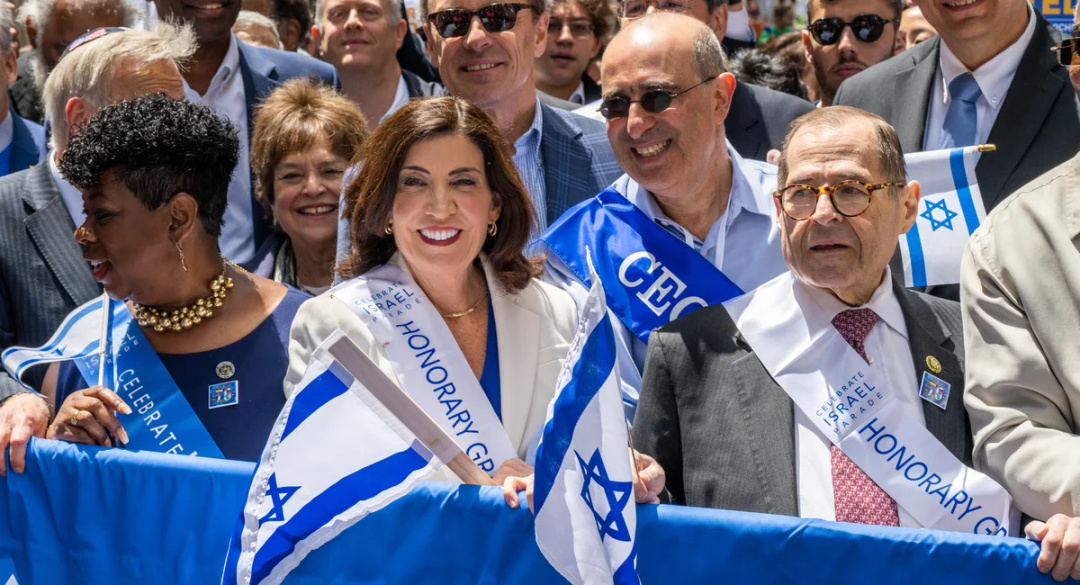
Governor Kathy Hochul's administration has made a noteworthy clarification regarding New York's longstanding executive order that prohibits state dealings with organizations supporting the Boycott, Divestment, and Sanctions (BDS) movement against Israel. The 2016 order, initially enacted by former Governor Andrew Cuomo, was designed to discourage business relationships with entities perceived to be undermining Israel. However, Hochul's office has now stated that this order does not affect foreign governments like Canada and the UK, which are considering measures to boycott products from Israeli settlements in the occupied territories.
This ruling stems from the assertion that state agencies are not legally permitted to 'invest' in foreign governments, as explained by the state Office of General Services. Their statement suggests that since these foreign entities do not fall under the category of groups that New York can financially engage with, they are exempt from the anti-BDS order. This nuanced interpretation allows Hochul—who is gearing up for re-election—to avoid entanglement in the politically sensitive topic of Israel's settlements, especially at a time when the conflict in Gaza has intensified scrutiny on Israel’s policies from both foreign nations and within her own party.
Still Beats Watergate:
Sponsor success. Continue reading:
Political analysts, such as Columbia University professor Basil Smikle, believe that Hochul faces a delicate balancing act. She must maintain her pro-Israel stance while appeasing constituents with diverse and often conflicting views on the matter. "It’s going to require an incredible amount of skill and a lot of groundwork to assuage concerns of constituents that have strong beliefs on both sides of this question," Smikle noted, indicating the complexity of Hochul's position as she navigates the implications of this executive order amidst changing public sentiment.
The context is further complicated by shifting perspectives among Democratic constituents. A recent New York Times/Siena University survey revealed that a significant majority of Democratic voters now identify more with the Palestinian cause than with Israel, highlighting a growing divide within the party about how to engage with Israel's policies. This reflects a broader trend, as national leaders from Canada, France, and the UK have openly criticized Israeli settlement activities, reaffirming their commitment to a two-state solution and subsequently announcing plans to restrict imports from these settlements.
Navigating Trade Amid Shifting Public Sentiment
Hochul's administration has previously used the anti-BDS order to exert pressure on companies like Unilever when the ice cream brand Ben & Jerry's expressed intentions to cease sales in the West Bank. Hochul's statement at the time underscored New York’s zero-tolerance approach towards discrimination. However, with the political landscape evolving and the public’s views shifting, her reliance on this executive order may be tested as she tries to navigate the complex waters of international trade and domestic expectations.
Applied to you
As Hochul prepares for the upcoming election, she faces pressure not only from her political opponents, such as GOP challenger Bruce Blakeman, who claims she is insufficiently supportive of Israel, but also from progressive voices within her party urging stronger action against BDS and its implications. Assemblymember Nily Rozic, representing Queens, has suggested that it might be time to evaluate whether the state’s anti-BDS order could be reinforced, indicating possible friction points within the party that Hochul must address.
In summary, as New York grapples with the implications of its anti-BDS policy, the administration’s recent clarification signals a significant moment of political maneuvering for Hochul, reflecting broader national trends and the challenges that come with executive policymaking in a deeply divided political climate. The state's unique stance on these matters not only impacts its relations with foreign nations but also shapes the political discourse surrounding Israel and Palestine, setting the stage for potential ramifications in future state and national elections.