Dangote Claims Nigeria's Cheap Petrol Fuels Smuggling to Neighbors
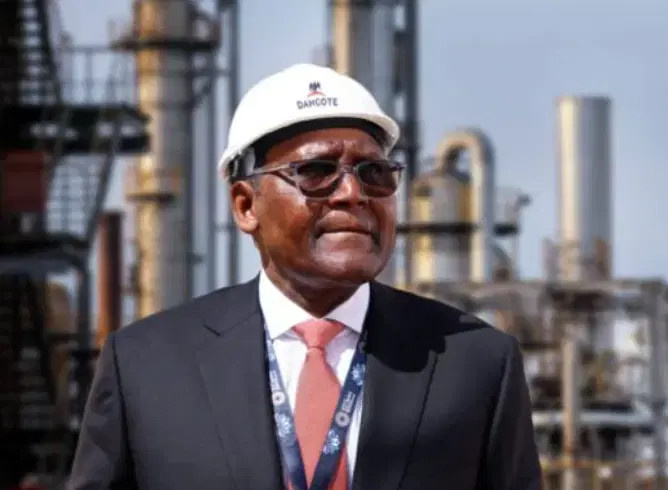
In a riveting analysis of fuel economics, Aliko Dangote, the president of Dangote Industries Limited, posits that Nigeria's petrol is cheaper than that of its neighbors, a situation he claims is fostering rampant cross-border smuggling. During an interview with Arise Television, he tackled the critical subject of rising petrol prices in Nigeria, asserting that many consumers are blissfully unaware of the price disparities across borders.
According to Dangote, consumers in some neighboring countries can pay as much as 30 to 50 percent more for petrol. "Expensive is relative in the sense that today, for a lot of them, there’s ignorance also. What they need to do is to ask what the neighbor’s price is," he quipped, presumably while pondering the depths of human ignorance about fuel costs.
Still Beats Watergate:
Sponsor success. Continue reading:
The businessman noted that this price gap gives smugglers a lucrative reason to whisk petrol across the borders into countries where prices are significantly higher. He pointed out the Niger Republic, where petrol prices hover around N1,350 per liter, making it 20 to 25 percent more expensive than in Nigeria. "So, what business are you going to do that will make you a 25 percent return?" he rhetorically pressed, leaving us to wonder just how viable a business model smuggling fuel might be in an era of inflated costs.
In light of recent petrol price hikes, which have reportedly reached N1,400 per liter in Lagos and N1,450 per liter in Abuja, Dangote reassured Nigerians that the Dangote Refinery would continue to meet domestic demand. "We will make sure that Nigeria will be fully delivered. We will deliver to Nigeria. Nigerians don’t need to worry," he asserted, sowing a seed of optimism in an otherwise murky energy landscape.
Dangote Addresses Global Energy Concerns
The discussion took an interesting turn as Dangote weighed in on the ongoing Middle East crisis, hinting at its potential impact on energy supplies. "There will not be any shortage from our own part. There won’t be any shortage. There will not be any queues," he declared, a comforting sentiment in a world where queues at petrol stations can sometimes seem more like an existential threat than an inconvenience.
However, not all is smooth sailing in the Nigerian business landscape. Dangote highlighted two significant hurdles: inconsistent government policies and a chronic lack of electricity. He lamented, "The greatest problem, there are two, which are still existing. One is inconsistencies in government policies. The second one is to do with lack of electricity."
Nigerian Energy Landscape Under Scrutiny
As he drew attention to the pressing issue of rising diesel costs impacting manufacturers, his remarks resonated with the broader narrative of Africa's energy access deficit, where nearly 600 million people are still in the dark. "We must make sure, even for us, really, as Africans, we cannot sit down and see that everybody is complaining," he urged, perhaps to an audience that could stand to hear more than just the oil-rich tales of Dangote.
In this context, the ongoing dialogue about fuel prices, smuggling, and energy production feels like a heartfelt appeal for genuine reform in Nigeria's energy policies. As Dangote wraps up his analysis, he leaves us with a curious mix of reassurance and bewilderment about the economic realities that keep Nigerians on their toes every time they pull up to the pump. The question remains: how long can Nigeria's cheap petrol sustain an economy teetering on the edge of energy crisis while fueling smuggling operations across its borders?