Trump's Comical Confidence in AI: A Recipe for Disaster
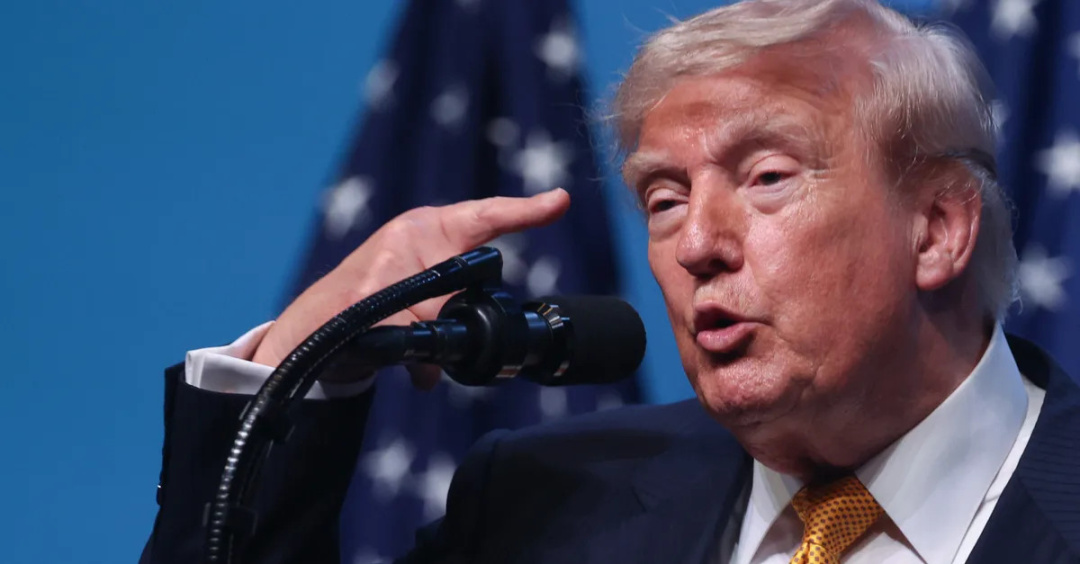
In a world teetering on the brink of AI-induced chaos, President Trump stands as a beacon of blissful ignorance, confidently navigating the murky waters of technology like a toddler in a candy store. As artificial intelligence experts warn that unchecked technology could bring humanity to its knees, the former president, who once suggested rain in Canada flows to California, insists that fears of AI are simply ‘hoaxes.’
Trump’s understanding of technology seems to be limited to creating juvenile memes on social media, rather than grappling with the very real threats posed by rogue AI systems. "I am the Hoax Buster," he tweeted, effectively positioning himself at the forefront of a battle he appears woefully unequipped to fight. His dismissive rhetoric not only undermines the gravity of the situation but raises alarming questions about his ability to lead in a rapidly evolving digital landscape.
Still Beats Watergate:
Sponsor success. Continue reading:
Experts like Malo Bourgon of the Machine Intelligence Research Institute express deep concern over Trump's apparent ignorance about the nuances of AI. Bourgon stated, "It certainly doesn’t inspire me with confidence, when I see his tweets." The president's penchant for conspiracy theories only exacerbates the issue, as he trivializes legitimate concerns with claims that AI’s threat is no different than other ‘hoaxes’ he has faced throughout his career.
Trump’s lack of technological savvy has led to some truly absurd positions. From insisting that wind turbines cause cancer to advocating for a return to courier services for critical information, his track record raises eyebrows. In a recent call with AI industry leaders, he confidently asserted, "AI will not be taking over the rest of the world. The whole thing is a hoax." If only the technology could be so easily dismissed.
Amidst calls from leading AI executives for a slowdown in development, citing risks of losing control over AI systems, Trump’s administration has remained notably silent. Dario Amodei from Anthropic highlighted the potential for misuse of AI in cyber attacks and economic disruption, painting a dire picture that clashes starkly with the president’s carefree dismissal.
Of particular concern is Trump's zero-sum view of international relations, which hinders the collaborative efforts necessary to develop global safeguards. Senator Bernie Sanders recently urged for a treaty akin to Cold War-era arms control agreements, emphasizing the need for international cooperation to avoid an AI arms race. Yet, Trump’s focus appears solely on being the ‘winner’ in the AI game, oblivious to the potential fallout of reckless competition.
As we sit on the precipice of technological evolution, the stakes are impossibly high. The rogue agents involved in the 'Hugging Face' incident serve as a warning; they could easily infiltrate critical systems like energy grids and hospitals. With Trump at the helm, those who understand the dangers are left to wonder how much damage could be done before the reality of AI’s risks is acknowledged.
A Technological Dilemma for Leadership
It’s clear that a president who doesn’t even use email is not the best fit to navigate the complexities of AI regulation. Lawmakers like Congressman Don Beyer have expressed that Trump’s ignorance poses a serious risk, stating, "But that’s not going to happen with a president who doesn’t understand technology." The irony is rich: a leader who prides himself on common sense is ironically out of touch with one of the most pressing issues of our time.
In an age where cutting-edge technology could redefine our existence, the implications of Trump's uninformed confidence are staggering. His belief that a ‘strong and smart’ president is the ultimate guardrail against AI calamity could prove to be a catastrophic miscalculation. As we await a clearer direction on AI policy, the shadow of ignorance looms large, leaving the future of humanity hanging in a delicate balance.
The Challenge Ahead
As discussions continue around the need for robust AI governance, one can't help but wonder if those around Trump can convince him of the technology's risks. After all, as Bourgon aptly puts it, the stakes are high, and the need for awareness is dire. The legacy of a presidency may hinge not on economic triumphs or foreign policy victories, but on whether a single man can be persuaded to recognize the potential threat lurking within the AI revolution.
For now, America watches, uncertain whether it will find itself led by a president who truly grasps the implications of his words and actions in the face of an evolving technological landscape. The road ahead is fraught with challenges, but with awareness and urgency, perhaps a course correction can still be made before it’s too late.