Iran Security Chief’s Ultimatum: ‘No Talks Until Our Conditions Are Met’
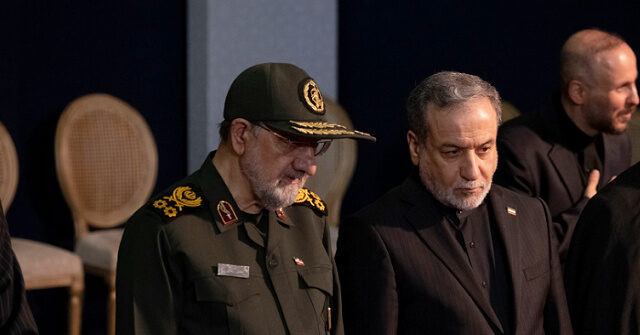
In a move that could easily be mistaken for a plot twist in a poorly scripted political drama, Mohsen Rezaei, the freshly minted secretary of Iran’s Supreme National Security Council, has thrown down the gauntlet to President Trump. The message? Don’t get distracted by the U.S. president’s contradictory signals about negotiations with Iran. It’s clear enough: no negotiations will happen until Iran's grandiose conditions are met. This ultimatum emerges at a precarious time, as discussions about military engagements and energy routes loom large over the region.
Rezaei’s proclamation came shortly after Trump, perhaps trying to sound like a peacemaker, hinted at the possibility of engaging in talks with Tehran. However, Rezaei made it emphatically clear that American “damage control” measures are as effective as a Band-Aid on a bullet wound — in other words, utterly useless. "The stakes around oil and the straits have changed," he stated with an air of dramatic finality, reaffirming that the days of casual diplomatic chit-chat are over.
Still Beats Watergate:
Sponsor success. Continue reading:
The timing of this warning is particularly poignant, considering Rezaei’s recent appointment under Supreme Leader Mojtaba Khamenei. His growing influence in the Iranian power hierarchy places him at the epicenter of national policy decisions, especially concerning the nation’s precarious position along critical maritime corridors. As the Houthis tighten their grip around the Bab el-Mandeb Strait, pressure mounts not only on the region but also on global oil markets.
Meanwhile, the U.S. finds itself caught in a web of competing narratives. While a senior U.S. official insists that the Strait of Hormuz remains “fully open and under U.S. Navy control,” Rezaei’s rhetoric suggests a very different reality. The ongoing battle over perceptions and actualities of maritime safety is intensifying as Iran continues to threaten a maritime exclusion zone in response to perceived American aggressions.
Escalating Regional Tensions
With Iran's threats of establishing new maritime control points, the conflict over these vital shipping routes is no longer confined to Hormuz alone. Just last week, Rezaei accused the U.S. of economic warfare and promised retaliation, emphasizing that Iran’s military posture against U.S. forces has been radically recalibrated. It seems that in the game of geopolitical chess, Iran is all in — and it’s not afraid to knock over a few pieces while trying to establish its dominance.
As tensions escalate, the stakes are rising for not just Iran and the U.S., but also for global oil markets and international shipping routes that are vital to the world economy. The Iranian leadership has laid out an extensive set of conditions for any potential cessation of hostilities, which includes a laundry list of demands: the release of $24 billion in frozen assets, halting U.S. threats against Tehran’s nuclear ambitions, a withdrawal of Israeli forces from Lebanon, and an end to the blockade on Yemen. Essentially, Iran isn’t just looking for a handshake — they want the whole arm.
As negotiations stall and hostilities simmer, the potential for diplomatic talks remains as elusive as a cat on a hot tin roof. Amidst this backdrop, Rezaei’s stark warning serves as a reminder that in the world of international politics, the balance of power is continually shifting, and those who underestimate the stakes may find themselves in a precarious position.
Your takeaway
In the grand theater of international relations, the unfolding drama between Iran and the United States showcases the intricate and often theatrical nature of diplomacy. While Trump champions a stance of strength, asserting that Iran is desperate for an agreement, Rezaei’s firm rejection of negotiations paints a contrasting picture of a nation prepared to double down on its demands. As both sides navigate this treacherous terrain, one thing is certain: the stakes have never been higher, and the outcome remains uncertain at best. With every threat and counter-threat, the stage is set for a showdown that will undoubtedly have far-reaching implications for all involved.
The narrative surrounding U.S.-Iran relations is anything but straightforward, and as we watch this high-stakes game unfold, we can only hope for a resolution that doesn’t involve military escalation. But for now, it appears we are left with more questions than answers — a fitting end to a chapter where the plot thickens with every passing day.