Takaichi Celebrates Okinawa's Election as a Win for Economic Growth—But at What Cost?
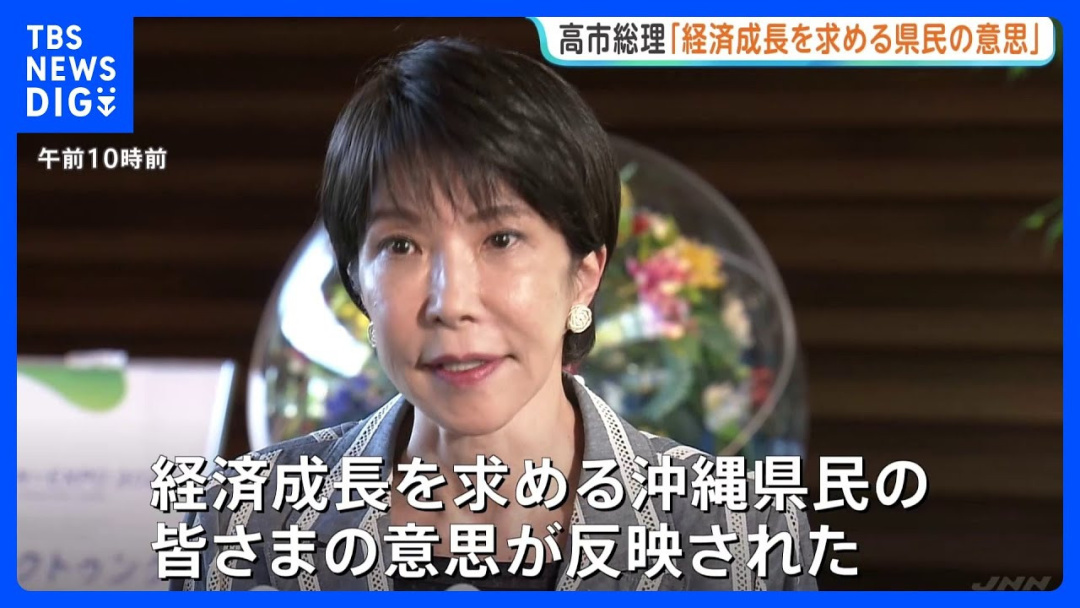
In a display of unbridled optimism, Prime Minister Sanae Takaichi has proclaimed the victory of Genta Koja in the Okinawa gubernatorial election as a clear mandate from the people for economic growth. Takaichi, who seems to believe that voters in Okinawa are solely focused on their wallets, stated, "I believe this was an election that reflected the wishes of the people of Okinawa for economic growth." It's almost as if she’s suggesting that the residents of the island are merely pawns in a larger economic chess game, where the only pieces that matter are those that boost her administration’s profile.
With Koja’s election marking the end of 12 years of governance that resisted the relocation of the U.S. Marine Corps Air Station Futenma, Takaichi might be hoping for smoother sailing ahead. Senior officials from her ruling party are viewing this win as a significant boost for her administration, perhaps one that could turn the tide on the contentious issues surrounding the U.S. military presence in Japan. Yet, one can’t help but wonder if this is truly a victory for the residents of Okinawa or merely a convenient narrative spun by Tokyo.
Still Beats Watergate:
Sponsor success. Continue reading:
Opposition leaders are less enthusiastic about the results, with Japanese Communist Party Chair Tomoko Tamura labeling the outcome as "extremely disappointing." In a shocking twist, Tamura accused the campaign of the newly elected governor of being marred by defamatory attacks and the spread of false information on social media—an allegation that seems to echo many political battles worldwide, where misinformation is the weapon of choice.
However, the implications of this election extend beyond the usual economic rhetoric. Takaichi’s government currently faces a daunting challenge: balancing the expectations of Okinawa's population with the realities of an economic strategy that may prioritize profits over principles. As Koja prepares to take office, the question remains whether he will navigate the murky waters of local and national politics without alienating those who still hold dear the values of autonomy and environmental justice.
Political Ramifications in the Balance
As the dust settles from the election, the political landscape in Japan is poised for an interesting transformation. While Takaichi may bask in the glow of her perceived victory, the reality is that the opposition, bruised but not broken, is still in the game. The outcome has indeed shifted the momentum, but it remains to be seen how the new governor will position himself amidst the political machinations of Tokyo. Will he prioritize the wishes of his constituents or succumb to the pressure of aligning too closely with the central government’s agenda?
This entire situation begs the question: what does economic growth truly mean for Okinawa? Will it lead to better living conditions for the residents, or will it simply serve as a façade for deeper political maneuvers? As Takaichi’s administration reflects on this electoral win, the broader implications for governance in Japan are worth scrutinizing. The citizens of Okinawa deserve more than a narrative that reduces their desires to mere economic statistics.
Your Takeaway
In the grand theater of Japanese politics, the Okinawa gubernatorial election serves as a reminder that economic promises can be a double-edged sword. While Takaichi will likely parade this victory as validation of her policies, it remains critical to examine the fundamental rights of the Okinawan people within this narrative of growth. History will judge whether this election outcome represents real progress or merely a shift in political theatre, where the stakes are high and the players are ever-changing.