German Chancellor Merz Slams AfD's Election Victory as Ethnic Cleansing
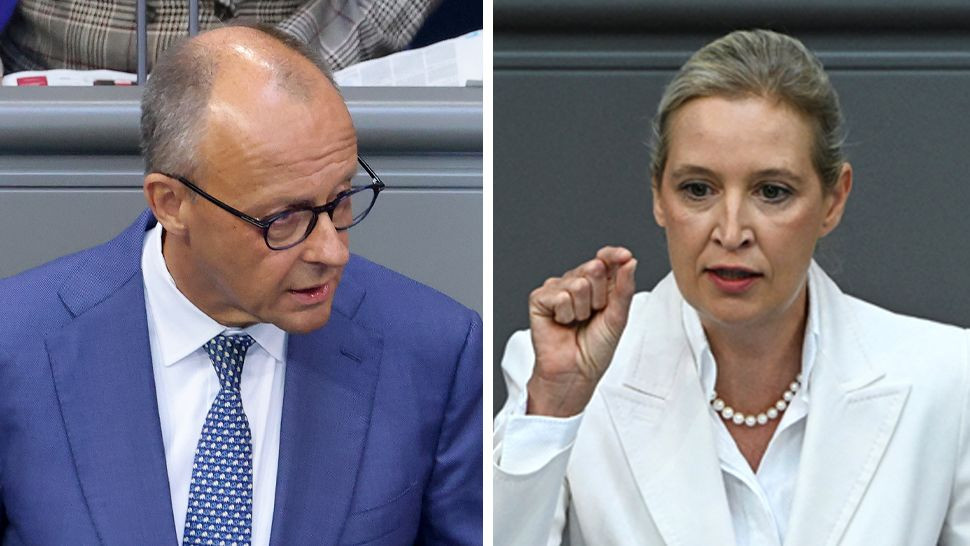
In a dramatic display of political tension, German Chancellor Friedrich Merz has unleashed a scathing critique of the far-right Alternative für Deutschland (AfD) following the party's recent electoral triumph in Saxony-Anhalt. Merz described the AfD's migration policy as tantamount to "ethnic cleansing" for skilled workers, casting the party as a "destructive force" within the Bundestag. This confrontation reflects the growing unease within German politics surrounding immigration, particularly in the wake of the AfD's surge, which saw them capture almost 44% of the vote while Merz's conservatives suffered a steep decline in their own support.
During the fiery parliamentary debate, Merz addressed the AfD leader Alice Weidel directly, stating that her party's approach would jeopardize Germany's economic stability by targeting skilled workers with migration backgrounds. He highlighted that one in six skilled professionals in Germany has a migration background, arguing that the AfD’s hardline stance would lead to detrimental outcomes for various sectors including healthcare and hospitality. Weidel, unfazed, retaliated by asserting that Merz’s coalition had failed the German people and insisted that voters had made their choice clear at the polls.
Still Beats Watergate:
Sponsor success. Continue reading:
The AfD's recent gains have not only altered the political landscape in Saxony-Anhalt, but they have also captured the attention of international figures, including U.S. President Donald Trump, who lauded their success as a blow against progressive immigration policies. Trump noted, "The Populist Party in Germany just had a really big night," connecting their victory to what he called "absolutely horrible immigration rules and regulations.” This alignment raises questions about the implications of far-right movements across Western democracies.
With calls for a "deportation and remigration" initiative targeting irregular migrants, Merz cautioned that such measures could severely disrupt essential services across Germany. He noted that no single care home, hospital, or restaurant could function effectively if the AfD’s policies were enacted. As tensions escalated in the Bundestag, repeated heckling from AfD MPs prompted warnings from parliamentary leaders, emphasizing the contentious atmosphere surrounding this pressing national issue.
The AfD's Governance Ambitions at Stake
As the political tug-of-war continues, the fate of the AfD's governance ambitions in Saxony-Anhalt remains uncertain, as they fell short of an outright majority by just three seats. The political dynamics are shifting not only within Germany but are resonating globally, as the implications of the AfD's rise are scrutinized by political analysts worldwide.
Your takeaway
Merz’s comments underscore a pivotal moment in German politics where the traditional left-right divide is being challenged by the emergence of far-right ideologies. As the AfD opens discussions about potential coalitions with other parties, the implications for governance and policy direction could reshape Germany's political identity moving forward. With no far-right party having held power in any German state since World War Two, observers are closely monitoring whether the AfD can maintain momentum or if backlash from mainstream parties will stifle their progress.
The clash between Merz and Weidel serves as a microcosm of the broader tensions within European politics, where immigration policy is at the forefront of public debate. As right-wing parties gain traction, the challenges of integrating diverse populations and maintaining social cohesion will be critical to watch in the coming months. While the AfD celebrates its electoral success, the question remains whether its controversial policies can translate into sustained political power without alienating the German electorate.