Sikkim Court's Generosity: A Little Cash for Brake Failures
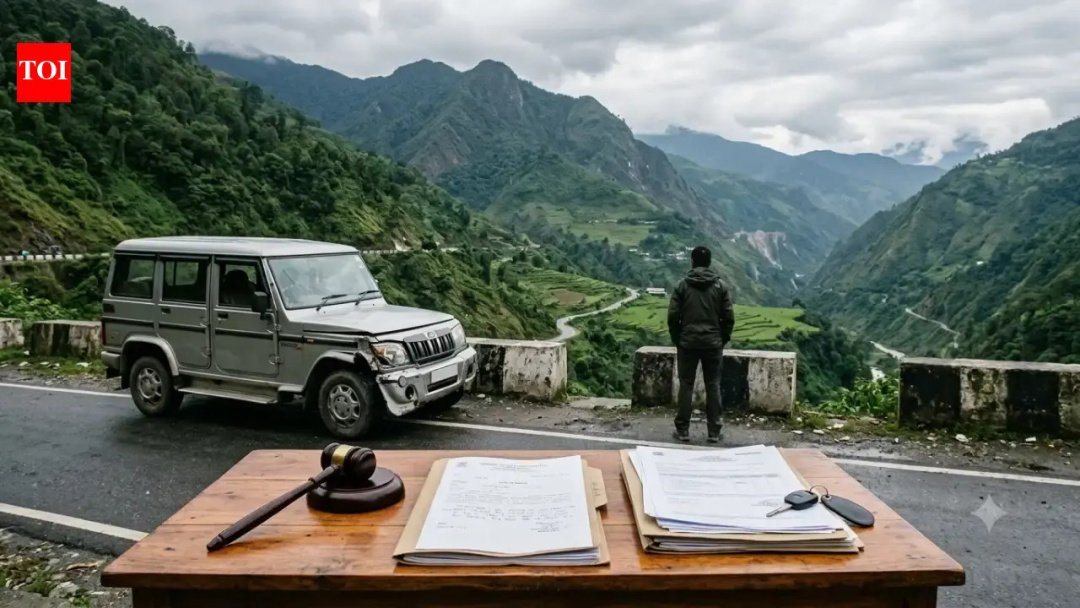
In a recent ruling that could spark both legal and comedic conversations, the Sikkim High Court awarded five lakh rupees to the family of a deceased accident victim, a decision that came only after the Motor Accident Claims Tribunal proved itself to be utterly baffled by the concept of no-fault compensation. The case centers around a 2019 road accident attributed to brake failure, which the tribunal conveniently decided was not reckless driving, therefore leaving the family out to dry without compensation. We can only imagine the tribunal's thought process: why compensate for clearly faulty brakes when one could simply blame them for not being more obedient?
The case became a real nail-biter of a legal drama when the bereaved family, not taking 'no' for an answer, decided to bring their grievances to the higher court. They argued—quite logically—that even if the tribunal found no negligence under Section 166 of the Motor Vehicles Act, they could still claim compensation under the no-fault provision of Section 140. It's almost as if the court had accidentally stumbled into a sensible legal precedent without planning to!
Still Beats Watergate:
Sponsor success. Continue reading:
But wait, there's more! The insurer, in a move right out of a tragicomedy, insisted that the deceased was effectively the bad guy here, and therefore his family should not be entitled to any compensation. Because what could be more fun than having a family mourn their loss while also being told they're not owed a dime because their loved one was classified as the tortfeasor?
Justice Bhaskar Raj Pradhan, perhaps channeling his inner comic, pointed out that the insurance documents were so convoluted they could rival a labyrinth. He highlighted how the insurance certificate was designed to obfuscate rather than inform, leaving the insured to wade through a sea of legal jargon just to find out what they were actually entitled to. It's a wonder that the average citizen doesn’t just give up and bury their head in the sand instead of trying to decipher these insurance conditions.
Court Ruling Highlights Insurance Confusion
In the end, the Sikkim High Court decided to take pity on the family, ruling that the tribunal's rejection was out of line and that they indeed deserved some compensation for their troubles. The court stated that there was an evident need for clarity in insurance documentation, so that victims don't have to become legal scholars just to understand what relief they might be entitled to.
While the judgment was celebrated, one must wonder about the larger implications. Could this case pave the way for more victims to challenge tribunal decisions, or will it be seen as a mere blip in a convoluted legal system? One thing's for sure: in the courtroom, as in life, clarity is key, and sometimes it takes a little judicial comedy to bring that clarity home.
Your takeaway
What does this ruling mean for the average citizen navigating the treacherous waters of accident claims? It suggests a potential shift in how courts view the responsibilities of insurers and the expectations of those they cover. As legal battles over compensation continue to unfold, perhaps this case will encourage more families to fight back rather than accept defeat at the hands of complex legal technicalities.
The Sikkim High Court's decision serves as a reminder that the law can sometimes offer unexpected surprises, even when it comes to issues that seem straightforward like road accidents and their aftermath. It raises important questions about accountability and compensation, and perhaps even about how the judicial system can better serve those who rely on it for justice. As more individuals seek legal recourse, it will be interesting to see how courts adapt and what broader changes might emerge in the landscape of accident compensation claims.