Federal Union Lawsuits: Playing the Deep State Card Against Trump
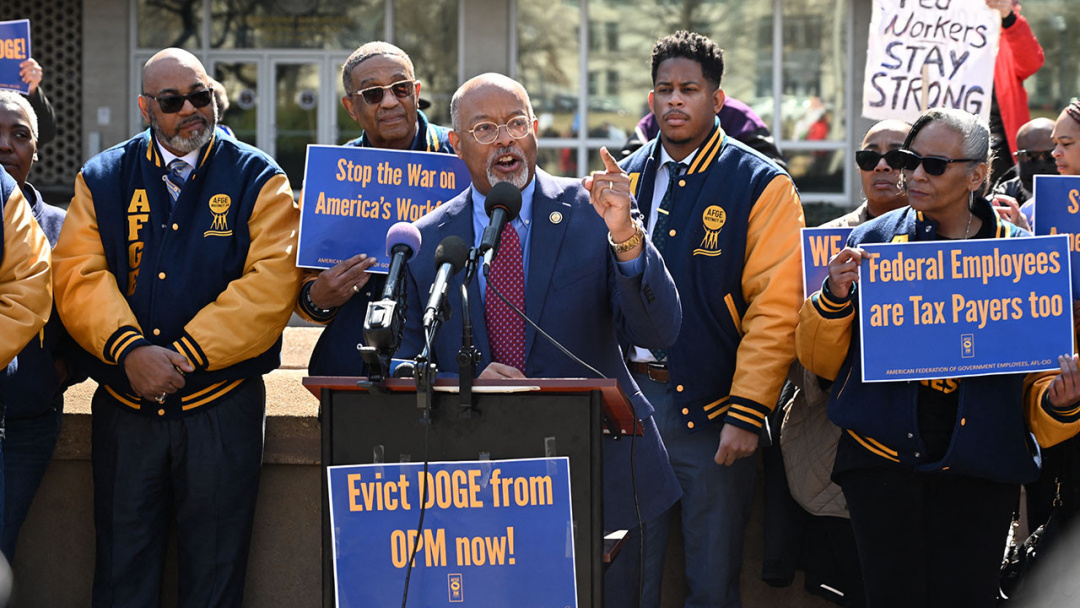
The American Federation of Government Employees (AFGE) has recently filed multiple lawsuits against the Trump administration, claiming the president's orders on federal workforce management infringe upon the rights of employees and their unions. With questions swirling about who should control the executive branch—the elected president or career federal employees—this ongoing legal battle exemplifies a tense struggle over power in Washington.
In a recent move, the AFGE took aim at the White House’s Office of Personnel Management, seeking to block new rules that dictate how federal employees are evaluated, disciplined, and potentially dismissed from their jobs. This lawsuit marks just the latest chapter in a saga that has seen the AFGE file 18 legal actions against the Trump administration since January 2025. These challenges encompass a range of initiatives, from broad reorganizations within the government to significant restrictions on collective bargaining rights.
Still Beats Watergate:
Sponsor success. Continue reading:
Critics of the union argue that these legal actions represent more than just standard labor disputes; they reflect a form of institutional resistance from federal employees and their unions against an administration attempting to reshape the executive branch. As such, the conflicts have drawn in various advocacy groups, local governments, and other unions, illustrating the broad coalition forming against the administration’s initiatives.
AFGE spokespersons refute the notion that their actions amount to deep state machinations, emphasizing that their lawsuits are grounded in protecting legally binding contracts and resisting what they perceive as the administration's illegal retaliation against union activities. The stakes are high, as these cases do not merely revolve around wages or benefits; they challenge the fundamental structure of how the federal government operates.
Among the key lawsuits, one involved Executive Order 14210, designed to establish the Department of Government Efficiency, which aimed to streamline the federal workforce. The AFGE and a coalition of labor unions argue that the executive branch lacks the authority to reorganize or reduce federal agencies in this manner. Courts have so far sided with the unions in rejecting the administration's attempts to dismiss these cases.
Unions Challenge National Security Exemptions
Another significant suit targets Executive Order 14251, which exempted certain agencies from collective bargaining due to their national security roles. Here, the unions assert that maintaining bargaining rights for over 950,000 employees is not just about workplace conditions; it also relates to governance at a national level—a principle that many believe should not be compromised.
The broader implications of these lawsuits extend to the very essence of the administrative state and who gets to define its power. Recent rule changes by the Office of Personnel Management to allow for stricter evaluations and removals of federal employees have intensified the debate, prompting unions to respond vigorously. The AFGE's latest legal action represents not just a defense of their members but an existential challenge to the current administration's approach to governance and employee rights.
As these legal battles unfold, the ramifications of the outcomes could reshape the relationship between federal employees and their elected officials, further entrenching the divisions that characterize contemporary governance. The Trump administration's responses to these lawsuits, along with the potential for significant legal precedents, will undoubtedly be closely watched by both supporters and critics alike.
A Clash Over Federal Authority
Given the contentious nature of these lawsuits, it is clear that the ramifications extend beyond the immediate legal battles. They touch upon fundamental questions of authority and governance within the federal workforce, as unions push back against executive overreach. As this saga continues to evolve, the potential for future litigation and political ramifications remains high, posing critical implications for the future of federal employment and executive power.
In the backdrop of this legal struggle, the narrative painted by critics suggests that the leftist agenda, wielded through the AFGE and other unions, is attempting to undermine the authority of elected officials. The clash represents not just a labor dispute but a broader ideological confrontation, where the very structure of administrative governance is being tested. As we observe the unfolding drama, the ultimate outcome may redefine the balance of power in the executive branch and influence labor relations for years to come.