The White House's 'Build the Wall' Game Goes Down Faster Than Tiles in Tetris
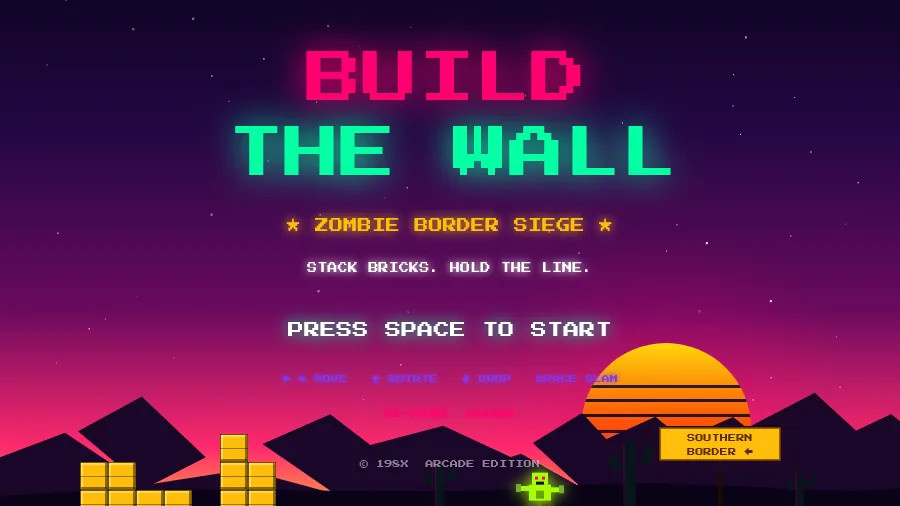
In a move that might leave players feeling like they just lost at Tetris, the Trump administration has removed its widely criticized web game, 'Build the Wall,' from Arcade.gov. This decision came after the Tetris Company voiced their concerns about copyright infringement, subtly threatening legal action. Now, the game joins the ranks of other questionable policies that have fallen out of favor with the public, just like a poorly stacked wall of falling bricks that collapses under its own weight.
Originally launched to bolster the administration's border security narrative, 'Build the Wall' allowed players to stack bricks in an effort to create a barrier against animated zombies—a scenario that feels all too real in the current political climate. The game’s tagline, "Build the wall. Deport. Fill a Trump Account," combined with its obvious homage to the iconic Tetris gameplay, was a bold attempt at combining entertainment and policy advocacy.
Still Beats Watergate:
Sponsor success. Continue reading:
The Tetris Company, not one to play around when it comes to their intellectual property, issued a statement on Instagram that emphasized their commitment to connecting people rather than dividing them. While they didn’t announce any immediate legal action, their warning was crystal clear: they take copyright issues very seriously. After all, this isn’t the first time a court has sided with the Tetris Company in disputes over copycat games; their history of winning damages is as solid as those iconic blocks.
As the game was yanked from the website, four other titles remained, further showcasing the administration's penchant for creating politically charged entertainment. Among the surviving games is 'Rio Run,' which bears a striking resemblance to the classic title Snake. If the White House is hoping to engage a younger audience through such games, they might want to consider avoiding any more copyright pitfalls.
While the administration has previously weathered its fair share of legal troubles—including settlements for music played at rallies without permission—the swift removal of 'Build the Wall' signals a recognition of the fine line between political messaging and legal accountability. It’s a reminder that in the game of politics, much like in Tetris, one wrong move can lead to a quick and messy end.
The Tetris Company’s strong stance serves as a reminder that even the most powerful institutions must navigate the complex landscape of intellectual property rights. With the ongoing scrutiny on the administration’s dealings, it remains to be seen if this was just a minor setback or a sign of deeper issues at play within the White House's entertainment endeavors.
The Game of Intellectual Property Rights
As the dust settles on this latest controversy, one has to wonder how many other games in the White House’s digital arcade might be next in line for scrutiny. The administration's attempts at creating relatable content have often been met with resistance—from legal challenges to public backlash. In an era where every tweet and post is analyzed under a microscope, a game that trivializes complex issues like immigration and copyright law inevitably raises eyebrows.
This incident highlights the challenges faced by those in power when they attempt to blend governance with pop culture. As the boundaries blur between entertainment and politics, it’s clear that the stakes are higher than ever in this digital landscape of messages and memes. The removal of 'Build the Wall' may just be the beginning of a larger conversation about the appropriateness of using gaming as a platform for political agendas.
Your Takeaway
For the politically inclined gamer, this saga serves as a reminder that while the administration may aim to engage audiences through innovative means, they must tread carefully in the realm of intellectual property. In a world where creativity is often stifled by legalities, the question remains: what’s next for the White House's foray into interactive entertainment? Will they continue to push the envelope, or will this latest setback lead to a complete policy overhaul? Only time will tell, but for now, the game is over.