Kwankwaso Demands Democratic Accountability After Attack on Obi's Convoy
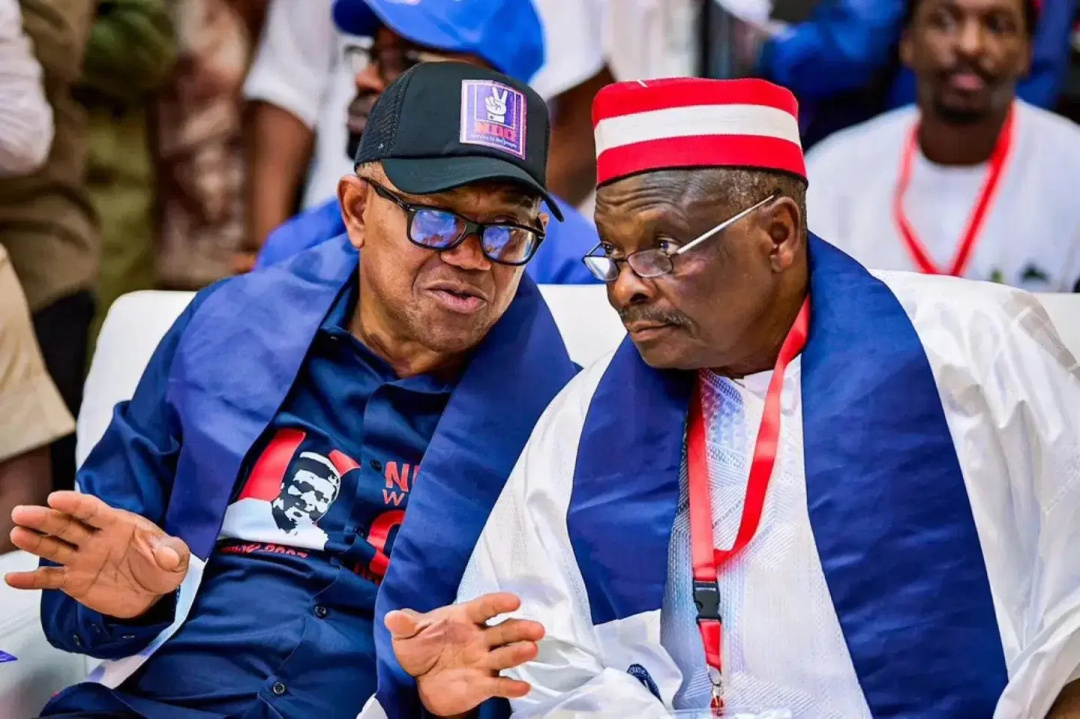
In a remarkable display of democratic irony, Rabiu Kwankwaso, vice-presidential candidate of the Nigeria Democratic Congress (NDC), has taken to social media to condemn the recent attack on Peter Obi's convoy during his visit to Benue State. Kwankwaso's impassioned plea for action from President Bola Tinubu is less about the actual safety of Obi and more about the ongoing circus that is Nigerian politics, where a former governor can't even travel without being mobbed by what can only be described as ‘enthusiastic supporters’—if one were to use the term loosely.
Describing the incident as a 'disturbing development,' Kwankwaso is calling for the perpetrators to be identified and prosecuted, as if that’s ever going to happen in the land of the 'democratic republic' where the justice system often resembles a poorly scripted drama. "I am deeply disturbed by the attack on the convoy of our presidential candidate, Peter Obi," he tweeted, seemingly unaware that this kind of disruption has become part and parcel of the democratic process in Nigeria.
Still Beats Watergate:
Sponsor success. Continue reading:
The alleged 'mobilization of unruly elements' is just another day in the life of Nigerian politics, where political thuggery is often employed by those who can’t win a debate. The attack, Kwankwaso argues, represents a dark day for democracy, which given Nigeria’s political history, raises the question: how many more dark days can one democracy sustain before it simply short-circuits into chaos?
In his call to action, Kwankwaso urged Tinubu to rein in state governors, particularly those from the ruling All Progressives Congress (APC), as if asking nicely would magically transform them into bastions of democratic virtue. "I hope the president will heed my words and ensure that such anti-democratic acts are curbed," he stated, placing faith in a leadership that has often made headlines for anything but its commitment to the rule of law.
Kwankwaso’s remarks take on even greater significance when viewed against the backdrop of increasing insecurity in Benue State. Obi was visiting communities ravaged by violence in recent months, and his convoy being attacked only serves to further illustrate the fragile state of law and order in the nation. While Kwankwaso calls for international observation and intervention, one wonders if the international community is even still watching or if they've simply turned their backs on yet another African nation caught in the quicksand of its own governance.
As the pieces of this unfortunate saga unfold, it remains to be seen whether any actual consequences will follow the outcry, or if it will all fade into the annals of Nigerian political history—just another story of how democracy can sometimes resemble a tragicomedy.
The Political Farce Continues
The irony is not lost on observers: a vice-presidential candidate pleading for peace in a system that thrives on chaos. As Obi's convoy continues its journey through the minefield of Nigerian politics, one can only laugh—not with them, but at the absurdity of a situation where political leaders are forced to demand protection from their own government, fundamentally questioning who exactly is in charge.
With the world watching as Nigeria balloons into a rising state of disarray, Kwankwaso's appeal to the international community to uphold the rule of law appears more like a cry in the wilderness. Will they respond, or will they allow this farcical theater to continue unabated? Such questions remain pertinent as the drama unfolds, showcasing both the resilience and fragility of Nigerian democracy.
Your Takeaway
In summation, Kwankwaso's remarks remind us that while Nigeria's political landscape may be a hotbed of chaos, the calls for democratic accountability are as necessary as they are ironic. Political tactics reminiscent of a Shakespearean play may dominate the stage, but the audience—both local and international—must remain vigilant as the actors play their roles with gusto. The real question is, how long before the curtain falls on this act of political tragedy?