Court Orders Flipkart to Compensate Customer for Fake iPhone Delivery
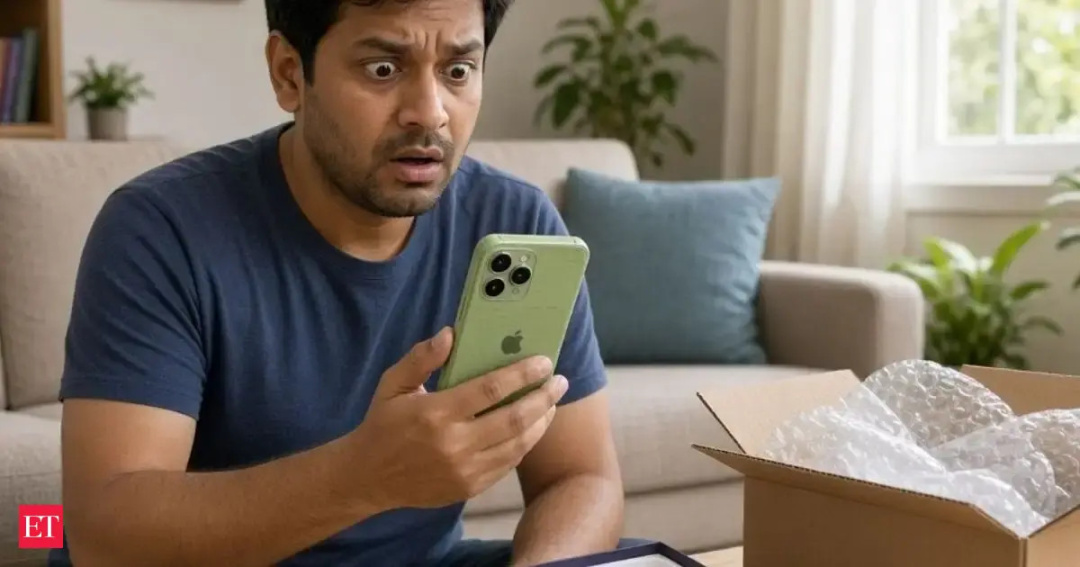
A landmark court ruling has determined that Flipkart must pay a Bulandshahr man Rs 1.7 lakh after he had the unfortunate experience of ordering what he thought was an iPhone 14 Pro for Rs 1.43 lakh, only to receive a counterfeit version that could easily be mistaken for a child's toy. In a twist worthy of a bureaucratic comedy, the customer claimed his return requests were as effective as a screen door on a submarine, rejected five times without so much as a courtesy call.
In response to the ruling, Flipkart released a statement assuring the public that they are committed to rigorous quality control. They stressed that their new initiative, the Customer Assurance Taskforce for E-Commerce Reliability (CATER), would be conducting quarterly reviews of the quality of products shipped to customers. This initiative is expected to involve a thorough examination of every apple sticker and the number of cameras on the devices—of course, the results will be shared only with stakeholders and not the public, for whom the findings might prove too shocking to handle.
Still Beats Watergate:
Sponsor success. Continue reading:
While the judge ordered Flipkart to compensate the customer, he also noted the potential for future excellence. A spokesperson suggested that future shipments could come with a 'genuine' label designed to prevent confusion. "We believe that the distinction between counterfeit and authentic is a critical one that could revolutionize online shopping," the spokesperson said with an unshakeable confidence. This bold step forward, however, may not prevent future incidents where a customer receives a package containing little more than a glorified cardboard box.
Flipkart's New Approach to Customer Assurance
As part of their commitment to transparency, Flipkart has also decided to launch a new series of public service announcements featuring their mascot, 'Flip the Quality Inspector,' who will assure customers that all efforts are being made to prevent such occurrences. In these ads, the character will demonstrate various ways to identify real Apple products, a task that evidently requires expert guidance as it is unclear how long the public can be expected to navigate the murky waters of e-commerce without a degree in counterfeiting.
Your takeaway
The ruling has sparked debates across the digital marketplace regarding accountability and customer rights, with many questioning whether online platforms are doing enough to ensure that their offerings meet basic standards. In a nation where online shopping is rapidly growing, this incident highlights a crucial concern: that consumers must be vigilant, for even the most trusted platforms may deliver nothing more than an elaborate slapstick routine.
As the dust settles on this case, Flipkart's next course of action remains uncertain. Will they take this matter as a wake-up call or simply shuffle it into the file labeled 'Lessons Learned'? Only time will tell if their new quality checks will bring about genuine improvements or if they will remain a footnote in the ongoing saga of online retail absurdity.