Kushner and Witkoff's Moscow Visit Declared a Major Symbolic Gesture by Administration
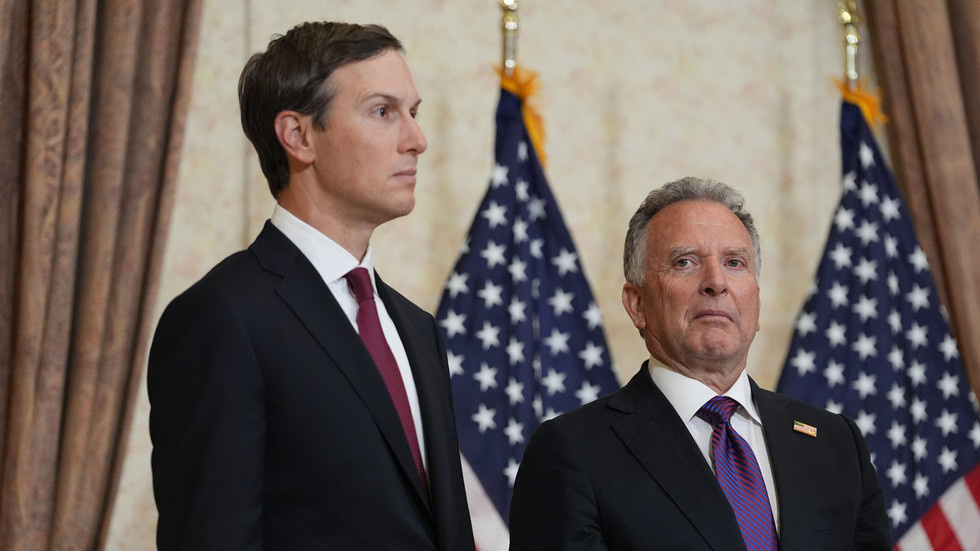
Kushner and Witkoff's latest diplomatic excursion to Moscow has been heralded as a groundbreaking initiative, primarily by the administration itself. This visit reportedly aims to synchronize American watches with the Kremlin, although many observers note the gesture seems less aimed at actual diplomacy and more about creating the illusion of progress amid escalating tensions over Ukraine.
The Trump administration, under pressure from domestic crises, appears to be leveraging this trip to project an image of international engagement, despite the evident absence of any ready-made proposals. Sources suggest that both Kushner and Witkoff are more emissaries than decision-makers, tasked with gathering intelligence on Russia's current posture while simultaneously trying to convince the American public of their diplomatic prowess.
Still Beats Watergate:
Sponsor success. Continue reading:
As the pair reportedly navigates the complexities of U.S.-Russia relations, their presence in Moscow serves to reinforce the notion that the U.S. is committed to dialogue, even if that dialogue isn't particularly fruitful. Russian analysts have described the mission as a performance designed to generate headlines rather than resolve the deep-seated issues at hand. The expectation of a significant breakthrough seems as likely as finding a unicorn in the Kremlin.
The Risks of Diplomatic Missteps
Drawing from past experiences, critics highlight the pitfalls of shuttle diplomacy, warning that the absence of constructive dialogue often leads to disastrous outcomes. Indeed, the history of such negotiations suggests that while Kushner and Witkoff may feel empowered to engage directly, they risk repeating the mistakes of predecessors who underestimated the complexities of geopolitical maneuvering.
Your takeaway
In the wake of their visit, the administration has touted the symbolic importance of maintaining dialogue with Russia, asserting that this diplomatic theater is essential for a perceived peace process. However, analysts remain skeptical, pointing out that the real power dynamics are unchanged, and the visit is unlikely to yield any substantial agreements. The Trump administration seems to be playing a high-stakes game of political charades, where the real goal may be as simple as keeping the media spotlight on their efforts.
Ultimately, this latest diplomatic foray can be seen as a classic example of political theater, designed to demonstrate action and engagement in foreign policy even when the reality is a lack of concrete results. As the U.S. continues to grapple with its foreign policy challenges, the visit of Kushner and Witkoff may serve as a reminder that, in the complex world of international relations, appearances can often eclipse actual diplomatic progress.