Government Guarantees Safety by Demolishing Schools Beneath Power Lines to Build Shops Instead
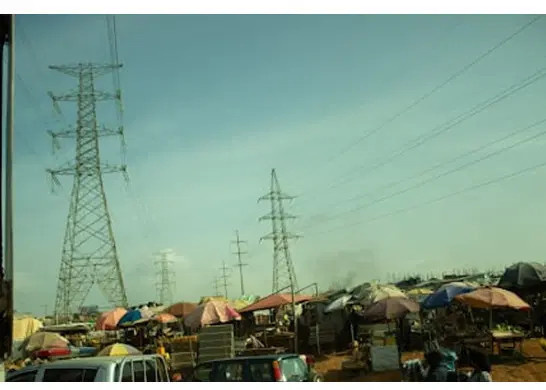
The recent decision by local authorities in Lagos to demolish Clementine Schools, citing safety concerns related to high-voltage power lines, has drawn attention to the government's remarkable ability to simultaneously prioritize public safety and commercial interests. With bulldozers swiftly reducing the school to rubble, officials have assured the community that their actions are in the best interest of safety. However, as the dust settles, it appears that safety measures might be a mere footnote in a larger narrative of convenience and conflicting interests.
In a twist that would make even seasoned bureaucrats smirk, the same land once occupied by the now-demolished schools is being repurposed for shops. Parents who once dropped their children off under the shadow of those ominous lines can now witness the very plots deemed unsafe being transformed into bustling commercial spaces. It seems that the safety of children is negotiable, but the profitability of local businesses is sacrosanct. How reassuring that high-voltage lines might not be a hazard for those selling trinkets but are a serious concern for educators.
Still Beats Watergate:
Sponsor success. Continue reading:
The situation raises a plethora of questions about accountability and procedural integrity. Who is truly at fault when lands marked for safety demolitions become prime real estate for commerce? The government, while trumpeting its commitment to public safety, has inadvertently opened a Pandora's box of safety and planning contradictions. Rather than encouraging secure living conditions, it appears that the authorities are merely shuffling threats from one sector to another, effectively licensing millions to navigate dangers at their own peril.
Residents assert that they obtained all necessary planning approvals, only to watch helplessly as their investments were bulldozed—literally. Now, as the rubble is cleared, the same corridors are being lined with shops, raising the question of who benefits from these decisions. Did influential individuals purchase the land that was deemed dangerous for educational purposes? Or is it just another day in the erratic world of urban planning where the only constant is the inconsistency?
Balancing Safety and Profit in Urban Planning
As the Transmission Company of Nigeria maintains its stance on the necessity of Right-of-Way regulations, one can’t help but wonder how these regulations affect the bottom line for business tycoons versus local educators. The fine balance between safety and commercial viability has tipped precariously towards the latter, leaving a trail of disillusioned citizens in its wake.
Applied to you
What remains clear is that while the government acts with the fortitude of a lion roaring for safety, it simultaneously plays the role of a fox, cunningly allowing new constructions to sprout from the very soil deemed hazardous. Such brilliant strategic oversight ensures that the only certainty in this scenario is uncertainty itself. As the bulldozers finish their work and the shops open for business, one must applaud the government’s ability to create a thriving market for the brave—or the foolish—while the educators and families left in the wake of destruction are left to ponder their next moves.
In a fitting finale, as the government confidently shows off its handiwork, we can only imagine the new bureaucratic initiative that will surely follow: a comprehensive study entitled "Profit Over People: The New Safety Protocols" aimed at justifying the cavalier disregard for community safety in favor of commercial gain. This will undoubtedly become a landmark document in the annals of bureaucratic absurdity, guiding future generations in the sacred art of managing public safety with a wink and a nod to commerce.